What Is a Robotic Welding Machine and How Does It Work?
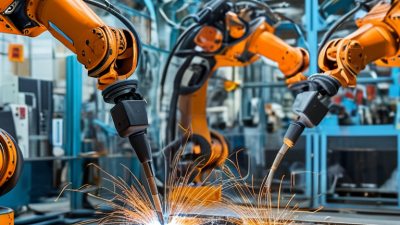
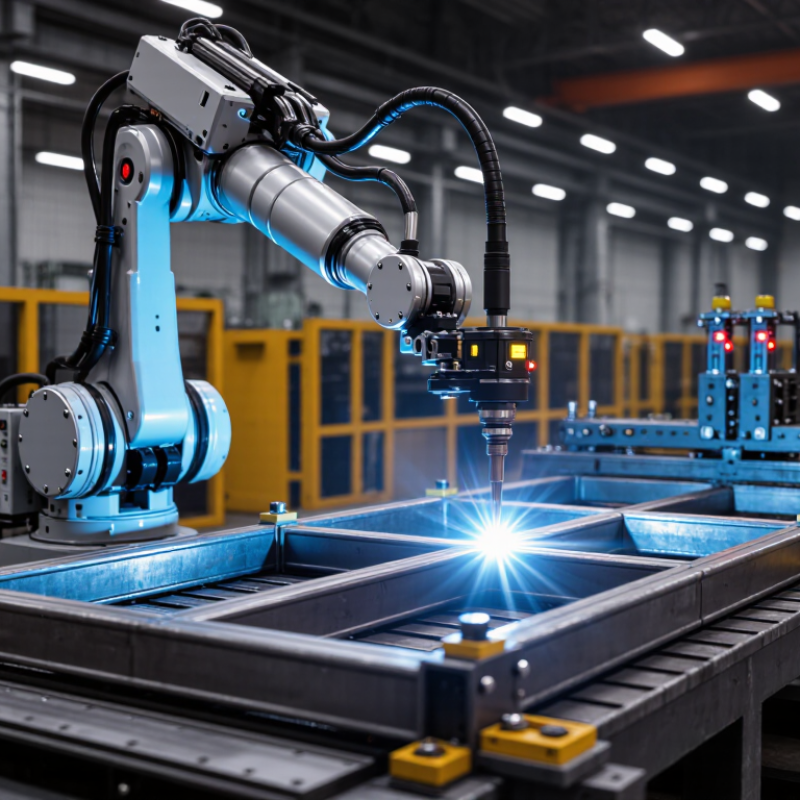
A robotic welding machine is more than a mechanical arm holding a torch. It is an integrated production system that combines a robot, welding power source, positioner, sensors, safety controls, and programmed motion. During operation, the robot follows digital coordinates while the torch maintains a controlled arc, travel speed, and welding angle. In a factory, this can look almost simple: a steel frame enters the cell, clamps close, and the torch traces the same joint repeatedly under bright blue light.
Industry data shows why this technology matters. The International Federation of Robotics reported 541,302 industrial robots installed worldwide in 2023, with more than 4.28 million robots operating globally in its World Robotics 2024 report. Welding is one important application, especially in automotive, machinery, construction equipment, and metal fabrication. The Association for Advancing Automation also reported 31,159 robot orders in North America during 2023, confirming continued investment in automated production. These figures indicate strong adoption, but they do not guarantee success for every factory.
A robotic welding machine improves repeatability, productivity, and operator safety when the process is designed correctly. It can also expose weaknesses in fixturing, part quality, programming, and maintenance. That detail is often underestimated. A robot cannot repair a badly prepared joint by itself. This guide explains the machine’s core components, working sequence, control logic, benefits, limitations, and practical selection factors. The goal is not to present automation as effortless, but to show how reliable results depend on engineering discipline, skilled supervision, and continuous process review.
Definition and Core Components of a Robotic Welding Machine
A robotic welding machine is an automated system that joins metal parts through programmed welding movements. Its core is the robotic manipulator, which positions the welding torch along a defined path. A controller stores motion instructions and coordinates each joint with the welding process. The power source creates the arc, while the wire feeder supplies filler metal at a controlled rate.
Other essential components include the torch, shielding-gas system, workpiece positioner, sensors, safety enclosure, and human-machine interface. A positioner may rotate a frame so the torch reaches a seam without awkward angles. Sensors can detect joint location, arc conditions, or minor part variation. The enclosure limits access to arc radiation, heat, sparks, and moving machinery. These functions must be designed and validated under applicable industrial robot safety requirements, including ISO 10218.
The scale of automation is significant.
The International Federation of Robotics reported 541,302 industrial robots installed worldwide in 2023 in its World Robotics 2024 report.
Welding systems form one practical part of this wider manufacturing shift. Yet the definition sounds tidy, while factory reality is less tidy. A robot can repeat a path. It cannot automatically understand a badly fitted joint, contaminated steel, or changing tolerances. Skilled technicians still teach points, adjust parameters, inspect weld profiles, and correct fixture problems. That human feedback remains a core component, even when it is missing from simplified equipment diagrams.
How Robotic Welding Systems Prepare and Position Metal Parts
A robotic welding machine joins metal parts through programmed torch movements, controlled speed, heat, and shielding gas. However, welding begins before the arc starts. Accurate preparation and positioning often decide the final joint quality.
Operators clean each part, remove oil, scale, and sharp burrs, then check dimensions against the drawing. A fixture holds the pieces firmly while locating pins establish repeatable reference points. Sensors may inspect gaps, edges, and part presence before welding. The robot then approaches the joint from a planned angle, maintaining a steady torch distance. This reduces distortion and helps create consistent penetration. Small errors still matter. A slightly misplaced bracket can change the joint gap and affect the entire welding path. In practice, setup is never completely perfect, so experienced technicians verify critical points through trial runs and measurements.
Tips: Keep fixtures clean and inspect locating pins regularly. Use a simple go/no-go gauge for important dimensions. Run the robot slowly during the first cycle, watching torch clearance and cable movement. Record corrections instead of relying on memory. Also, do not assume every part is identical; heat, cutting variation, and handling can change its position. A careful operator combines sensor feedback with practical judgment. That balance makes robotic welding more dependable.
How a Robotic Welding Cell Prepares and Positions Metal Parts
Representative cycle profile for a GMAW robotic welding cell. Actual times vary with part geometry, weld length, fixture design, and inspection requirements.
The fixture first receives and aligns the metal parts. Locating pins and clamps then establish repeatable joint geometry before the robot performs the weld. After welding, the cell releases the part for unloading and inspection. Positioning and fixturing are essential because consistent joint location helps the robot maintain the programmed torch path.
The Step-by-Step Welding Process Performed by an Industrial Robot
A robotic welding machine combines a programmable robot, welding power source, torch, sensors, and safety enclosure. It repeats controlled movements with steady speed and positioning.
The process begins when an operator loads prepared metal parts into a fixture. The fixture holds each piece firmly and establishes the welding position. Small alignment errors can still affect the final joint.
The robot checks its programmed starting point before welding. Its torch moves toward the joint and maintains the required angle and distance. An arc then melts the electrode wire and the edges of the base metals.
The robot follows a planned path, controlling travel speed, wire feed, and heat input. It may pause between passes when thicker material requires layered welding. Sensors can detect position changes and support real-time adjustments.
After welding, the robot returns to a safe position. An operator inspects the bead for gaps, spatter, undercut, or uneven penetration. Visual inspection is useful, but it cannot reveal every internal defect.
Tips: Clean surfaces before loading parts. Check fixture wear regularly. Confirm torch alignment at the start of each shift. Keep cable routing clear of moving joints. Record inspection results and adjust one variable at a time. Automation reduces variation, but it does not remove responsibility. A carefully programmed robot can still produce weak welds when material preparation is poor.
Sensors, Controllers, and Software Used for Welding Automation
What Is a Robotic Welding Machine and How Does It Work?
A robotic welding machine combines a programmable arm, welding torch, sensors, and a controller. The controller coordinates torch speed, travel angle, wire feeding, voltage, and current. Sensors watch the joint in real time. A camera may locate the seam, while an arc sensor detects small deviations during welding. This matters when heat causes metal distortion. The robot does not simply repeat a stored path.
Software converts a weld procedure into motion instructions. It can adjust weaving patterns, pause timing, gas flow, and torch position. Offline programming also allows engineers to test reach, collision risks, and cycle time before production. The International Federation of Robotics reported 541,302 industrial robots were installed worldwide in 2023. That figure shows the scale of automation, but it does not guarantee weld quality. Poor calibration still creates defects.
Controller logs can record arc time, alarms, current, voltage, and sensor corrections. Engineers use these records to trace porosity, undercut, or inconsistent penetration. In practice, a clean lens and stable grounding often matter more than sophisticated software. Small errors become visible quickly. The American Welding Society emphasizes qualified procedures, inspection, and trained personnel for reliable welds. Automation reduces repetitive exposure and improves consistency, yet it cannot replace process judgment. Sensor readings may also become unreliable near smoke, spatter, or reflective surfaces. That weakness deserves honest review.
Common Applications, Benefits, and Limitations of Robotic Welding
A robotic welding machine uses a programmable arm, welding torch, sensors, and a control system. The arm follows a planned path while creating consistent joints. Operators set welding speed, current, torch angle, and wire feed rate. In a real workshop, fixture accuracy matters as much as robot programming. A small positioning error can produce an uneven bead.
Robotic welding is common in automotive frames, agricultural equipment, steel furniture, pressure-resistant structures, and repetitive metal assemblies. It works best when parts have stable dimensions and predictable weld locations. The main benefits are consistent weld quality, higher production speed, and improved worker safety around heat, fumes, and sparks. Robots can also repeat long weld sequences without tiring. This makes inspection and process tracking easier. Still, automation does not remove the need for skilled technicians.
There are practical limitations. A robot may struggle with warped parts, narrow joints, reflective surfaces, or frequent product changes. Initial costs can be significant, including fixtures, programming, guarding, and maintenance. Skilled staff must correct torch wear, wire feeding problems, and sensor errors. The machine can repeat a mistake perfectly. That point deserves attention. In some small-batch workshops, manual welding remains more flexible and economical. Poor fixture design may cancel much of the expected productivity gain. Regular testing, documented settings, and careful operator judgment remain essential.