Top Robotic Welding Machine Manufacturers Worldwide?
Choosing the right robotic welding machine involves more than comparing prices or advertising claims. Manufacturers differ in robot accuracy, welding power sources, torch design, software, safety systems, and service quality. A strong machine should produce stable arcs, clean welds, and repeatable results across long production shifts. It should also fit the factory’s actual space, materials, fixtures, and operator skills.
This guide examines leading robotic welding machine manufacturers worldwide through practical and technical criteria. These include welding performance, robot payload, programming tools, integration support, spare-part availability, training, and long-term maintenance. A workshop may need a compact six-axis robot for steel frames, while an automotive plant may require multiple synchronized cells. Small details matter. Cable routing can affect downtime. Poor fixture alignment can ruin an otherwise excellent system.
No single manufacturer is best for every factory. That is an important limitation. Published cycle times may reflect ideal conditions, not a busy production floor with changing parts. Customer reviews can also be incomplete or difficult to verify. Therefore, this overview focuses on established capabilities, documented experience, and realistic purchasing considerations. It does not treat brand reputation as proof of performance.
Readers will find a practical comparison of global suppliers, their typical strengths, and the situations they serve best. The discussion also considers installation support, operator learning curves, and total ownership costs. A reliable decision requires more than a polished demonstration. It requires measured trials, clear specifications, and honest questions about future production needs.
Robotic Welding Fundamentals: Processes, Payloads, and Integration Standards
Top Robotic Welding Machine Manufacturers Worldwide?
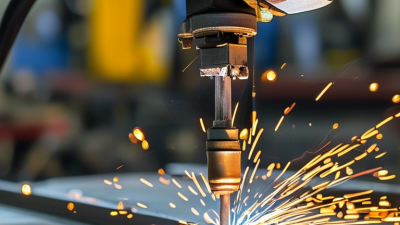
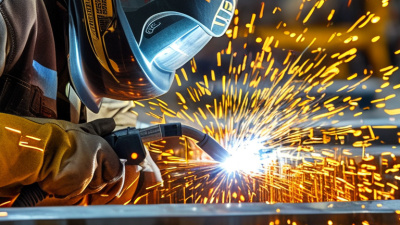
Robotic welding combines repeatable motion with controlled heat. Common processes include MIG/MAG, TIG, spot welding, and laser welding. MIG/MAG suits many structural assemblies and production lines. TIG offers cleaner, slower welds for precise joints. Spot welding remains practical for overlapping sheet metal. The correct process depends on material, thickness, joint design, and required finish.
Payload is not only the torch weight. It includes cables, sensors, dress packs, and mounting hardware. A robot near its limit may lose accuracy during fast movements. I have seen reliable cells fail because payload calculations ignored cable drag. That detail matters. Integration also requires communication between the robot, welding power source, fixtures, safety devices, and production software. Standard industrial networks and documented interfaces can simplify commissioning. However, standards do not remove every problem. Fixture tolerances, grounding, ventilation, and operator access still need physical testing.
Tips: Measure the complete tool package before selecting a robot. Leave payload capacity for future upgrades. Test torch angles on real joints, not only digital models. Keep welding parameters documented and traceable. Include safety-rated stops, guarding, and access controls from the beginning. A skilled integrator should validate cycle time, arc stability, weld quality, and maintenance access. Small trials often reveal large design mistakes.
Global Market Context: IFR Recorded 541,302 Robot Installations in 2023
Top Robotic Welding Machine Manufacturers Worldwide?
Global Market Context: IFR Recorded 541,302 Robot Installations in 2023
The International Federation of Robotics reported 541,302 industrial robot installations worldwide in 2023. This figure came from World Robotics 2024. It represented a 2% year-on-year decline, yet remained the third-highest annual total recorded. The global operational stock exceeded 4.2 million units, showing sustained factory investment.
Welding is only one application within this total. However, automotive, heavy equipment, fabricated metal, and construction machinery continue to require repeatable weld quality. Manufacturer evaluation should therefore examine more than installation volume. Check torch accessibility, arc stability, seam tracking, programming time, safety functions, and local technical support. A machine that looks impressive during a demonstration may struggle with reflective surfaces, tight joints, or frequent product changes. That distinction matters.
Tips: Request a sample weld using your actual material and joint design. Measure cycle time, spatter, rework, energy use, and operator training hours. Compare these results with the supplier’s written specifications. IFR data provides valuable market context, but it does not rank welding-machine manufacturers directly. That limitation deserves attention. Purchasing decisions based only on global robot totals can become misleading. Production experience, independent testing, and documented service performance should carry greater weight. Some factories also underestimate fixture accuracy. Small positioning errors can create large weld defects.
Ranking Criteria: Accuracy, Cycle Time, Uptime, Safety, and Service
The leading robotic welding machine manufacturers should be judged by measurable production results, not brochure claims.
The International Federation of Robotics reported 541,302 industrial robot installations worldwide in 2023. That expansion makes supplier comparison more demanding. Buyers should test positional accuracy across repeated welds, including after thermal expansion.
Cycle time must include loading, torch travel, welding, inspection, and changeovers. Shorter is not always better.
Uptime needs verified maintenance records, fault recovery times, and spare-parts availability. A system achieving 98% scheduled availability may outperform a faster cell that stops weekly.
The OEE framework separates availability, performance, and quality, preventing attractive but incomplete comparisons.
Data beats slogans.
Safety deserves equal weight. ISO 10218 and ISO/TS 15066 provide recognized guidance for robot integration, safeguarding, and collaborative operation.
Risk assessments should examine arc flash, fumes, pinch points, and unexpected restart conditions.
Service is measurable. Ask for technician response targets, remote diagnostic procedures, training hours, and local support coverage.
The IFR’s World Robotics reports confirm that robot adoption is accelerating, but adoption figures do not prove welding quality.
Factory trials remain essential.
One weakness is often overlooked: a supplier may show excellent laboratory accuracy, yet struggle with warped parts, dirty fixtures, or variable joint gaps. Evaluate those imperfections before signing a contract.
Leading Global OEMs: ABB, FANUC, KUKA, Yaskawa, and Kawasaki
Top Robotic Welding Machine Manufacturers Worldwide
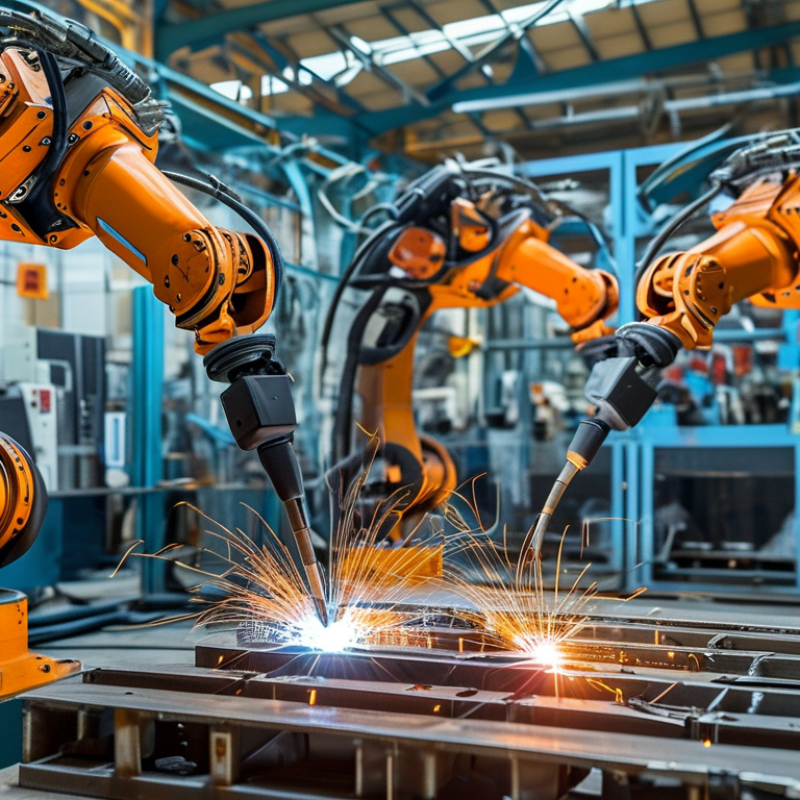
Leading global OEMs compete through reliability, motion control, software, and after-sales support. The strongest suppliers usually offer six-axis robots, positioners, welding power sources, and safety integration. Their systems handle automotive frames, steel cabinets, construction parts, and repeated production cycles. In factory trials, a robot must maintain torch angle, travel speed, and arc stability around real fixtures, not only during demonstrations.
Experience often reveals hidden differences. A machine may weld quickly but struggle with cable routing or difficult access points. Engineers should inspect duty cycles, payload ratings, programming tools, spare-part availability, and local service response. Global manufacturers from Europe and Asia often provide mature platforms, but their interfaces and training quality can vary. No supplier is perfect. A careful buyer records downtime, bead consistency, operator feedback, and maintenance hours before choosing.
Tips: Request sample welds using your actual material and joint design. Check heat distortion after cooling. Ask who supports the cell at night. Review safety documentation and integration responsibilities in writing. A lower purchase price can become expensive when fixtures, software changes, or replacement torches are excluded. Leave room for manual adjustment; production parts rarely match drawings perfectly.
Selection Guide: ROI, ISO 10218 Compliance, Training, and After-Sales Support
Top Robotic Welding Machine Manufacturers Worldwide?
Choosing a robotic welding machine should begin with measurable production needs, not glossy catalog claims. The International Federation of Robotics reported 541,302 industrial robots were installed worldwide in 2023. This growth increases supplier choice, but also complicates comparison. Estimate ROI from arc time, labor coverage, fixture costs, energy use, scrap, and maintenance. A realistic model should include programming delays and operator training. Payback periods often look attractive until these details are added.
Safety evidence deserves equal attention. Ask whether the complete cell supports ISO 10218 requirements, including risk assessment, safeguarding, emergency stops, validation, and integration controls. Compliance belongs to the full system, not only the robot arm. Request test records, technical files, and documented acceptance procedures. Training should cover welding parameters, robot recovery, fixture changes, and safe fault clearing. Short demonstrations are not enough. Operators need practice beside the actual cell.
Tips: Compare three suppliers using the same parts, cycle targets, and material thickness. Ask for an itemized five-year ownership estimate. Review response times, spare-parts availability, remote diagnosis, and local technicians. The World Robotics 2024 report also shows a global operational robot stock exceeding four million units, yet installed equipment still fails without disciplined service. A spreadsheet can mislead. Leave room for downtime, skill gaps, and imperfect first-year performance.
Top Robotic Welding Machine Manufacturers Worldwide? - Selection Guide: ROI, ISO 10218 Compliance, Training, and After-Sales Support
| Selection Area | Evaluation Dimension | Practical Data and Reference Range | What to Request from a Supplier | Recommended Assessment |
|---|---|---|---|---|
| Application Fit | Welding process compatibility | Confirm support for GMAW/MIG/MAG, FCAW, GTAW/TIG, or resistance welding according to the production process. Wire diameter, shielding gas, material grade, joint design, and weld-position requirements must be matched to the package. | Process specification, sample welds, qualified welding procedure, consumable list, and a recorded acceptance test on representative parts. | Mandatory fit Reject systems that cannot demonstrate the required process and material capability. |
| Application Fit | Robot payload and reach | Select payload based on torch, dress package, tooling, sensors, and cable-management loads. Common arc-welding robot configurations often use approximately 6–20 kg payload classes and roughly 1.4–2.0 m working reach, but the actual work envelope must be validated. | Robot model specification, reach diagram, payload calculation, interference study, and cycle-time simulation. | Allow margin Use engineering headroom rather than selecting only the minimum rated payload. |
| Productivity | Cycle time and utilization | Calculate total cycle time as arc time plus loading, unloading, positioning, wire changes, torch cleaning, inspection, and planned maintenance. Avoid using arc-on time alone. A utilization assumption should be based on the real product mix and shift pattern. | Time study, production simulation, takt-time calculation, and a clear definition of uptime, utilization, and first-pass yield. | Verify in trials Compare suppliers using identical parts, fixtures, weld lengths, and quality criteria. |
| Quality | Repeatability and weld consistency | Robot repeatability is only one part of weld quality. Consistency also depends on fixture accuracy, part variation, TCP calibration, wire delivery, torch condition, welding parameters, and seam tracking. | Repeatability specification, calibration procedure, weld-quality records, dimensional inspection results, and defect-rate data from comparable applications. | Quality system Evaluate the complete cell, not the robot arm alone. |
| Safety | ISO 10218 compliance | The robot and robotic application should be designed and integrated in accordance with the applicable edition of ISO 10218-1 and ISO 10218-2. The integrator remains responsible for application-level risk assessment and protective measures. | Declaration of conformity, risk assessment, safety-function validation, safety circuit documentation, safeguarding layout, and technical file information. | Non-negotiable Do not rely on a general compliance statement without application-specific documentation. |
| Safety | Functional safety and safeguarding | Assess fencing, interlocked gates, emergency stops, light curtains or scanners, safe speed, safe position, enabling devices, and restart prevention. ISO 13849-1 or IEC 62061 may be relevant depending on the safety-control design and jurisdiction. | Safety-performance-level or safety-integrity calculations, validation reports, electrical drawings, and a lockout/tagout procedure. | Audit required Have an independent qualified safety professional review the final cell. |
| Integration | Fixtures and positioners | Check fixture repeatability, clamping access, part-change time, positioner payload, rotational range, collision clearance, and whether one or more stations are required to keep the robot productive during loading. | Fixture drawings, positioner ratings, changeover study, datum strategy, clamping-pressure details, and accessibility review. | High impact Poor fixturing can eliminate the expected robot productivity advantage. |
| Integration | Sensors and seam tracking | For parts with dimensional variation, evaluate touch sensing, through-arc seam tracking, laser sensing, wire-touch sensing, or vision. Sensor selection should reflect joint type, surface condition, tolerance, and required correction speed. | Demonstration using actual joint tolerances, sensing accuracy data, recovery logic, and examples of fault detection. | Application dependent Specify sensing only where it solves a measured variation or quality risk. |
| Financial Case | Total cost of ownership | Include robot, welding power source, positioners, fixtures, safety equipment, extraction, programming, installation, training, spare parts, utilities, software, maintenance, consumables, and future modifications. | Itemized quotation, installation scope, excluded items, annual service pricing, consumables estimate, and a five-year ownership forecast. | Compare total cost Do not rank offers on equipment purchase price alone. |
| Financial Case | ROI and payback calculation | Simple payback period = Initial investment ÷ Annual net cash benefit. Annual net cash benefit should include labor savings, throughput gains, scrap and rework reduction, and recovered capacity, less maintenance, consumables, energy, programming, financing, and downtime costs. | Transparent assumptions, sensitivity analysis, baseline labor data, product mix, shift schedule, utilization assumption, and conservative, expected, and optimistic scenarios. | Use scenarios Require a model that remains viable under lower utilization and higher downtime. |
| Training | Operator and programmer training | A complete program should cover operation, teach pendant use, coordinate systems, program backup, basic troubleshooting, torch maintenance, fixture operation, safety procedures, and controlled recovery from faults. | Training syllabus, duration, class size, language options, competency tests, refresher schedule, and post-training support arrangements. | Require competency Training is complete only when personnel can safely recover and document common faults. |
| Training | Welding-process knowledge | Robot programmers and operators should understand welding parameters, shielding gas, wire-feed behavior, joint preparation, distortion, preheat requirements, weld symbols, and applicable quality criteria. | Welding engineer involvement, procedure qualification support, parameter-development method, and access to qualified welding personnel. | Cross-functional Combine automation training with welding-process training. |
| After-Sales | Technical support response | A useful service agreement defines support hours, remote-diagnostic method, severity levels, response targets, escalation path, field-service availability, and expected restoration time. Response targets are contractual commitments, not universal industry facts. | Service-level agreement, escalation contacts, installed-service coverage, remote-access procedure, and examples of support reports. | Contract it Separate response time from resolution time and define both clearly. |
| After-Sales | Spare parts and maintainability | Critical spares may include contact tips, liners, drive rolls, torch components, sensors, fuses, relays, filters, batteries, and safety components. Availability depends on the system configuration and regional service network. | Recommended spare-parts list, lead times, local inventory policy, preventive-maintenance schedule, part interchangeability, and obsolescence policy. | Protect uptime Stock low-cost wear parts and identify long-lead critical components before commissioning. |
| After-Sales | Warranty and lifecycle support | Review warranty duration, coverage exclusions, travel and labor terms, software-license conditions, upgrade policy, cybersecurity responsibilities, and support availability over the planned service life. | Warranty document, lifecycle statement, software-maintenance terms, revision policy, and end-of-support notification procedure. | Lifecycle check Prefer documented support continuity over informal assurances. |
| Sustainability | Energy, fume extraction, and consumables | Compare welding-power efficiency, standby modes, compressed-air requirements, extraction capacity, wire utilization, spatter, shielding-gas consumption, and consumable replacement frequency under the same production conditions. | Utility-load data, extraction design, consumable forecast, environmental requirements, and measurement method used for quoted figures. | Measure on site Use production trials or metered data rather than nominal estimates alone. |
| Supplier Selection | Weighted scoring model | A practical weighting can assign: application fit 20%, safety and compliance 20%, productivity and quality 20%, total cost and ROI 15%, training 10%, after-sales support 10%, and lifecycle sustainability 5%. | Scored technical response, pass/fail compliance checklist, reference installations, trial results, and documented commercial assumptions. | Use gates first Apply safety and application-fit pass/fail gates before calculating the weighted score. |
| Validation | Factory and site acceptance tests | Acceptance should cover cycle time, weld quality, dimensional accuracy, safety functions, changeover, fault recovery, documentation, training completion, and production-rate performance using agreed samples. | Signed FAT and SAT protocols, sample parts, defect limits, measurement equipment, punch list, and final handover criteria. | Define before order Payment milestones should be linked to objective acceptance results. |
Related Posts
-
Top 10 Spot Welder Machines for Global Buyers 2026?
-
2026 Best Welding Steel Techniques and Tips for Beginners?
-
2026 How to Choose the Right Gas MIG Welder for Your Needs?
-
What is Mig Welder Hire and Why Do You Need It?
-
10 Essential Tips for Choosing the Right MIG Welding Equipment?
-
Top 10 Benefits of Using a Resistance Spot Welder in Manufacturing Industries?
Contact us
Please fill out the enquiry form, and our dedicated team will promptly attend to your request