Why Is Distillery Filtration Important for Global Buyers?
For global buyers, distillery filtration is more than a final polishing step. It directly affects clarity, consistency, stability, and customer confidence. A bottle may look bright under warehouse lighting, yet develop haze after transport or temperature changes. That small defect can create costly returns.
In practical production, filtration must match the liquid, process, and target market. Operators may evaluate filter media, pore size, flow rate, temperature, and pressure. They also review cleaning procedures and replacement records. These details help buyers compare suppliers with greater confidence. A reliable filtration system should protect product quality without removing desirable aroma, texture, or character. That balance requires testing, not assumptions.
Results can vary.
Global purchasing teams also need clear documentation. Technical specifications, batch records, material certificates, and maintenance procedures support consistent communication across borders. They can also simplify quality reviews and responsible compliance checks. However, filtration is not a cure-all. Poor storage, unstable ingredients, or weak sanitation may still damage the finished product. This point is sometimes underestimated. Buyers should therefore assess the complete process, not only the filter housing.
A well-designed filtration program can reduce avoidable variation and strengthen long-term supplier relationships. It gives importers measurable quality information before products reach distribution centers. For that reason, understanding distillery filtration helps global buyers make more informed, practical, and defensible purchasing decisions.
What Distillery Filtration Is and How It Works
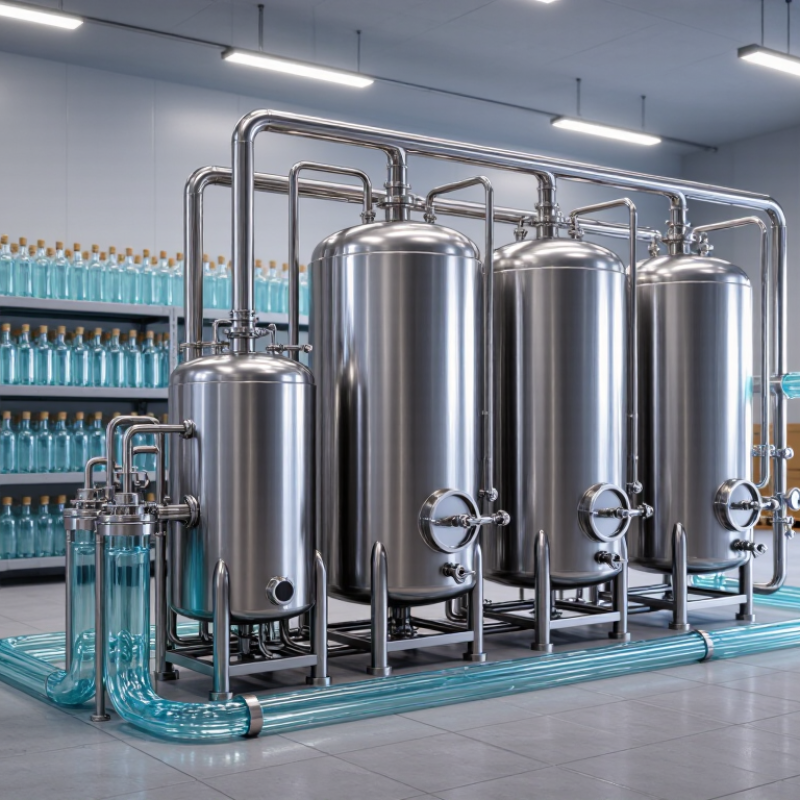
Distillery filtration is the controlled removal of unwanted particles, haze, and selected compounds from a distilled beverage. It normally follows distillation, when the liquid may still contain fine solids, oils, or crystals. The process does not create quality by itself. It protects clarity, consistency, and shelf appearance.
A typical system begins with a coarse filter that catches visible particles. Finer depth filters then trap smaller solids throughout a fibrous media layer. Some facilities use activated carbon to reduce certain odors or color compounds.
Membrane filters work differently. They force liquid through precise pores, retaining particles above the rated size. Pressure, flow rate, temperature, and filter condition all affect performance. Cold liquid may flow slowly. Excessive pressure can damage the media or cause channeling.
Global buyers should request pore ratings, material specifications, operating limits, and test records. Food-contact compliance must match the destination market. Operators should also check seals, connections, and cleaning procedures, not only the filter element.
In practical production, a clear sample can still hide process weakness. Laboratory checks such as turbidity, alcohol strength, and sensory review provide stronger evidence.
It is easy to over-filter. That deserves scrutiny. Removing too much may reduce desirable aroma or mouthfeel, while too little filtration can leave visible haze. A reliable specification therefore balances appearance, flavor, throughput, maintenance, and documented safety controls.
Why Filtration Matters for Spirit Quality and Safety
Filtration directly influences a spirit’s appearance, texture, and perceived cleanliness. Fine filtration can remove suspended particles, barrel debris, and unstable compounds that create haze. It also supports batch-to-batch consistency, which global buyers closely inspect. However, filtration cannot repair poor distillation or remove every hazardous compound. A filter is not a rescue device.
Safety requires evidence, not bright glass alone. The World Health Organization’s Global Status Report on Alcohol and Health and Treatment of Substance Use Disorders (2024) reported 2.6 million alcohol-attributable deaths in 2019. This finding reinforces the need for disciplined production controls. Filtration should work with validated distillation, water treatment, sanitation, and laboratory testing.
Buyers should request filter specifications, pore ratings, change records, and contaminant test results. Codex Alimentarius guidance also emphasizes hygienic processing and contamination control across the food chain. In practice, these documents may be incomplete. That deserves attention.
Tips: Compare samples before and after filtration under strong, neutral lighting. Check clarity after chilling, not only at room temperature. Ask whether activated carbon is used, because it can reduce unwanted aromas and desirable character. Review alcohol strength, sensory notes, and laboratory results together. Do not accept “crystal clear” as proof of safety. A clear spirit can still require further verification.
Key Filtration Methods Used in Modern Distilleries
For global buyers, filtration is a quality-control decision, not merely a polishing step. IWSR’s 2024 No- and Low-Alcohol Strategic Study forecasts about 7% annual volume growth through 2028. This growth increases demand for bright, stable, and consistent products. Modern distilleries therefore combine several methods, depending on spirit type and export conditions.
Depth filtration removes visible particles, yeast residues, and processing solids. Cartridge filters then provide tighter control, often between 1 and 5 microns. Membrane filtration can reach submicron levels, but excessive pressure may reduce aroma. Chill filtration removes fatty compounds that create haze at low temperatures. It improves visual stability, yet some buyers believe it can soften texture and character. activated carbon filtration is useful for reducing color and selected unwanted compounds. It requires careful monitoring because it may also remove desirable flavor notes.
Quality teams should check filter media certificates, pore-size validation, pressure records, and cleaning procedures. The FDA Food Code 2022 emphasizes equipment sanitation and contamination control in food operations. ISO 22000 also requires documented hazard-control systems. These standards do not replace sensory testing. They support it.
No method is perfect. A crystal-clear spirit can still taste flat. A lightly hazy spirit may retain more character. Global buyers should request retained samples, cold-temperature trials, and batch records before approving filtration specifications.
Why Is Distillery Filtration Important for Global Buyers? — Key Filtration Methods Used in Modern Distilleries
| Filtration Method | Typical Retention Range | Main Purpose in a Distillery | Common Applications | Key Benefits | Important Buying Considerations |
|---|---|---|---|---|---|
| Coarse Screening | Approximately 100–1,000 µm | Removes large particles before pumping, fermentation transfer, distillation, or fine filtration. | Wash, mash, botanical infusions, fruit solids, spent grain particles, and process-water protection. | Low pressure drop, simple operation, and effective protection for pumps and downstream filters. | Screen opening, open-area percentage, cleanability, corrosion resistance, and compatibility with the feed solids. |
| Depth Filtration | Typically about 1–20 µm, depending on media grade | Captures suspended solids throughout the thickness of the filter media rather than only at the surface. | Clarification of distilled spirits, liqueurs, botanical extracts, and products containing moderate particulate loads. | High dirt-holding capacity and good tolerance for variable particle concentrations. | Media material, extractables, pressure rating, flow capacity, disposal requirements, and food-contact compliance. |
| Cartridge Microfiltration | Common nominal or absolute ratings from 0.2–5 µm | Removes fine suspended particles and improves visual clarity before filling or bottling. | Vodka, gin, rum, whisky, neutral spirits, liqueurs, and final polishing stages. | Consistent filtration performance, compact equipment footprint, and easy grade selection. | Absolute versus nominal rating, cartridge length, flow rate, differential-pressure limit, and sanitation method. |
| Membrane Microfiltration | Approximately 0.1–1.2 µm | Provides tighter removal of fine particles and, with suitable membrane ratings, can reduce microbial load. | Final clarification, water treatment, low-alcohol beverages, and products requiring controlled particulate reduction. | Highly repeatable separation and the ability to monitor transmembrane pressure and flux. | Membrane material, fouling tendency, cleaning chemicals, operating pressure, product loss, and validation requirements. |
| Ultrafiltration | Approximately 0.01–0.1 µm; often specified by molecular-weight cut-off | Separates very small colloids, macromolecules, and some haze-forming components. | Specialty beverage processing, process-water treatment, and selected recovery or concentration steps. | Fine separation with lower thermal impact than many evaporation-based processes. | Flux decline, product retention, concentration polarization, cleaning procedures, and whether aroma compounds are affected. |
| Chill Filtration | Process-dependent; commonly performed at approximately 0–5 °C | Precipitates and removes compounds that may create haze when the spirit is cooled after bottling or during storage. | Whisky and other aged or congeners-rich spirits that may show temperature-related haze. | Improves cold stability and visual consistency across international shipping and storage conditions. | Filtration temperature, spirit strength, residence time, haze specification, throughput, and possible flavor or texture impact. |
| Activated Carbon Treatment | Adsorption process; no single pore-size rating defines performance | Adsorbs selected color bodies, odor compounds, and trace organic constituents. | Neutral spirits, vodka-style products, water treatment, and controlled color or aroma adjustment. | Can reduce unwanted color and certain organics without relying solely on particle-size separation. | Carbon type, iodine number, contact time, bed depth, pressure drop, alcohol compatibility, and potential aroma stripping. |
| Sterile-Grade Membrane Filtration | Typically 0.2 µm for validated liquid sterilizing filtration | Reduces viable microorganisms immediately before hygienic filling when the product and process require it. | Low-alcohol beverages, flavored spirits, cream liqueurs, and other products with greater microbiological sensitivity. | Supports microbiological control without heat treatment that could alter delicate flavors. | Validation of bacterial retention, integrity testing, aseptic handling, prefiltration, and compatibility with alcohol content. |
| Polishing or Final Security Filtration | Often approximately 0.45–1.0 µm, selected according to product risk | Removes residual particles after blending, proofing, storage, or transport between process stages. | Final filtration before bottling, export shipments, and products requiring a bright appearance. | Helps maintain batch-to-batch appearance and protects filling equipment from fine debris. | Required flow rate, filter life, pressure monitoring, product hold-up volume, and packaging-line integration. |
Note: Retention ranges and operating temperatures are typical industry ranges rather than universal specifications. Final selection should be confirmed through product trials, compatibility testing, and the applicable food-contact and microbiological requirements of the destination market.
How Filtration Supports Global Buyers’ Quality Requirements
Why Is Distillery Filtration Important for Global Buyers?
Global buyers need more than a clear distilled beverage. They require consistent quality across shipments, climates, and production dates. Filtration helps remove visible particles, haze-forming compounds, and unwanted residues before packaging. It can also support a cleaner appearance and a more stable sensory profile.
Quality requirements vary between markets. Some buyers request precise turbidity limits, documented filter grades, and batch-level test records. Others focus on aroma, mouthfeel, color, or shelf stability. A reliable distillery records pressure, flow rate, temperature, and filter changes during production. These details help buyers trace quality decisions instead of relying on verbal assurances. Independent laboratory testing can verify clarity, alcohol strength, and relevant microbiological controls.
Filtration is not a cure for poor distillation. That matters. Excessive filtration may reduce desirable aroma compounds or make the product feel thin. Experienced producers therefore validate each filtration stage through sensory panels and laboratory results. Small pilot trials are useful before full-scale production, especially when a buyer changes packaging or shipping conditions. Even then, results can differ between batches. That limitation deserves honest communication. Clear specifications, retained samples, and corrective-action records give global buyers practical confidence when evaluating long-term supply.
Factors to Compare When Choosing Distillery Filtration Equipment
When global buyers assess distillery filtration equipment, they should compare process needs before comparing prices. Filtration affects clarity, aroma retention, yield, and production consistency. A clear spirit can still lose character when the filter captures desirable flavor compounds. That trade-off deserves practical testing, not a sales promise. Ask suppliers for pilot data using a similar spirit, alcohol strength, and temperature. Small trials reveal pressure rise, flow stability, and final sensory changes.
Pore size is only one factor. Buyers should examine filter-media material, surface area, and dirt-holding capacity. The equipment must tolerate alcohol, cleaning chemicals, temperature shifts, and repeated sanitation cycles. Check seals and wetted parts carefully. Compatibility protects both product quality and worker safety. Flow rate should match the bottling line, storage tanks, and expected seasonal demand. Oversized systems waste capital, while undersized units create delays.
Reliable monitoring matters. Pressure gauges, sampling ports, and clear maintenance records help operators identify fouling early. Confirm cleaning procedures, replacement intervals, documentation, and technician training. Ask whether local service support and spare parts are realistically available in the target market. Certifications should fit the destination country’s food-contact and electrical requirements. Total cost includes energy, labor, consumables, downtime, and disposal. We sometimes overvalue impressive specifications. A quieter question is better: can the team operate this system correctly every day? That answer may require another trial.
Why Is Distillery Filtration Important for Global Buyers?
Factors to Compare When Choosing Distillery Filtration Equipment
Fine filtration helps distilleries improve clarity, reduce visible particles, and protect product consistency during international distribution. The chart shows representative engineering ranges commonly used for industrial filtration selection. Lower micron ratings indicate finer particle removal, while actual performance depends on liquid viscosity, solids loading, flow rate, pressure drop, cleaning procedures, and sanitary design.
Typical ranges shown: depth filtration 1–100 µm, bag filtration 1–25 µm, cartridge filtration 0.2–10 µm, and membrane filtration 0.01–0.2 µm. Confirm final ratings and certification requirements with the equipment supplier.
Article Source:
Contact us
Please fill out the enquiry form, and our dedicated team will promptly attend to your request