What Is the Water Recycling Industry?
Water Recycling Industry describes the systems, companies, and professionals that recover water for safe and useful purposes. It includes municipal wastewater treatment, industrial process-water recovery, agricultural reuse, and rainwater management. Instead of sending every used drop away, these systems remove contaminants and return water to a controlled cycle.
The work begins with collection and careful testing. Screens remove plastics and debris. Biological treatment reduces organic pollution. Membranes, filtration, ultraviolet light, or advanced oxidation may provide additional protection. Engineers then match the treated water with its intended use, such as irrigation, cooling towers, toilet flushing, or industrial production. Drinking-water applications require much stricter treatment and monitoring. Reliable programs also track salinity, pathogens, chemicals, energy use, and maintenance records.
The industry is growing because freshwater supplies face pressure from population growth, drought, and climate variability. It can reduce demand on rivers and aquifers, but it is not a perfect solution. Treatment consumes energy, creates residual waste, and requires skilled operation. Poorly designed systems can create health or environmental risks. That reality deserves honest attention. Standards, permits, laboratory testing, and transparent public reporting help build trust. However, technology alone cannot guarantee success. Local water quality, infrastructure, cost, and community acceptance all matter. A practical understanding of the Water Recycling Industry therefore requires both technical knowledge and real-world judgment. Some projects succeed with advanced equipment. Others need simpler maintenance and better training first. The strongest approach is measured, evidence-based, and open to improvement.
Definition and Scope of the Water Recycling Industry
The water recycling industry turns used water into a controlled resource. It includes treatment, testing, storage, distribution, and reuse. The term is not perfectly uniform. Some projects recycle water within factories. Others produce water for farms, buildings, or drinking supplies. In each case, the process reduces demand for freshwater and limits wastewater discharge.
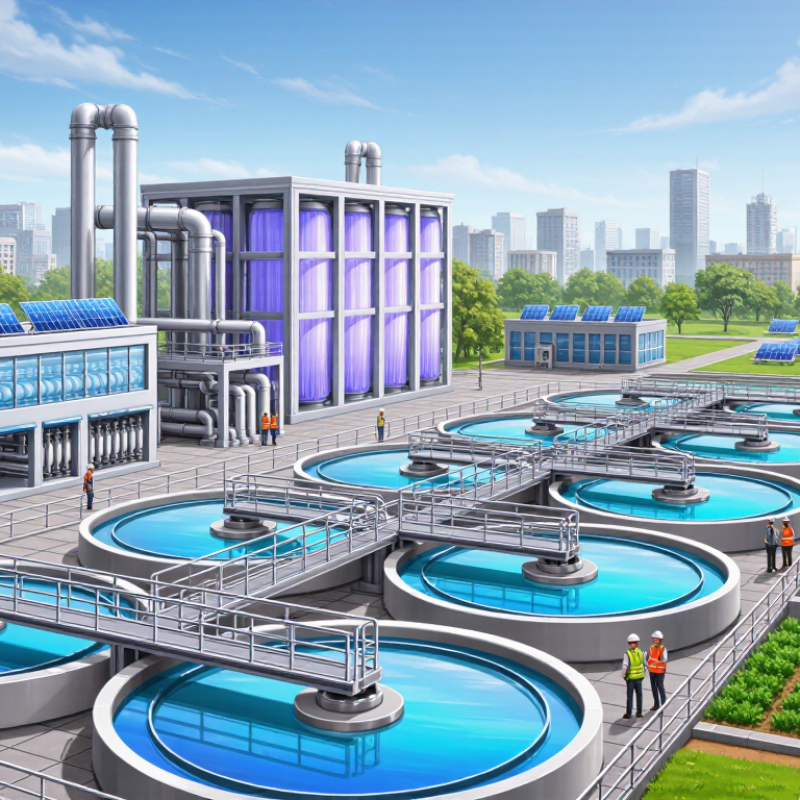
Its scope covers municipal plants, industrial facilities, agricultural systems, and decentralized treatment units. Engineers may combine screening, biological treatment, membrane filtration, and disinfection. Operators monitor turbidity, nutrients, salts, pathogens, and chemical residues. These measurements support decisions about safe end uses. Recycled water might cool equipment, irrigate crops, flush toilets, or recharge underground supplies.
Policy and public health shape the industry as much as technology does. Permits define treatment targets, monitoring schedules, and reporting duties. Skilled operators also inspect pumps, sensors, tanks, and pipes daily. A small calibration error can affect an entire treatment line. Costs remain difficult to compare because energy, maintenance, water quality, and local infrastructure vary widely. The industry also faces public hesitation, even when testing results are strong. That concern should not be dismissed. Water recycling is practical, but no single design fits every community or facility.
Sources and Types of Recyclable Water
What Is the Water Recycling Industry? Sources and Types of Recyclable Water
The water recycling industry converts used water into a controlled resource. Its main sources include municipal sewage, industrial process water, greywater, stormwater, and agricultural drainage. Greywater comes from showers, sinks, and laundry, while blackwater contains toilet waste and requires stronger treatment. Industrial water may contain oils, salts, metals, or complex chemicals. It is never automatically reusable.
The numbers show why these sources matter. UNESCO’s United Nations World Water Development Report 2024 states that agriculture uses about 70% of global freshwater withdrawals. Industry uses roughly 20%. Domestic use accounts for about 10%. UN-Water’s 2024 SDG 6 Synthesis Report estimates that only 56% of domestic wastewater was safely treated worldwide in 2022. Much remains exposed.
Treatment choices depend on water quality and its next use. Screening, biological treatment, membrane filtration, activated carbon, and disinfection may work together. Potable reuse requires multiple barriers and continuous monitoring, consistent with World Health Organization guidance. Stormwater can carry fuel residues, microbes, and heavy metals. Agricultural drainage may contain nutrients and pesticides. The category “recyclable” is therefore incomplete. A source can be technically recoverable but economically impractical. That uncomfortable gap deserves more attention.
What Is the Water Recycling Industry?
Water recycling collects, treats, and reuses water from different sources instead of discharging it as waste. Common recyclable sources include municipal wastewater, industrial process water, stormwater, and agricultural drainage.
Global freshwater withdrawals by source sector: Agriculture accounts for the largest share, followed by industrial and municipal uses. These sectors generate different types of recoverable water that can be treated for irrigation, industrial processes, environmental restoration, or non-potable urban applications.
Data reference: Approximate global freshwater withdrawal shares—agriculture 69%, industry 19%, and municipal use 12%—based on widely cited FAO AQUASTAT global estimates.
Water Recycling Treatment and Reuse Processes
What Is the Water Recycling Industry?
Water recycling treats used water for a new, controlled purpose. The process can support irrigation, industrial cooling, groundwater recharge, or drinking water supplies. Treatment usually includes screening, biological processing, membrane filtration, disinfection, and continuous monitoring. Each stage targets a different risk. A clear-looking stream is not automatically safe.
Recycled water can reduce pressure on rivers and aquifers, especially near dense cities. The U.S. Environmental Protection Agency identifies non-potable and potable reuse as established management approaches. Potable reuse requires multiple barriers, including advanced oxidation, activated carbon, reverse osmosis, and independent verification.
Small details matter. Operators test conductivity, turbidity, pathogens, nutrients, and emerging contaminants. Sensors can detect changes before water reaches a storage tank.
Energy use remains a concern, particularly for high-pressure membranes and advanced oxidation. Concentrated brine also needs careful handling. Treatment is powerful, but not perfect.
Public confidence requires evidence, not slogans. The World Health Organization recommends health-based targets, source control, and risk management for safe water reuse. Some systems still face uncertain contaminant behavior and uneven monitoring capacity. Engineers must review operating data, maintenance records, and local water quality together. Reuse works best when treatment design matches the final application.
Key Technologies and Industry Applications
What Is the Water Recycling Industry?
Key Technologies and Industry Applications
The water recycling industry treats used water for safe, practical reuse. Its systems combine physical, biological, and chemical processes. Membrane bioreactors remove organic matter and suspended solids in compact treatment units. Ultrafiltration can reduce fine particles, bacteria, and some viruses. Reverse osmosis removes dissolved salts and many trace contaminants. It also consumes significant energy.
Ultraviolet treatment provides a final disinfection barrier without adding a lasting chemical residue. Ozone can break down difficult organic compounds, but operators must control by-products carefully.
Online sensors measure turbidity, conductivity, pressure, and microbial indicators. Reliable systems need regular calibration, sampling, and documented maintenance. A clean control panel does not guarantee safe water.
Applications vary by water quality and local risk. Factories may reuse treated water for cooling towers, washing, or process operations. Farms can apply reclaimed water through drip irrigation when nutrient and pathogen limits are suitable. Buildings may reuse it for toilet flushing and landscape irrigation. Municipal facilities often produce non-potable water for parks and street cleaning.
Treatment design is rarely perfect. Membranes foul, sensors drift, and electricity costs can change project decisions. Operators should test the source water before selecting equipment. They should also plan for drought, power interruptions, sludge handling, and public communication. In practice, careful monitoring often matters as much as advanced technology.
Economic, Environmental, and Regulatory Considerations
What Is the Water Recycling Industry?
Economic, Environmental, and Regulatory Considerations
The water recycling industry treats used water for another practical purpose. Sources may include municipal wastewater, factory discharge, or greywater from buildings. Treatment can involve filtration, biological processing, disinfection, and membrane systems. Recycled water may serve cooling towers, irrigation networks, industrial cleaning, or toilet flushing. Each use requires a different quality standard.
Economically, recycling can reduce freshwater purchases and wastewater discharge fees. It also creates demand for engineers, laboratory technicians, maintenance workers, and monitoring services. However, treatment equipment requires capital, electricity, chemicals, and skilled operation. A recycled-water project may save water but consume more energy than expected. The economics are not always elegant. Careful measurement matters.
Environmental benefits depend on the entire system. Reuse can protect rivers, lower groundwater extraction, and reduce pressure during droughts. Yet poorly managed systems may concentrate salts, generate sludge, or transfer pollutants into soil. Operators need regular sampling, reliable sensors, and clear records. Regulatory requirements vary by location and intended use. Permits may specify treatment levels, storage conditions, worker protections, testing frequency, and public reporting. A project can meet technical targets and still face community concerns about safety or taste. Those concerns deserve evidence, not dismissal. The industry continues to improve, but its promises should be tested against real operating data.
| Dimension | Indicator | Verified Data or Regulatory Position | Industry Relevance | Reference |
|---|---|---|---|---|
| Industry Definition | Core activity | Water recycling treats municipal, industrial, agricultural, or stormwater flows so that the resulting water can be used again for beneficial purposes. | The industry includes collection, treatment, advanced purification, storage, monitoring, distribution, and operation of reuse systems. | U.S. Environmental Protection Agency, Guidelines for Water Reuse |
| Global Water Pressure | Freshwater withdrawals by agriculture | Approximately 70% of global freshwater withdrawals are used by agriculture. | Reclaimed water can supplement irrigation supplies and reduce pressure on rivers, reservoirs, and groundwater sources. | FAO AQUASTAT and UN-Water global water-use assessments |
| Environmental Condition | Domestic wastewater safely treated | About 56% of domestic wastewater was safely treated globally in 2022. | The remaining treatment gap represents both an environmental risk and a potential source of recoverable water, nutrients, and energy. | UN-Water, SDG 6.3.1 progress reporting |
| Environmental Benefit | Reduction of freshwater abstraction | Reusing treated water can replace part of the demand for potable or natural freshwater, although the actual reduction depends on treatment quality, local demand, and system losses. | Benefits are usually greatest in water-stressed regions and for non-potable uses such as irrigation, industrial cooling, and urban landscaping. | UNESCO World Water Development Reports; U.S. EPA water-reuse guidance |
| Environmental Risk | Residual contaminants | Recycled water may contain trace pharmaceuticals, personal-care chemicals, nutrients, salts, pathogens, or industrial contaminants if treatment and source control are insufficient. | Risk management requires treatment barriers, source control, monitoring, operational controls, and a use-specific water-quality plan. | World Health Organization, Guidelines for the Safe Use of Wastewater, Excreta and Greywater |
| Energy Consideration | Treatment-energy relationship | Conventional biological treatment generally requires less energy than advanced membrane treatment and potable reuse, while energy demand increases with salinity, contaminant load, and required water quality. | Energy efficiency, renewable electricity, process optimization, and recovery of biogas can materially affect operating costs and emissions. | International Water Association and U.S. EPA water-reuse technical guidance |
| Economic Model | Main cost categories | Typical cost categories include source-water collection, treatment equipment, energy, chemicals, laboratory testing, permits, storage, pumping, distribution, maintenance, and replacement of assets. | Reuse projects must be evaluated as complete systems; advanced treatment alone does not represent total project cost. | U.S. EPA, Guidelines for Water Reuse |
| Economic Driver | Value of a reliable alternative supply | The economic value of recycled water increases when freshwater is scarce, drought restrictions are frequent, or the cost of developing new supplies is high. | Financial feasibility depends on avoided water-supply costs, avoided wastewater-discharge costs, user demand, infrastructure distance, and regulatory requirements. | World Bank and OECD water-economics assessments |
| Potential Revenue | Water and resource recovery | Potential revenue or avoided costs can come from reclaimed-water sales, wastewater-service fees, nutrient recovery, biogas production, reduced discharge fees, and avoided freshwater purchases. | Projects with several revenue streams are generally less dependent on a single water tariff or end-use market. | International Water Association resource-recovery frameworks |
| EU Regulation | Agricultural irrigation | Regulation (EU) 2020/741 establishes minimum requirements for the safe reuse of urban wastewater for agricultural irrigation and has applied since 26 June 2023. | The regulation uses water-quality classes, monitoring requirements, risk management, and permits to control public-health and environmental risks. | European Union, Regulation (EU) 2020/741 |
| EU Reuse Quality | E. coli limits for agricultural irrigation classes | For the EU agricultural-reuse framework, the maximum E. coli values are generally 10, 100, 1,000, or 10,000 colony-forming units per 100 mL, depending on the assigned quality class and crop exposure. | Required quality becomes stricter when workers, consumers, or edible crop portions have greater exposure to reclaimed water. | European Union, Regulation (EU) 2020/741, Annex I |
| United States Regulation | Regulatory structure | Water-reuse requirements are primarily established by states, territories, tribes, and local authorities; the federal government provides guidance rather than one nationwide reuse standard. | Project developers must verify requirements for the intended end use, including treatment performance, monitoring, permits, reporting, and cross-connection control. | U.S. Environmental Protection Agency, Water Reuse Action Plan and Guidelines for Water Reuse |
| Potable Reuse | Public-health safeguards | Potable reuse requires multiple treatment barriers, validated monitoring, strict operational controls, and compliance with drinking-water standards; no single treatment step is considered sufficient by itself. | Public acceptance and regulator confidence depend on transparent risk assessment, independent oversight, reliable operation, and clear communication. | World Health Organization and U.S. EPA potable-reuse frameworks |
| Infrastructure | Centralized versus decentralized systems | Centralized systems treat large flows at regional facilities, while decentralized systems serve individual buildings, districts, or smaller communities. | Decentralized systems can reduce distribution distances, but they require strong local management, maintenance, monitoring, and safeguards against cross-connections. | U.S. EPA and UN-Habitat wastewater-management guidance |
| Circular Economy | Recovered resources | Wastewater can provide three resource streams: water, recoverable nutrients such as nitrogen and phosphorus, and energy through organic-matter conversion. | Resource recovery can reduce disposal needs and improve the environmental and economic performance of treatment facilities. | UN-Water and International Water Association resource-recovery guidance |
| Social Acceptance | Trust and adoption | Acceptance is influenced by perceived health risk, the intended use, trust in institutions, transparency of monitoring data, and public participation. | Communication and community engagement are operational requirements for many reuse projects, not merely marketing activities. | World Health Organization water-safety and risk-communication guidance |
| Key Performance Measures | Recommended project metrics | Useful indicators include reclaimed-water volume, percentage of demand served, energy intensity, treatment reliability, compliance rate, greenhouse-gas emissions, freshwater displacement, and cost per cubic meter. | A balanced scorecard prevents projects from being judged only by production volume or treatment cost. | International Water Association and U.S. EPA performance-management guidance |
Note: Water-quality limits, permits, treatment requirements, and allowable end uses vary by jurisdiction and application. Project-specific engineering, health-risk assessment, and regulatory review are required before implementation.
Article Source:
Contact us
Please fill out the enquiry form, and our dedicated team will promptly attend to your request