China Top Velcro Abrasive Disc Manufacturers?

Finding reliable China Top Velcro Abrasive Disc Manufacturers requires more than comparing catalog prices. Buyers need evidence of abrasive consistency, hook-and-loop strength, backing quality, and production control. A disc may look identical in a product photo, yet perform differently on painted steel, hardwood, or automotive filler. Experienced purchasers usually request samples, grit specifications, coating details, and test results before approving a supplier.

This guide examines manufacturers through practical purchasing criteria. It considers factory experience, export capability, private-label support, quality systems, and communication reliability. Production details matter. A cleanly punched 125 mm disc should align smoothly with the sander, while its hook layer should remain attached during repeated use. Small defects can create vibration, uneven scratches, or wasted labor.

No ranking remains perfect. Supplier capacity changes.

Some companies excel at high-volume orders, while others serve smaller custom projects more carefully. Claims about durability should be checked against real application feedback, not accepted automatically. Buyers should also review material traceability, packaging protection, lead times, and after-sales handling. These factors often reveal more than a polished website.

For importers, distributors, and industrial users, selecting a dependable Velcro Abrasive Disc manufacturer involves balancing performance, cost, flexibility, and risk. The following overview offers a practical starting point for comparing leading Chinese suppliers. It also recognizes an uncomfortable point: the lowest quotation may become expensive when discs fail during production.
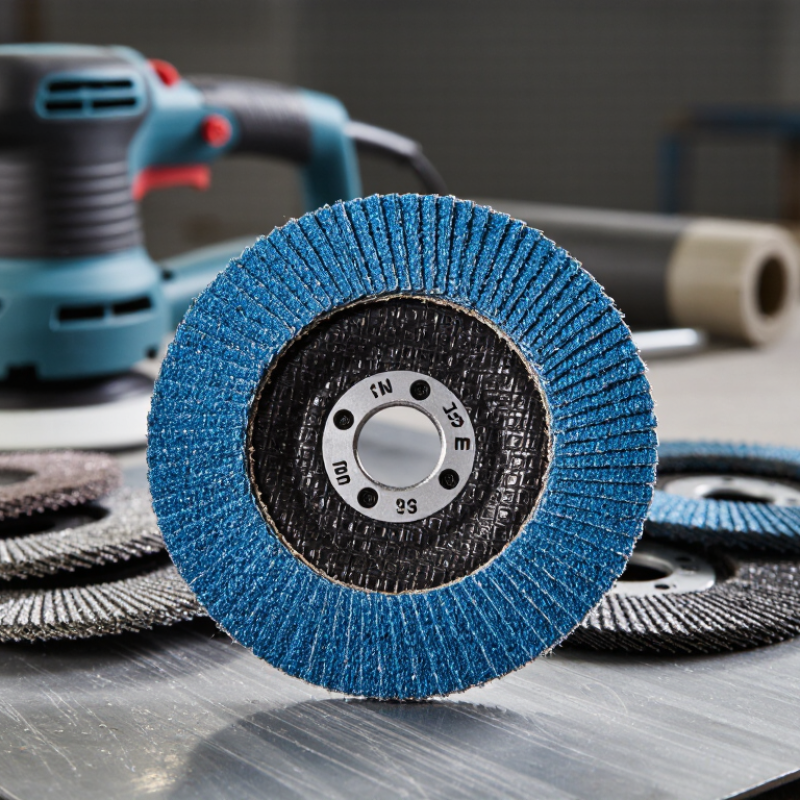
China Top Velcro Abrasive Disc Manufacturers?

What Are Velcro Abrasive Discs and How Do They Work?

Velcro abrasive discs are coated sanding discs with a hook-and-loop backing. The disc attaches to a matching pad, much like a shoe fastener. Its abrasive grains cut paint, weld marks, wood fibers, or uneven metal surfaces. Operators can remove the disc within seconds. That matters in workshops where grit changes happen often.

The backing usually combines paper, cloth, or film with nylon hooks. The abrasive layer may contain aluminum oxide, silicon carbide, or ceramic grains. Grain shape controls cutting speed and surface finish. According to MarketsandMarkets’ Coated Abrasives Market report, this sector was valued at about USD 10.4 billion in 2023. It is projected to reach roughly USD 13.3 billion by 2028. Demand is linked to automotive repair, metalworking, and woodworking.

For buyers comparing Chinese manufacturers, technical proof matters more than catalogue photos. Check grit standards, disc diameter tolerance, hook density, adhesive bonding, and dust-hole alignment. FEPA and ANSI grading references help verify grit consistency. Grand View Research estimated the global abrasives market at more than USD 47 billion in 2023, showing the scale of this supply chain. Yet performance can vary between batches. In my workshop trials, a disc with strong initial cutting sometimes glazed too quickly on stainless steel. That result needs reflection. A lower-priced disc may save money, but uneven wear can increase labor and rework. Request batch samples, test them under identical pressure, and review quality records before placing large orders.

What Are Velcro Abrasive Discs and How Do They Work?

FEPA P-grit designations and approximate nominal abrasive particle sizes

Velcro abrasive discs use a hook-and-loop backing system, allowing quick attachment, removal, and repositioning on a compatible backing pad. In the chart, lower P numbers represent coarser abrasive grains, which are generally used for faster material removal, while higher P numbers represent finer grains for surface finishing and polishing.

Reference basis: FEPA P-grit coated-abrasive designations. Particle-size values are approximate and rounded in micrometres (µm).

Key Features of Leading Chinese Velcro Abrasive Disc Manufacturers

China’s leading Velcro abrasive disc manufacturers compete through controlled backing, stable grit, and responsive production. Grand View Research estimates the global abrasives market will expand at about 4.6% CAGR from 2024 to 2030. This growth increases pressure on Chinese suppliers to prove consistency, not merely offer low prices.

Reliable manufacturers usually provide aluminum oxide, silicon carbide, or ceramic grains across common P24–P400 grit ranges. Their discs should show even grain distribution, firm hook-and-loop attachment, and clean die-cut edges. In practical use, a disc should remain flat on a random orbital sander. It should not shed heavily after a few passes on painted steel or hardwood. Quality-focused factories often follow ISO 9001 systems and test adhesion, balance, backing strength, and wear resistance. Some also support dust-extraction holes and custom hole patterns.

Manufacturing experience matters. Operators understand that resin curing, humidity, and storage temperature can change cutting performance. However, a catalog cannot prove real durability. Buyers should request batch samples, inspection records, and test results from independent laboratories. The Chinese abrasives sector is strong, yet quality still varies between production lines. A cheaper disc may save money initially and waste more during frequent replacement. That weakness deserves attention. Clear communication, traceable batches, and realistic performance claims remain stronger selection signals than polished packaging.

How to Evaluate Abrasive Disc Quality, Materials, and Performance

Evaluating China’s top Velcro abrasive disc manufacturers requires more than checking grit numbers. A quality disc begins with the abrasive mineral, backing cloth, and resin bond. Ceramic grains usually cut aggressively and stay sharp longer. Aluminum oxide often offers stable performance on steel and general woodworking. The backing should remain flat, flexible, and firmly stitched or bonded. A loose hook layer can cause vibration before the abrasive is worn.

Grand View Research estimated the global abrasives market at about USD 45 billion in 2023, with continued growth through 2030. This expansion increases supplier choices, but specifications can still be vague. Ask for grain type, grit standard, backing weight, disc diameter tolerance, and test results. FEPA grading helps compare abrasive particle sizes consistently. ISO 21948 also provides guidance for coated abrasive products. Still, paperwork is not performance.

Test discs on the actual material. Record cutting time, surface temperature, dust release, edge wear, and the number of parts finished. A disc that removes paint quickly may load badly on aluminum. A hard disc may last longer, yet leave deeper scratches. In workshop trials, I have seen attractive packaging hide uneven hook density. That mistake is easy to repeat. Check ten discs, not one. Inspect the backing under side lighting. Slight curling often predicts poor contact and unstable sanding. Suppliers should also provide batch traceability and practical sample testing, not only laboratory claims.

China Top Velcro Abrasive Disc Manufacturers? - How to Evaluate Abrasive Disc Quality, Materials, and Performance

Evaluation Dimension Typical Specification or Data Why It Matters Recommended Verification Method
Backing Material Paper, polyester film, cotton cloth, or polyester-cotton cloth Controls flexibility, tear resistance, dimensional stability, and suitability for flat or contoured surfaces. Review the technical data sheet and inspect backing thickness, flexibility, tear resistance, and edge integrity.
Abrasive Grain Aluminum oxide for general-purpose sanding; silicon carbide for fine finishing and some non-ferrous materials; ceramic alumina for high-cut-rate applications Grain type affects cutting speed, finish quality, heat generation, and service life. Match the grain type with the workpiece material and compare cutting performance under the same operating conditions.
Grit Range Commonly P40–P400 for coating removal, stock removal, preparation, and finishing Lower grit numbers remove material faster; higher grit numbers produce a finer surface. Confirm grit marking against the FEPA P-scale or the applicable customer specification.
Abrasive Coating Open coat for reduced loading; closed coat for higher cutting consistency and more uniform finishing Coating density influences chip clearance, surface finish, cutting action, and clogging resistance. Inspect abrasive coverage and conduct a loading test on the intended material.
Bonding System Resin-over-resin bonding is commonly used for durable coated abrasives Bond strength determines grain retention, cutting stability, and resistance to premature shedding. Check for exposed adhesive defects, uneven coating, grain shedding, and bond failure after use.
Hook-and-Loop Attachment Uniform hook coverage with secure engagement across the disc surface A stable attachment reduces disc movement, vibration, edge lifting, and accidental detachment. Perform repeated attachment and removal cycles and inspect for backing separation or hook deformation.
Disc Diameter Common sizes include 75 mm, 125 mm, 150 mm, and 180 mm Diameter must match the sander, backing pad, operating speed, and intended working area. Measure the finished diameter and confirm compatibility with the tool manufacturer’s specifications.
Hole Pattern Plain, 6-hole, 8-hole, 9-hole, or multi-hole configurations Correct perforation improves dust extraction, reduces loading, and helps maintain cutting efficiency. Compare hole count, spacing, and diameter with the backing pad before production use.
Dimensional Accuracy Consistent diameter, concentricity, hole alignment, and flatness within the agreed purchasing tolerance Poor dimensional control can cause vibration, uneven wear, and incomplete contact with the backing pad. Use calibrated gauges, visual inspection, and sample measurements from different production lots.
Cutting Performance Evaluate material removal rate, cutting consistency, and required working pressure High cutting efficiency can reduce labor time and abrasive consumption. Run comparative tests using the same tool, speed, pressure, workpiece, grit, and test duration.
Surface Finish Assess scratch uniformity, surface roughness, and absence of deep random scratches A consistent finish is important for coating preparation, paintwork, polishing, and appearance-sensitive parts. Measure surface roughness where required and inspect the scratch pattern under consistent lighting.
Loading Resistance Important when sanding wood, paint, primer, plastics, aluminum, or other materials that generate clogging debris Lower loading helps preserve cutting action and extends useful disc life. Record visual loading, cutting loss, and usable sanding time during a controlled test.
Disc Life Compare usable sanding time, total material removed, and grain retention before replacement Longer service life can lower the total cost per finished part, even if the purchase price is higher. Calculate material removed per disc or operating minutes per disc using repeatable test conditions.
Heat Management Assess heat buildup, discoloration, workpiece distortion, and abrasive glazing Excessive heat can damage coatings, burn wood, affect plastics, or reduce abrasive performance. Monitor workpiece temperature or discoloration during testing and use suitable pressure and speed.
Dust Extraction Compatibility Perforated discs should align with the backing pad and dust-extraction system Effective extraction can improve visibility, reduce loading, and limit airborne dust. Test dust collection, hole alignment, and clogging behavior with the intended equipment.
Safety and Operating Speed The disc must be rated for the tool’s maximum operating speed and used with a compatible backing pad Exceeding rated limits or using damaged components increases the risk of disc failure. Check product markings, technical documentation, packaging condition, and applicable safety requirements.
Quality Control Documentation Batch traceability, inspection records, product specifications, and sample approval procedures Documented controls improve consistency between shipments and support corrective actions. Request batch numbers, inspection reports, retained samples, and clearly defined acceptance criteria.
Evaluation Note: Performance values should be compared only under identical conditions, including abrasive grit, workpiece material, tool speed, applied pressure, dust extraction, and test duration. Actual results may vary by application and operating setup.

Top Manufacturing Regions and Supplier Selection Criteria in China

China’s hook-and-loop abrasive disc supply is concentrated in several manufacturing belts.
Jiangsu and Zhejiang support large coated-abrasive clusters, with nearby logistics and converting capacity. Guangdong is stronger in export packaging, automotive repair supplies, and flexible customization. Shandong also deserves attention for industrial abrasives and resin-based production. According to Grand View Research’s 2024 coated abrasives analysis, Asia-Pacific represented more than 40% of global market revenue, reflecting strong regional demand and manufacturing depth. The figure is useful, but it does not prove every supplier is capable.

Supplier selection should begin with application evidence, not catalog variety. Ask for grain type, backing weight, hook density, disc runout, and removal-rate test results. For metal grinding, aluminum oxide or ceramic grain may suit different pressure and heat conditions. For woodworking, dust loading and edge stability matter more. ISO 9001 certification can support process control, but an audit still matters. Request recent batch records, inspection photographs, and traceable sample numbers.

Test samples on your own machines. Measure cutting speed, disc life, clogging, and hook adhesion after repeated changes. The China National Bureau of Statistics reported continued growth in manufacturing investment during 2024, but broad industrial growth does not guarantee stable abrasive quality. A low price can look convincing—and still be wrong. I would also check carton protection, moisture barriers, export experience, and response time when defects appear. Supplier claims need verification. That is the uncomfortable part.

Applications, Customization Options, and Purchasing Considerations

China’s top Velcro abrasive disc manufacturers serve woodworking, automotive repair, metal finishing, and composite fabrication. In a workshop, a disc must remove paint evenly without tearing the loop backing. Woodworkers often choose aluminum oxide for sanding furniture and plywood. Ceramic grain suits harder metals and faster stock removal. Fine grits, such as 240 or 400, help create smoother surfaces before coating.

Customization affects both performance and purchasing cost. Buyers can request different diameters, grit ranges, hole patterns, backing weights, and loop fabrics. A seven-hole disc may improve dust extraction on compatible sanders. A denser backing can reduce edge curling during machine sanding. Packaging can also include private labels, moisture barriers, and mixed-grit kits. Small details matter.

Request samples before placing a large order. Test them on your actual machine, material, pressure, and sanding speed. Check cutting efficiency, disc life, heat buildup, and hook-and-loop release. I have seen inexpensive discs fail because the holes were slightly misaligned. That mistake creates dust and uneven finishes. Ask about abrasive grain type, production consistency, minimum order quantity, lead time, and inspection records. A reliable supplier should explain tolerances clearly and provide batch samples when requested. Do not judge quality from one successful test. Different wood species and metal coatings can produce surprisingly different results.

Contact us

Please fill out the enquiry form, and our dedicated team will promptly attend to your request