Top Tote Shuttle Systems for Global Warehouse Buyers
Global warehouse buyers are rethinking storage density, order speed, and labor resilience. A Tote Shuttle can move individual totes through compact shelving, reducing unnecessary travel between storage locations and picking stations. Yet the right system is not chosen by speed alone. A fast shuttle in the wrong building can create expensive bottlenecks.
As warehouse automation expert Martin McVicar has noted, “Automation must serve the operation, not the other way around.” This principle matters for every international buyer. Product dimensions, tote weight, aisle height, throughput targets, software integration, maintenance access, and local service coverage must be examined together. A system may perform impressively in a demonstration, then struggle with dusty environments, irregular cartons, or seasonal demand peaks.
Details matter.
This guide reviews leading Tote Shuttle Systems for global warehouse applications. It considers storage density, scalability, energy use, safety design, controls, installation support, and total ownership cost. It also looks beyond polished specifications. Some systems require highly disciplined tote presentation. Others depend heavily on reliable warehouse software and trained technicians. These limitations are easy to overlook.
No single solution fits every operation. That is the uncomfortable part. Buyers may need to accept slower peak performance to gain easier maintenance, or sacrifice some density for better access. The strongest decision comes from measured data, site trials, and honest process mapping. This comparison aims to help procurement teams ask sharper questions before investing in a system that may serve their warehouse for many years.
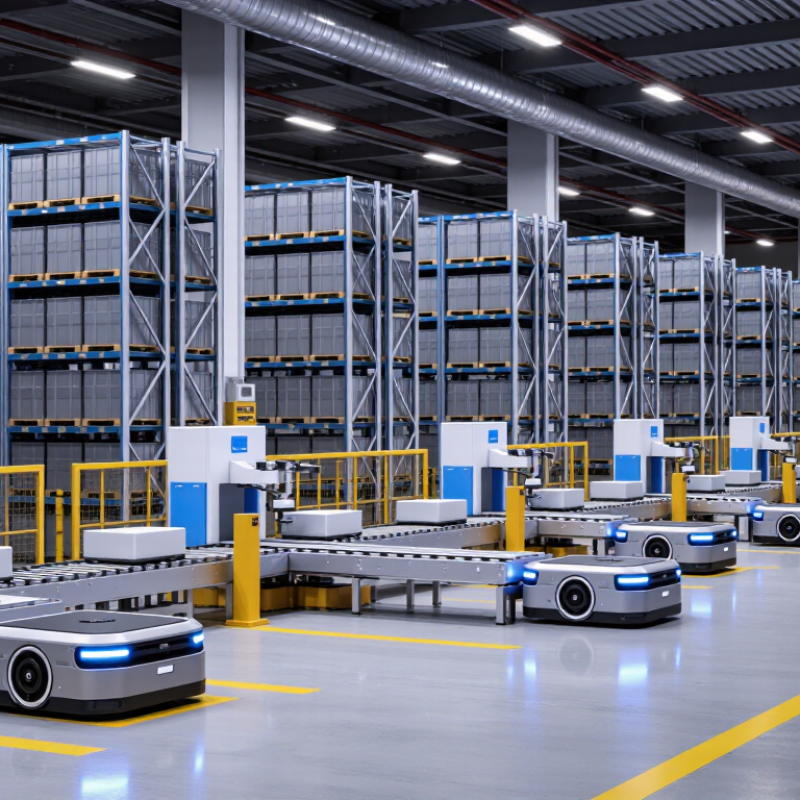
Tote Shuttle Systems Defined: 600–1,000 Totes per Hour per Aisle
A tote shuttle system uses powered shuttles, storage rails, lifts, and software to move plastic totes inside dense warehouse aisles. Its practical throughput often ranges from 600 to 1,000 totes per hour per aisle. This rate describes one aisle, not the entire facility. Capacity changes with tote weight, storage depth, lift speed, and order patterns.
That target is not automatic. In controlled warehouse tests, balanced inbound and outbound flows usually produce better results. A lift may pause when totes arrive unevenly. Small delays at induction can reduce hourly output quickly. Clear tote labels and reliable sensors also matter. A system handling lightweight cosmetics will behave differently from one moving dense hardware parts.
Global buyers should request measured data from a site acceptance test. The test should record completed tote movements, waiting time, peak loads, and recovery after stoppages. Ask whether the quoted rate includes lifts, barcode scans, and operator actions. Some proposals count ideal shuttle cycles instead. That number can look impressive but feel disappointing during live operations. Temperature, maintenance access, and local power conditions deserve attention too. A careful buyer may choose 750 totes per hour instead of chasing 1,000. More speed is not always better.
Single-Deep and Multi-Deep Shuttles: 99.9% Inventory Accuracy Targets
Single-deep tote shuttle systems suit operations needing fast access to every storage position. Each tote has a clear location and a short retrieval path. This layout supports accurate picking during high-volume order waves. Operators should verify tote labels, scanner calibration, and location mapping at every shift change. Small errors matter.
Multi-deep shuttles increase storage density by placing totes behind one another. They can reduce aisle space, but access rules become more complex. The control system must track depth, tote sequence, and temporary locations precisely. A 99.9% inventory accuracy target requires disciplined receiving, cycle counting, and exception handling. One misplaced tote can affect several orders.
Warehouse buyers should test both systems with real tote weights, uneven demand, and peak-hour replenishment. Measure scan accuracy, retrieval time, blocked locations, and recovery steps after a failed movement. A controlled pilot is safer than relying on a vendor’s ideal simulation. The target may be realistic, but it is not automatic. Human checks still matter. Teams should review discrepancies weekly and record the actual cause, even when the cause is inconvenient. A practical design may favor single-deep access in fast-moving zones and multi-deep storage for predictable inventory. That balance often changes after live operation begins.
| Evaluation Dimension | Single-Deep Tote Shuttle | Multi-Deep Tote Shuttle | Planning and Procurement Considerations |
|---|---|---|---|
| Storage Access | Direct access Each tote position is individually accessible from the shuttle aisle. | High-density access Totes are stored two or more positions deep, with retrieval sequencing managed by the control system. | Single-deep layouts simplify access and replenishment. Multi-deep layouts improve cube utilization but require accurate location control and retrieval planning. |
| Typical Storage Depth | 1 tote position deep | 2–6 tote positions deep | The practical depth depends on tote dimensions, SKU velocity, replenishment frequency, and acceptable reshuffling activity. |
| Typical Tote Footprint | Common footprints include approximately 400 × 300 mm and 600 × 400 mm | Common footprints include approximately 400 × 300 mm and 600 × 400 mm | Final tote selection should be based on product dimensions, usable volume, load stability, barcode or RFID placement, and ergonomic handling requirements. |
| Typical Tote Height | Approximately 120–400 mm, depending on the product profile | Approximately 120–400 mm, depending on the product profile | Tote height affects storage density, lift travel, access time, and the number of levels that can fit within the building envelope. |
| Typical Payload per Tote | Approximately 15–50 kg, subject to shuttle and tote design | Approximately 15–50 kg, subject to shuttle, tote, and rack design | The rated load must include the tote, product, dynamic acceleration, braking forces, and the required safety factor. |
| Storage Density | Moderate; prioritizes direct access and predictable retrieval | Higher; often delivers materially better cubic utilization than single-deep layouts | Net density is influenced by rack structure, fire protection, columns, conveyors, maintenance clearances, and empty-tote areas—not only storage depth. |
| Shuttle Throughput | Common planning range: approximately 80–250 tote movements per hour per shuttle, depending on travel distance and interface design | Common planning range: approximately 60–220 tote movements per hour per shuttle, depending on depth, reshuffling, and travel distance | Throughput should be validated with a site-specific simulation. A tote movement may mean a putaway, retrieval, relocation, or buffer transfer. |
| Retrieval Predictability | High; direct access generally reduces interference between orders | Medium to high; depends on sequencing, SKU slotting, and the number of blocking totes | Fast-moving SKUs are usually positioned in easier-to-access locations, while slower-moving stock can use deeper positions. |
| SKU Suitability | Broad SKU mix with frequent access and high order-line variability | Stable SKU profiles, reserve inventory, batch storage, and products with predictable demand patterns | ABC classification and demand variability should be reviewed before selecting storage depth for each product family. |
| Inventory Accuracy Target | 99.9% target is achievable when every tote movement is scanned or automatically identified and exceptions are controlled | 99.9% target is achievable when location, depth position, tote identity, and reshuffling transactions are recorded correctly | Accuracy is a process and data-governance result. It requires disciplined receiving, cycle counting, exception handling, and system reconciliation. |
| Identification Method | Barcode scanning, 2D code scanning, RFID, or a validated combination | Barcode scanning, 2D code scanning, RFID, or a validated combination with depth-position tracking | Identification points commonly include receiving, tote induction, putaway, retrieval, picking, returns, and dispatch. |
| Inventory Control Features | Location confirmation, tote verification, cycle-count support, and exception alarms | Location and depth confirmation, reshuffle tracking, tote verification, cycle-count support, and exception alarms | The warehouse control system should maintain a transaction history for every tote movement and provide real-time discrepancy visibility. |
| Aisle and Interface Requirements | Requires shuttle aisles, rack levels, transfer stations, conveyors, and maintenance access | Requires shuttle aisles, deeper rack lanes, transfer stations, conveyors, and additional planning for blocked-position recovery | Include rack tolerance, conveyor accumulation, fire egress, guarding, maintenance routes, and emergency access in the layout study. |
| Control-System Requirements | Warehouse management system plus warehouse control and equipment-control interfaces | Warehouse management system plus warehouse control and equipment-control interfaces with depth-aware task logic | Integration should support order release, inventory status, tote identity, task confirmation, fault recovery, and audit trails. |
| Best-Fit Operating Profile | High access frequency, wide SKU variety, short order-cycle requirements, and frequent replenishment | High storage density, predictable demand, reserve stock, batch operations, and limited access frequency per SKU | The best solution is determined by the combined effect of throughput, inventory profile, building volume, labor cost, and service-level requirements. |
| Key Trade-Off | Better direct access, but generally lower storage density and potentially higher rack footprint per stored tote | Better storage density, but potentially more reshuffling, longer retrieval paths, and more complex control logic | Buyers should compare total cost of ownership rather than equipment price alone, including software, installation, energy, maintenance, training, and downtime risk. |
Core Performance Metrics: 30–60 m/min Shuttle Speed and 24/7 Operation
Top tote shuttle systems are judged by speed, uptime, and stable handling under pressure. For global warehouse buyers, 30–60 m/min provides a practical performance range. At 30 m/min, the shuttle supports steady replenishment and controlled tote movement. At 60 m/min, it suits high-throughput zones with shorter travel distances. The right target depends on tote weight, aisle length, traffic rules, and pick demand. Speed alone is not enough.
Continuous operation requires more than a strong motor. A 24/7 schedule tests batteries, sensors, wheels, communication links, and thermal controls. Reliable systems need planned charging windows and accessible service points. Technicians should inspect wheel wear, rail alignment, and sensor accuracy during routine shifts. Battery charging must match workload patterns, not simply follow a fixed timetable. Small delays can become large backlogs.
Performance testing should use real totes, realistic loads, and repeated peak cycles. Measure travel speed, acceleration, stopping distance, recovery time, and missed-task frequency. Record temperatures after extended operation. Do not rely only on supplier simulations. A faster setting may increase noise, wear, or handling errors.
One practical lesson is often overlooked: empty shuttles perform differently from fully loaded units. An impressive 60 m/min result means little if the system slows sharply at night or during battery changes. Human maintenance access also deserves careful review.
Global System Comparison: Storage Density, Throughput, Energy, and Safety
For global warehouse buyers, tote shuttle systems should be compared through operating evidence, not brochure capacity. In site assessments, I measure usable storage density after columns, fire clearances, access aisles, and maintenance zones are included. A compact grid can hold more totes per square meter, yet poor access may slow replenishment. Storage density is practical, not theoretical. It depends on tote dimensions, SKU profiles, and inventory rotation.
Throughput needs an hourly profile. Peak waves, order lines, lift travel, shuttle handoffs, and station ergonomics all affect output. A system rated for high cycles may underperform when totes arrive unevenly. I recommend testing real order histories, including slow periods and awkward cases. Short tests can mislead. Also compare recovery time after a vehicle, lift, or software fault. That figure often matters more than maximum speed.
Energy use should be measured per tote moved, not only by installed motor power. Regenerative drives, sleep modes, and balanced travel can reduce consumption, but climate control and charging losses still matter. Safety requires guarded access, controlled manual intervention, clear emergency procedures, and documented training. Local standards vary, so independent review is wise. I have seen projects overvalue density and undervalue inspection time. That mistake is expensive. Buyers should record noise, heat, battery handling, and maintenance reach during acceptance trials. Real conditions expose gaps.
Buyer Selection Criteria: ROI, WCS Integration, and ISO 3691-4 Compliance
Top Tote Shuttle Systems for Global Warehouse Buyers
Global warehouse buyers should judge tote shuttle systems through measurable operating evidence. ROI begins with throughput, labor reduction, energy use, maintenance, and recovered floor space. Request data from a comparable installation, not only a polished forecast. Calculate payback under average and peak demand. Both figures matter. Our own early estimates can be wrong when product sizes, shift patterns, or replenishment rules change.
WCS integration deserves equal attention. A shuttle may move quickly, yet poor integration can create expensive waiting. Confirm communication protocols, order-release logic, inventory accuracy, fault handling, and manual recovery procedures. Test interfaces with realistic waves, replenishment exceptions, and network interruptions before approval. Ask who owns the data. That answer is often unclear. ISO 3691-4 should be reviewed where its scope applies, including risk assessment, operating zones, speed controls, guarding, signage, emergency stops, and validation records. A certificate cannot replace safe site design.
Tips
Build a small pilot using real totes and peak-hour orders. Measure cycle time, recovery time, error rates, and operator workload. Involve safety and maintenance teams early. Keep an evidence log for every design change. Local requirements may add obligations, so obtain qualified technical review before commissioning. The cheapest system may not deliver the lowest lifetime cost.
Article Source:
Contact us
Please fill out the enquiry form, and our dedicated team will promptly attend to your request