Top 10 Automotive Spot Welders for Global Buyers
Choosing the right automotive spot welder requires more than comparing power ratings. Global buyers need equipment that delivers stable welds, practical controls, and dependable service support. This guide examines ten leading options for workshops, repair centers, and production environments. Each model is considered through real operating factors, including weld current, electrode pressure, sheet-metal capacity, cooling performance, and cycle consistency. Small details matter. A balanced transformer, responsive timer, and durable copper tips can influence daily productivity.
The comparison also considers operator safety, maintenance access, voltage compatibility, and manufacturer documentation. These points help buyers assess products across different markets and working conditions. However, no ranking can fit every workshop. A compact repair shop may value mobility, while a factory may require automated arms and repeatable pressure. Specifications can also look impressive on paper but perform differently under continuous use. That limitation deserves attention. Practical testing, supplier communication, and local technical support remain essential before purchase. This article offers a structured starting point, not a substitute for inspecting equipment firsthand. Readers should verify certification claims, warranty terms, replacement-part availability, and installation requirements with authorized suppliers. The best automotive spot welder is not always the most powerful model. It is the one that matches the vehicle materials, workload, operators, and long-term service expectations.
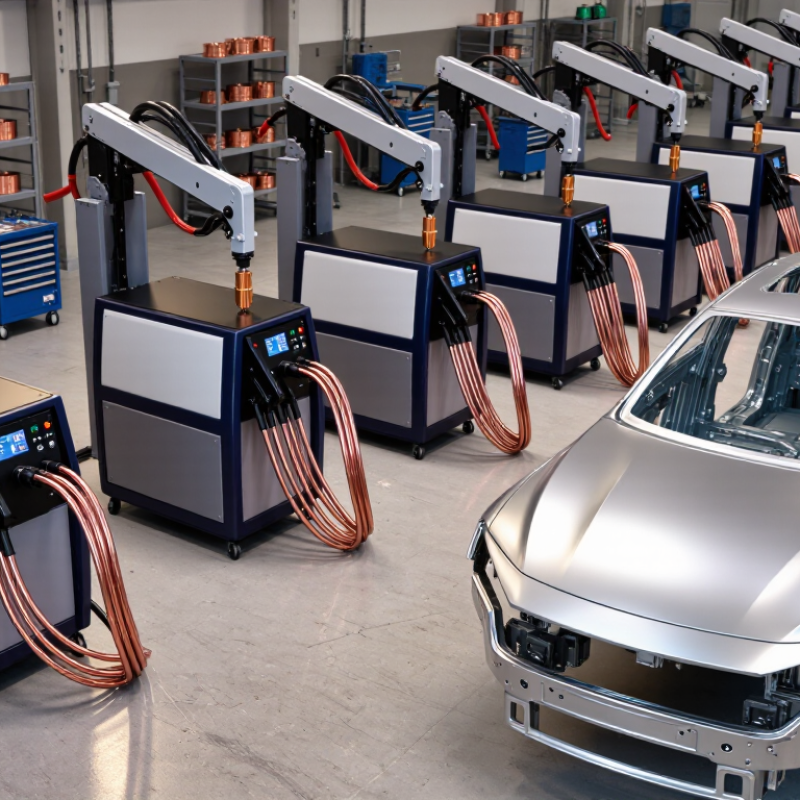
Automotive Spot Welding: Principles, Equipment Types, and Key Applications
Top 10 Automotive Spot Welders for Global Buyers
Automotive Spot Welding: Principles, Equipment Types, and Key Applications
Automotive spot welding joins overlapping metal sheets through heat, pressure, and electric current. Copper electrodes clamp the panels, then deliver a controlled current pulse. Resistance at the contact area creates localized heat. The weld forms quickly, often without filler metal.
In production testing, electrode force matters as much as current. Too little pressure can cause sparks, weak nuggets, or surface marks. Excessive pressure may reduce heat and deform thin panels. Timing also requires attention. Steel, galvanized steel, and aluminum each demand different settings, tooling, and cooling methods.
Common equipment includes portable hand-held welders, pedestal machines, robotic systems, and multi-gun production cells. Portable units suit repair bays and low-volume work. Pedestal models offer stable positioning for repeated joints. Robotic welders improve access and consistency across vehicle bodies. Multi-gun systems support high-throughput assembly, but they require careful electrical planning.
Key applications include body-in-white assembly, door frames, seat structures, battery enclosures, and exhaust components. Buyers should examine transformer capacity, programmable controls, electrode access, cooling performance, and spare-part availability. Global installations also need suitable voltage, operator training, guarding, and documented maintenance procedures.
Small details decide reliability. Clean contact surfaces help. Still, no machine compensates for poor panel fit-up. In my experience, impressive cycle rates can hide uneven weld quality. Trial welds, destructive testing, and production samples reveal more than a specification sheet. A practical selection may feel less advanced, yet perform better daily.
| Rank | Equipment Type | Welding Principle | Typical Welding Current | Typical Electrode Force | Common Material Thickness | Typical Weld Cycle | Best-Fit Automotive Applications | Primary Advantages | Key Buyer Considerations |
|---|---|---|---|---|---|---|---|---|---|
| 1 | Inverter DC Robotic Spot Welder | Medium-frequency inverter converts incoming power into controlled direct current for resistance welding. | 8–25 kA | 2–6 kN | 0.6–2.5 mm per sheet | 0.5–1.5 seconds per weld | Body-in-white, doors, side panels, roof structures, and automated assembly lines. | High repeatability, accurate current control, reduced transformer size, and easy robot integration. | Requires robot programming, water cooling, safety guarding, and reliable three-phase power. |
| 2 | Portable Transformer Spot Welding Gun | A portable gun applies electrode pressure and resistance current directly to overlapping sheets. | 8–20 kA | 1.5–5 kN | 0.5–2.0 mm per sheet | 0.8–2.0 seconds per weld | Manual body repair, low-volume production, large panels, and flexible joining stations. | Flexible access, relatively low installation cost, and suitability for irregular workpieces. | Gun weight, cable length, operator ergonomics, transformer duty cycle, and cooling capacity are important. |
| 3 | Pedestal Resistance Spot Welder | A stationary welding head uses opposed electrodes to clamp and weld components at a fixed workstation. | 10–30 kA | 2–8 kN | 0.6–3.0 mm per sheet | 0.6–1.8 seconds per weld | Brackets, seat components, reinforcements, small panels, and repetitive subassemblies. | Stable electrode alignment, simple operation, strong weld consistency, and easy fixture positioning. | Throat depth, electrode stroke, floor space, fixture design, and production volume should be evaluated. |
| 4 | Servo-Gun Robotic Spot Welder | A servo-driven electrode gun controls force, travel, and contact pressure through programmable motion. | 10–25 kA | 1.5–6 kN | 0.6–2.5 mm per sheet | 0.6–1.5 seconds per weld | High-speed body assembly, lightweight structures, tailored blanks, and variable thickness joints. | Accurate force profiles, lower mechanical shock, improved accessibility, and process data collection. | Higher initial cost, servo maintenance, controller compatibility, and robot payload must be considered. |
| 5 | AC Single-Phase Spot Welder | Alternating current passes through the sheets while electrodes apply mechanical pressure. | 10–35 kA | 2–8 kN | 0.6–3.0 mm per sheet | 0.8–2.5 seconds per weld | General fabrication, repair shops, basic steel body parts, and cost-sensitive production. | Simple controls, broad service familiarity, and comparatively straightforward installation. | Higher input power fluctuation, greater transformer size, power-factor effects, and heat generation may occur. |
| 6 | Multi-Spot Welding System | Several electrode pairs weld multiple points simultaneously or in a programmed sequence. | 15–60 kA total | 2–8 kN per electrode pair | 0.6–2.5 mm per sheet | 1–4 seconds per assembly | Floor pans, cross members, seat frames, battery trays, and high-volume structural assemblies. | High throughput, reduced handling, consistent weld spacing, and efficient repetitive production. | Complex tooling, balanced current distribution, maintenance access, and high fixture investment are required. |
| 7 | Projection Welding Machine | Raised projections on one component concentrate current and force to create controlled resistance welds. | 12–45 kA | 3–12 kN | 0.8–4.0 mm per component | 0.5–2.0 seconds per weld | Fasteners, nuts, bolts, brackets, reinforcement parts, and battery enclosure components. | Multiple welds in one operation, accurate weld location, and good suitability for small attachments. | Projection geometry, electrode wear, component flatness, force synchronization, and tooling accuracy matter. |
| 8 | Capacitor-Discharge Spot Welder | Stored electrical energy is released rapidly through the welding circuit for a short, high-current pulse. | 20–100 kA peak | 1–6 kN | 0.5–3.0 mm per sheet | 0.1–1.0 seconds per weld | Thin sheet assemblies, high-strength steel parts, small brackets, and applications with limited grid capacity. | Low average power demand, short heat input, rapid operation, and reduced thermal distortion. | Energy storage size, recharge time, pulse control, capacitor maintenance, and electrical safety are critical. |
| 9 | Aluminum-Capable MFDC Spot Welder | High-current medium-frequency direct current compensates for aluminum’s high electrical and thermal conductivity. | 20–50 kA | 3–10 kN | 1.0–3.0 mm per sheet | 0.7–2.5 seconds per weld | Aluminum body panels, electric-vehicle structures, battery cases, and mixed-material assemblies. | High current efficiency, controlled heat input, and compatibility with demanding lightweight structures. | Electrode material, tip dressing, cooling flow, surface condition, and suitable weld schedules are essential. |
| 10 | Manual Handheld Inverter Spot Welder | A lightweight inverter power source supplies controlled DC current through a manually positioned welding gun. | 6–18 kA | 1–4 kN | 0.5–2.0 mm per sheet | 0.7–2.0 seconds per weld | Collision repair, prototype work, service centers, small workshops, and low-volume manufacturing. | Portable design, improved energy efficiency, simple setup, and better control than many conventional AC units. | Operator training, gun reach, cable management, weld access, duty cycle, and tip maintenance affect results. |
Related Posts
-
How to Choose the Best Spot Welder for Your Needs
-
Best Spot Welding Gun Suppliers in China How to Choose?
-
How to Choose the Best Automotive Spot Welder?
-
What Is the Best Automotive Spot Welder in China?
-

2026 Top Spot Welder Buying Guide for Global Suppliers?
-
How to Choose the Best Spot Welding Gun in 2026?

Contact us
Please fill out the enquiry form, and our dedicated team will promptly attend to your request