What Is the Best Double Panel Radiator?
Choosing the best Double Panel Radiator is not simply a matter of selecting the largest model. Room size, insulation, window area, pipework, and operating temperature all influence performance. A radiator that feels powerful in a showroom may underperform beside a cold, uninsulated wall.
The Energy Saving Trust estimates that space heating represents about 55% of household energy use in a typical UK home. That figure makes radiator selection financially important. The International Energy Agency also reports that buildings account for roughly 30% of global energy demand, reinforcing the need for efficient heat delivery. These figures do not prove that every home needs a double panel design. They do show why heat output and system compatibility deserve careful attention.
Under BS EN 442, radiator output is commonly stated at a 50°C temperature difference. Modern condensing boilers and heat pumps may operate at lower temperatures. Their real output can therefore be much smaller than the catalogue figure. Check the correction factor.
Hydronics specialist Dan Holohan has repeatedly promoted a practical principle: “The best heating system is the one you don’t notice.” That idea applies here. A good Double Panel Radiator should warm the room evenly, avoid obstructing furniture, and work quietly with the heating system.
There is no universal winner. A double panel radiator can provide higher output within limited wall space, but it may cost more and project farther into the room. This guide compares heat output, dimensions, materials, installation needs, and long-term efficiency. Some assumptions will need challenging. Real rooms are rarely as neat as technical tables suggest.
What Is a Double Panel Radiator and How Does It Work?
What Is the Best Double Panel Radiator?
What Is a Double Panel Radiator and How Does It Work?
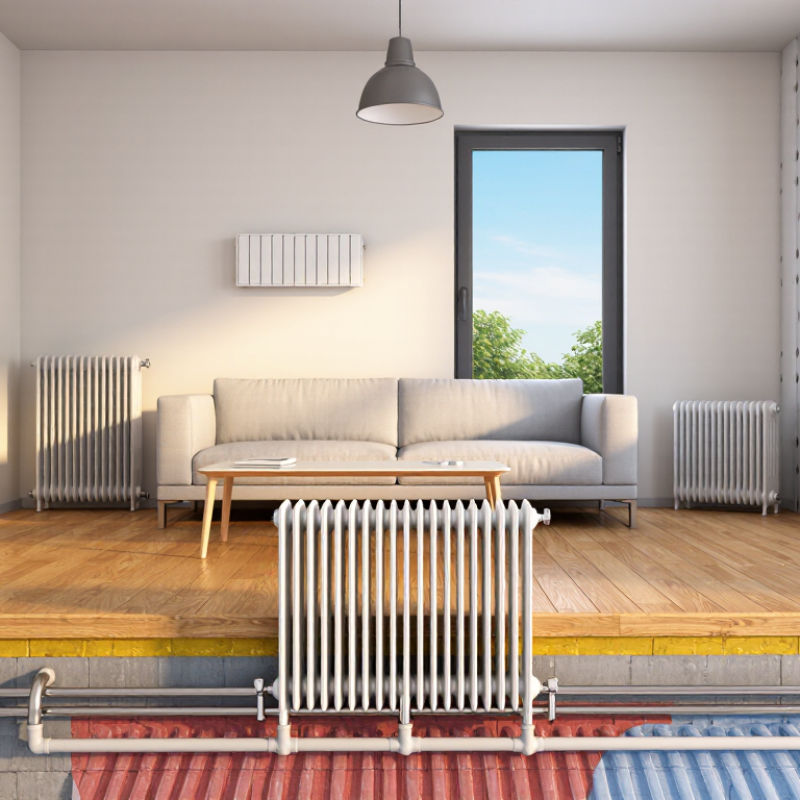
A double panel radiator contains two steel water panels, usually joined by internal convector fins. Hot water enters the radiator and warms both panels. The panels then transfer heat through radiation and convection. Cooler air moves underneath, warms between the panels, and rises into the room.
Simple, but not weak.
A common Type 22 model has two panels and two fin layers. It normally produces more heat than a Type 11 radiator of similar height and length. However, its output is not automatically double. The result depends on surface area, water temperature, room insulation, and airflow.
EN 442 compares radiator output under standard conditions, commonly at a 50°C temperature difference. Real homes may use lower temperatures, especially with efficient boilers or heat pumps. Output can then fall sharply.
The best choice starts with a room heat-loss calculation, not a catalogue size. The Chartered Institution of Building Services Engineers recommends calculating fabric and ventilation losses through its professional guidance. That approach considers windows, external walls, ceiling height, and air leakage.
The UK Department for Energy Security and Net Zero reported space heating as roughly 62% of domestic energy use in its Energy Consumption in the UK data. Correct sizing therefore matters.
I have seen oversized radiators installed in small bedrooms. They worked, but wasted wall space. A compact Type 22 may suit a narrow room, while a longer Type 21 can provide gentler output. This is easy to overlook.
Clearance around the radiator also affects convection, so furniture should not block its lower or upper air path.
Which Heating Needs Are Best Suited to Double Panel Radiators?
Double panel radiators suit rooms that need stronger, steadier heat than a single panel can provide. Their two heated panels create more surface area, helping warm medium or large living rooms, open-plan spaces, and bedrooms with external walls. They can also support rooms with tall ceilings or several windows, where heat escapes more quickly.
Room insulation matters greatly. A well-insulated room may need less output, while an older room with draughty frames can lose heat rapidly. In practice, installers usually estimate the required heat output in watts, considering floor area, ceiling height, window size, and wall exposure. Bigger is not always better. An oversized radiator may cause short heating cycles and uncomfortable temperature changes.
Double panel models work well beneath wide windows because rising warm air can reduce cold downdraughts. They are less suitable for narrow hallways or compact rooms with limited wall space. Their greater depth also needs careful clearance from furniture, curtains, and shelving. Keep airflow open.
A thermostatic valve can help control each room independently, although correct system balancing remains important. Poor balancing can leave one radiator hot while another stays lukewarm. That detail is easy to miss. Professional sizing is worthwhile, especially in older properties where insulation and boiler performance may vary. Even experienced installers can misjudge heat loss without checking the room carefully.
How to Compare Double Panel Radiator Size, Output, and Efficiency
What Is the Best Double Panel Radiator?
How to Compare Double Panel Radiator Size, Output, and Efficiency
A double panel radiator uses two water-filled panels and convector fins. Its larger surface area can deliver more heat than a single panel. However, bigger does not always mean better. Measure the wall, window position, pipe spacing, and available clearance first. A 600 mm-high unit may fit neatly, yet its length often determines the real heat output.
Compare output in watts, not appearance. EN 442-1:2014 rates radiator performance at a 50°C temperature difference, known as ΔT50. Modern heat pumps often operate at lower water temperatures. Using the common radiator formula, output can fall sharply when ΔT drops from 50°C to 30°C. CIBSE Guide B1 advises designers to assess actual operating conditions, not catalogue figures alone. Ask for the ΔT30 output when comparing products. The number may look disappointing.
Efficiency needs a wider view. Eurostat reported that space heating represented about 62.5% of household energy use in the European Union in 2022. A correctly sized radiator can support lower flow temperatures and reduce boiler cycling. That depends on room insulation, controls, and system balancing. I have seen oversized radiators installed in poorly insulated rooms. They warmed unevenly. Bigger was not the cure. Check the manufacturer’s tested output, EN 442 compliance, and the room’s calculated heat loss. A simple heat-loss assessment is still more reliable than guessing from room size. Even careful estimates can be wrong near cold external walls.
What Is the Best Double Panel Radiator?
Compare double panel radiator size, heat output, and low-temperature performance using typical Type 22 Radiator values at 600 mm height. Heat output is shown at the standard ΔT50 condition and at a lower-temperature ΔT30 condition, which is commonly associated with more efficient heating systems.
How to read the chart: Longer radiators provide greater heat output. The ΔT30 figures are lower because the average water-to-room temperature difference is smaller, but operating at lower water temperatures can improve system efficiency when supported by suitable heating equipment.
What Materials and Features Define a High-Quality Double Panel Radiator?
A high-quality double panel radiator begins with the right material. Most models use formed steel panels because steel offers strength, predictable heat transfer, and reasonable cost. The internal convector fins should be firmly welded, not loosely attached. This detail affects airflow and long-term durability. Aluminum can respond faster, but it may behave differently in mixed-metal heating systems. Professional installers should check corrosion risks before combining metals.
Output claims need independent testing. EN 442 provides a recognised method for measuring radiator performance under controlled conditions. Look for tested output in watts, operating pressure, and stated water temperatures. A larger number is not always better. A radiator can be oversized for a poorly insulated room, or undersized beside a cold window. The International Energy Agency reported that buildings consume about 30% of global final energy. Small efficiency losses still matter across millions of rooms.
Useful features include a factory-applied protective coating, clean welded seams, an air vent, and compatible thermostat controls. Low-water-content designs may react more quickly to temperature changes. Yet thinner construction can feel less forgiving during installation. That trade-off deserves attention. In my experience, uneven wall mounting causes more complaints than modest differences in panel thickness. Check the brackets, pipe alignment, and clearance around the radiator. Leave space beneath the unit for airflow. Performance depends on installation, not materials alone. A well-tested steel radiator, correctly sized and carefully installed, can outperform a more expensive model with poor system matching.
How to Choose the Best Double Panel Radiator for Your Room
What Is the Best Double Panel Radiator?
How to Choose the Best Double Panel Radiator for Your Room
Choosing a double panel radiator starts with the room, not its appearance. Measure the room’s length, width, and height, then consider windows, insulation, and outside walls. A poorly insulated bedroom may need more heat than a smaller, well-insulated office. Use a reliable heat-output calculator, and check its assumptions carefully. Many calculations use watts, while older guides use BTUs. Do not compare them without conversion.
A double panel radiator gives stronger heat than a single panel model because it has two heating surfaces. It suits larger rooms, cold walls, and spaces with limited wall length. Measure the available area, including skirting boards and furniture. Leave clear space around the radiator so warm air can circulate. I have seen attractive radiators perform poorly when a sofa blocks them. That mistake is easy to make.
Tips
Check the radiator’s heat output at your system’s water temperature. A lower-temperature heating system may require a larger radiator. Choose corrosion-resistant materials for humid rooms, and confirm the pipe positions before ordering. A thermostatic valve can improve room control, but it must fit your existing connections. Ask a qualified heating professional to verify the calculation, especially in older homes. Small measurement errors matter.
Article Source:
Contact us
Please fill out the enquiry form, and our dedicated team will promptly attend to your request