How to Clarify Syrup for Better Quality and Purity?

How to Clarify Syrup for Better Quality and Purity?

syrup clarification is a controlled separation process. It removes suspended solids, plant debris, color bodies, and other unwanted materials before concentration or crystallization. The goal is not simply to make syrup look bright. It is to protect flavor, reduce processing problems, and improve consistency from batch to batch.

Sugar-processing authority Peter Rein describes clarification as “the removal of impurities from the juice before evaporation and crystallization.” This principle remains practical today. A well-managed system begins with representative sampling. Operators should check turbidity, pH, temperature, color, and solids content. Small changes can reveal larger problems. For example, dark particles around a filter housing may indicate poor cleaning or excessive carryover from earlier stages.

Heat, settling, filtration, and carefully selected clarifying aids can work together. However, more treatment is not always better. Excessive heat may damage flavor. Incorrect pH may increase color formation. Overdosing a processing aid can create new filtration challenges. That part is often overlooked.

A reliable syrup clarification procedure should define contact time, temperature limits, filter performance, and cleaning intervals. It should also include records that operators can review later. Experience matters here, but experience alone is not enough. Results should be verified through laboratory testing and routine visual inspection.

The syrup should appear clean and uniform, with no visible sediment or haze. Still, appearance can mislead. A clear sample may contain dissolved impurities that require analytical testing. That is why quality decisions should combine trained observation, validated measurements, and documented process control. The best method may need adjustment. Sugar sources, equipment, and operating conditions are never perfectly identical.
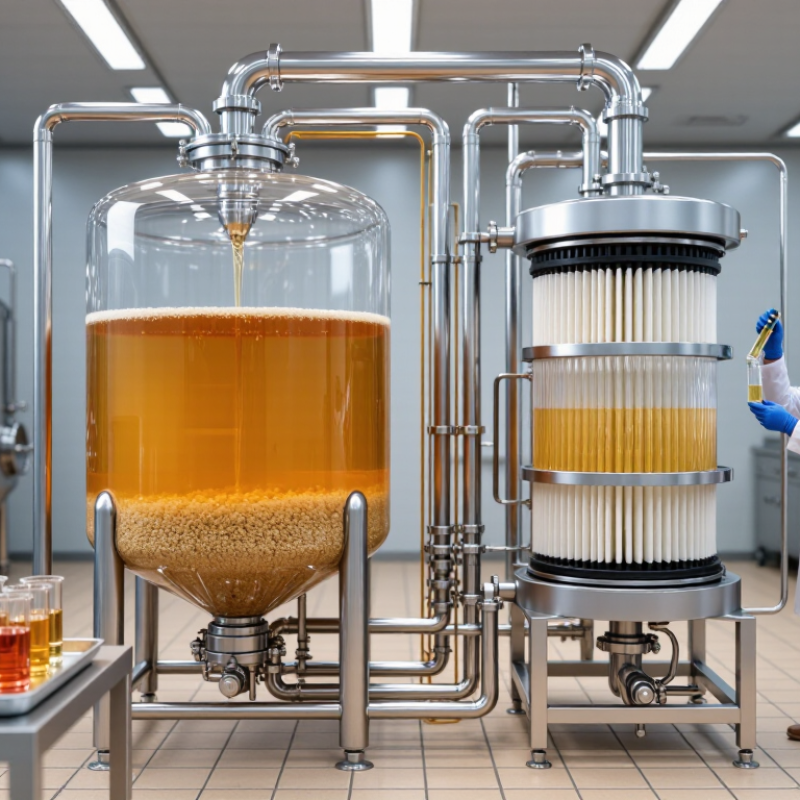
How to Clarify Syrup for Better Quality and Purity?

What Syrup Clarification Means and Why It Matters

Syrup clarification means removing suspended particles, waxes, proteins, color bodies, and fine crystals from a liquid sugar stream. It is not simply making syrup look bright. A clear sample should also show stable color, controlled turbidity, and predictable filtration performance. The International Commission for Uniform Methods of Sugar Analysis uses standardized methods for measuring color and turbidity, helping processors compare results across batches and facilities. Those measurements matter because small changes can affect evaporation, crystallization, taste, and shelf appearance.

The scale is significant. The United States Department of Agriculture’s October 2024 Sugar: World Markets and Trade report forecast global sugar production near 186 million metric tons for 2024/25. Even a minor quality loss becomes expensive at that volume. Operators commonly adjust pH, heat the syrup carefully, and use settling, flotation, filtration, or adsorption. Each step needs verification. Excessive heat can darken syrup, while aggressive treatment may remove desirable flavor compounds. Clearer is not always better.

In practical work, a cloudy sample often points to poor clarification balance, unstable pH, or overloaded filters. I have seen teams blame the filter too quickly. The real cause was upstream mixing. A reliable process records temperature, residence time, pressure drop, turbidity, and color for every batch. Codex food hygiene principles also support controlled processing, clean equipment, and documented monitoring. Visual inspection helps, but it cannot replace instrument data. A bright syrup can still hide microbial or chemical concerns.

How to Prepare Syrup Before the Clarification Process

How to Clarify Syrup for Better Quality and Purity?

How to Prepare Syrup Before the Clarification Process

Good clarification begins before the syrup reaches the filter. Use clean, food-grade equipment and confirm that tanks, pipes, and utensils are fully rinsed. Check the water quality before mixing. Hard water can affect color, taste, and filter performance. Measure sugar and water accurately, then heat the mixture gradually. Avoid sudden boiling. Excessive heat may darken the syrup and create unwanted flavor changes. A thermometer provides better control than visual judgment.

Allow the syrup to circulate gently until the sugar dissolves completely. Do not stir aggressively, because trapped air can create foam and slow filtration. Inspect the liquid under good lighting. Look for undissolved crystals, fibers, or unusual cloudiness. Strain large particles through a suitable pre-filter before the main clarification stage. In practice, this step is easy to underestimate. It can protect the finer filter and improve consistency.

Tips: Keep the syrup warm, but never hotter than your process specification allows. Record temperature, mixing time, and appearance for every batch. Let foam settle before filtration. If the syrup remains cloudy, check the water, heating pattern, and equipment cleanliness before adding more processing aids. A small trial batch is safer than changing the entire process. Not every problem comes from the filter.

How to Remove Suspended Solids and Visible Impurities

How to Clarify Syrup for Better Quality and Purity?

Syrup clarification starts with removing suspended solids before they damage texture, color, or shelf life. In practical processing, use a coarse screen first. It can catch fibers, crystals, and small fragments. Then allow the syrup to settle in a controlled tank. Gentle heating may reduce viscosity, but excessive heat can darken the syrup and affect flavor. A polishing filter can remove finer particles, while turbidity checks confirm whether the process works.

The USDA Foreign Agricultural Service reported global sugar production at about 183 million metric tons for 2023/24. This scale makes consistent clarification important across food facilities. ICUMSA analytical methods support testing for color, turbidity, and impurities. Codex General Principles of Food Hygiene also emphasizes controlled processing and preventive monitoring. A clear syrup is not automatically safe. It may still contain microorganisms or dissolved contaminants. That is an easy mistake to make.

Tips: Match filter porosity to particle size, not appearance alone. Record temperature, flow rate, and turbidity for every batch. Inspect filter cloths under bright light. Replace damaged media immediately. Do not reuse settled solids without evaluation. Small particles can return during pumping. A practical weakness remains: visual inspection is subjective. Operators may approve a bright sample too quickly. Combining visual checks with laboratory results is more reliable.

How to Filter, Settle, and Polish the Clarified Syrup

Clarifying syrup depends on controlled handling, not a single filter. In practice, I begin by checking temperature, Brix, color, and visible particles. Warm syrup flows more easily, but excessive heat can darken color or damage sensitive ingredients. I use clean, food-grade tanks and avoid strong agitation after heating. Small details matter.

Filtering should remove larger solids before finer polishing. A coarse screen catches fibers and crystals, while a finer filter improves visual clarity. I monitor pressure across the filter during operation. A sudden increase often indicates clogging or excessive solids. The flow may slow.

After filtration, the syrup should rest in a covered settling tank. Gentle settling allows dense particles to move downward without disturbing the liquid. The tank outlet should sit above the sediment layer. Operators can then transfer the clearer upper syrup carefully. This step takes time, but rushing it can overload the polishing filter.

Polishing provides the final improvement. A fine cartridge or depth filter can reduce haze and tiny suspended particles. I check samples before and after polishing for turbidity, color, aroma, and Brix. Clear syrup is not always pure syrup; dissolved impurities may remain invisible. That distinction deserves attention. Cleaning records, filter changes, and batch samples support reliable quality decisions. My own process reviews have shown that visual inspection alone is too subjective. A simple test result is often more trustworthy than a bright appearance.

How to Clarify Syrup for Better Quality and Purity? - How to Filter, Settle, and Polish the Clarified Syrup

Clarification Stage Primary Objective Typical Equipment Typical Operating Guidance Main Quality Indicator Common Risk
Pre-screening Remove coarse particles before fine clarification Mesh screen, basket strainer, or bag filter Select the screen opening according to particle size and syrup viscosity; avoid excessive pressure drop Visible particles and screen differential pressure Screen blockage or excessive product loss
Heating and Conditioning Reduce viscosity and improve particle separation Jacketed tank, tubular heat exchanger, or coil heater Use the lowest temperature that provides suitable flow; monitor temperature continuously to limit color development and sugar degradation Temperature, viscosity, color, and flavor stability Overheating, localized scorching, or unwanted crystallization
Coagulation or Flocculation Combine fine suspended solids into larger, removable flocs Mixing tank with controlled dosing and gentle agitation Any processing aid must be food-grade, legally permitted, and validated for the specific syrup; optimize dosage by jar testing Floc size, settling behavior, turbidity, and color Excessive additive residue or unstable flocs
Settling Allow dense particles and flocs to separate by gravity Settling tank, clarifier, or cone-bottom vessel Maintain low turbulence, provide sufficient residence time, and remove settled solids without disturbing the clarified layer Supernatant clarity and settled-solids volume Short residence time, carryover of solids, or microbial growth during delays
Depth Filtration Capture fine suspended solids throughout the filter medium Cartridge, bag, plate-and-frame, or depth filter Choose a food-contact-compatible medium; monitor inlet and outlet pressure and replace or clean the filter before breakthrough Turbidity, differential pressure, and filtrate flow Rapid fouling, channeling, or filter rupture
Polishing Filtration Improve final visual clarity and remove residual fine particles Fine cartridge filter or membrane-compatible polishing unit Use staged filtration rather than applying the finest grade immediately; confirm compatibility with syrup viscosity and solids content Final turbidity, visual appearance, and flow consistency High pressure drop, excessive hold-up volume, or product retention
Optional Adsorption Reduce selected color bodies, odors, or trace organic impurities Activated carbon bed or approved adsorption system Use only when required by the product specification; validate contact time, dosage, and downstream removal of adsorbent fines Color value, sensory profile, and contaminant reduction Loss of desirable flavor compounds or carbon carryover
Final Holding and Transfer Protect the clarified syrup from recontamination and quality loss Sanitary holding tank, covered transfer line, and hygienic pump Minimize holding time, maintain closed sanitary conditions, and verify cleaning and sanitation before use Temperature, pH, soluble solids, turbidity, and microbiological results Post-filtration contamination, air exposure, or crystallization in the line
Note: Operating conditions are typical process-development guidance rather than universal specifications. Actual temperature, residence time, filter grade, pressure limit, and quality targets should be validated for the syrup composition, solids concentration, viscosity, equipment, and applicable food-safety requirements.

How to Check Syrup Quality, Purity, and Storage Stability

How to Clarify Syrup for Better Quality and Purity?

Clear syrup begins with controlled filtration, not visual judgment alone. Use a calibrated refractometer to measure Brix, then record pH, color, odor, and turbidity for every batch. The International Commission for Uniform Methods of Sugar Analysis (ICUMSA) recommends standardized methods for color and purity testing. These methods help separate genuine clarity from temporary settling. A bright sample may still contain dissolved impurities.

For storage stability, test water activity, yeast, mold, and bacterial counts before release. The FDA Food Code 2022 uses 5°C (41°F) as a cold-holding benchmark for applicable perishable foods, but syrup storage depends on formulation and water activity. Check containers after opening. Sticky caps, crystals, gas formation, or a sour smell indicate possible deterioration. Retain samples at expected storage temperatures, including a warm-condition challenge. I once trusted a clear sample too quickly; later testing showed sediment forming after several days. That mistake was preventable.

Tips: Filter in stages, using coarse filtration before fine clarification. Measure Brix at a controlled temperature, because heat can distort readings. Keep a simple batch record with date, lot, pH, Brix, appearance, and microbial results. Codex food hygiene guidance supports documented controls and traceability, yet records are often treated as paperwork rather than evidence. They should be reviewed when results drift, even slightly.

Contact us

Please fill out the enquiry form, and our dedicated team will promptly attend to your request