How to Choose the Right PVC Wearlayer in 2026?

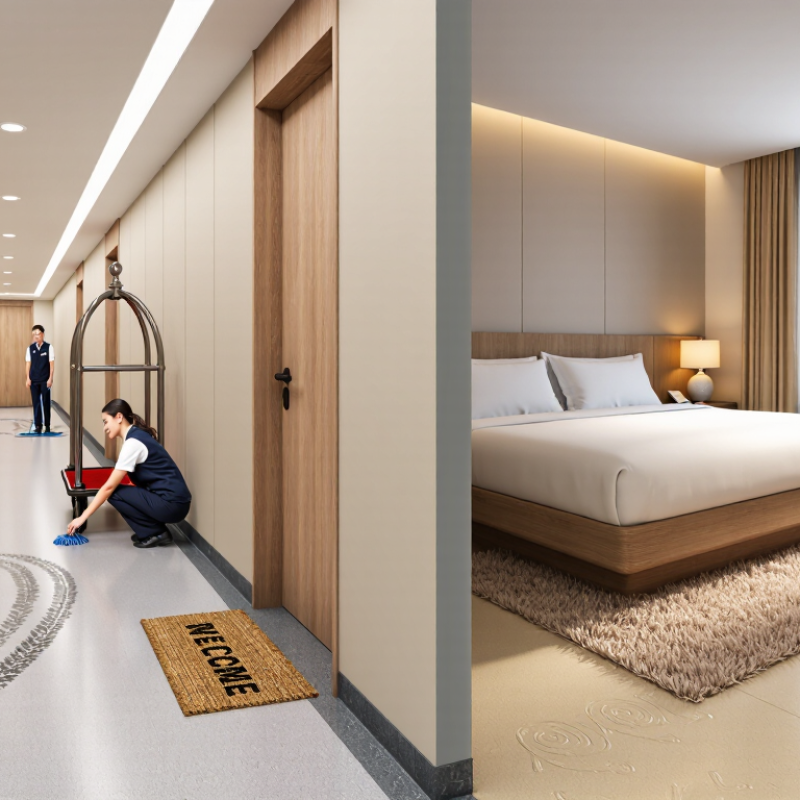
Choosing the right Pvc Wearlayer in 2026 requires more than comparing thickness numbers. It requires understanding the floor’s real working conditions. A busy hotel corridor faces rolling luggage, sharp grit, and repeated cleaning. A quiet bedroom does not. The same specification cannot serve both spaces equally well.

“Wear-layer selection should begin with the traffic pattern, not the product label,” says flooring materials consultant Elena Marquez. Her point is practical. A thicker PVC Wearlayer can improve resistance, but thickness alone does not guarantee longer service. Resin quality, surface treatment, print stability, embossing, and installation also influence performance. Small details matter.

Start with the environment. Measure foot traffic, trolley movement, sunlight exposure, moisture, and cleaning frequency. Note the floor beneath heavy furniture. Check whether sand enters from outdoor entrances. These details create abrasion that showroom samples rarely reveal. Commercial projects may need stronger polyurethane protection and higher dimensional stability. Residential rooms may prioritize comfort, appearance, and easy maintenance.

Look closely at technical documents. Ask for wear-layer thickness, test methods, slip performance, stain resistance, and warranty conditions. Compare like with like. A 0.55-millimeter layer tested under one method may not equal another product tested differently. This is where buyers often make mistakes.

A perfectly clear rule does not exist. That is worth admitting. Product selection still involves judgment, budget limits, and expected maintenance. In 2026, the strongest decision will balance measurable performance with honest site experience. Choose the PVC Wearlayer for the floor’s actual life, not its most attractive sample.
How to Choose the Right PVC Wearlayer in 2026?

What Is a PVC Wearlayer and Why Does It Matter?

A PVC wear layer is the clear protective surface on many resilient flooring products. It usually sits above the printed design and structural core. Its main job is to resist scuffs, scratches, stains, and daily abrasion. Every shoe, chair leg, and rolling cart tests this thin surface. Without suitable protection, attractive flooring can look tired surprisingly quickly.

Thickness matters, but it is not the whole story. A 0.3 mm wear layer may suit a quiet bedroom, while busy hallways often need stronger protection. However, a thicker layer cannot correct poor installation or careless maintenance. Surface treatment, material quality, texture, and abrasion-test results also influence service life. Ask for technical data, test standards, and cleaning instructions. Vague claims deserve caution. Numbers need context.

Start with the room, not the brochure. Map foot traffic, furniture movement, moisture exposure, and cleaning frequency. A textured surface can disguise small marks, but deep texture may hold dirt. Smooth flooring cleans easily, yet shows scratches sooner. Real buildings are messy. My first instinct would be to choose the thickest option, but that shortcut can waste money. The right PVC wear layer balances protection, appearance, maintenance, and expected use. Inspect samples under strong light, then compare them after repeated rubbing and cleaning. A showroom sample is only a beginning.

How to Match Wearlayer Thickness with Traffic and Usage

How to Choose the Right PVC Wearlayer in 2026?

Wearlayer thickness should follow traffic, not room size. For bedrooms and lightly used homes, a 0.20–0.30 mm layer may be sufficient. Hallways, kitchens, and active family rooms need stronger protection. A 0.30–0.50 mm layer is usually more suitable there. Expect more abrasion near entrances.

Commercial spaces demand closer inspection. Small offices may perform well with 0.50 mm. Retail floors, clinics, and busy corridors often need 0.55–0.70 mm or more. Shopping carts, grit, rolling chairs, and frequent cleaning can wear the surface quickly. Think about impact too. A dropped tool creates different stress than regular footsteps.

Usage patterns can expose weak assumptions. A home with two quiet adults may experience less wear than a small daycare. Pets add claws, moisture, and tracked sand. Entry mats help, but they cannot replace suitable protection. Check the manufacturer’s technical data, including abrasion resistance, surface treatment, and warranty conditions. Installation matters as well. Uneven subfloors can damage flooring regardless of wearlayer thickness.

A common mistake is choosing the thickest option automatically. It raises cost and may not solve poor maintenance or heavy furniture pressure. My own assessment would become less confident when future traffic is uncertain. In that case, allow a practical margin and inspect the busiest zones separately. A simple floor plan can reveal where extra durability truly matters.

Which Surface Treatments Improve PVC Wearlayer Performance?

A PVC wear layer is more than a thickness number. Its surface treatment controls staining, scuffing, cleaning effort, and visual ageing. ISO 10582 classifies resilient flooring with wear layers from 0.15 to 0.70 millimetres. However, thicker material does not always perform better. A poorly cured surface can still show black heel marks near entrances.

UV-cured polyurethane, often called PUR, creates a dense protective film. It can reduce dirt adhesion and support easier daily cleaning. Ceramic or mineral particles may improve scratch resistance, but excessive loading can reduce surface flexibility. Acrylic coatings can improve gloss and stain protection, although glossy finishes may reveal scratches more clearly. ASTM F1700 testing remains useful for checking commercial classification, yet laboratory results cannot fully represent sand, trolley wheels, or repeated moisture.

Tips: Ask for ISO 24338 abrasion results, coating thickness, and cleaning-cycle data. Request a sample panel. Drag a weighted chair across it, then inspect under side lighting. Also compare matte and gloss finishes in the actual room. A 2024 flooring market review from Grand View Research reports continuing demand for durable resilient floors, but market growth does not guarantee equal coating quality. I would not choose from a brochure alone. Production variation matters, and suppliers should provide batch-level test records.

How to Compare Durability, Safety, Appearance, and Maintenance

How to Choose the Right PVC Wearlayer in 2026?

How to Compare Durability, Safety, Appearance, and Maintenance

A PVC wear layer protects flooring from traffic, scratches, stains, and daily friction. Thickness matters, but it does not tell the whole story. In busy corridors, I examine abrasion resistance, surface hardness, and seam performance together. A thick layer can still disappoint if the finish wears unevenly. Furniture legs, grit, and rolling loads often reveal weaknesses within months.

Safety deserves practical checking. Request verified information about slip resistance, emissions, and chemical composition. Review current local requirements before installation. A low-odor product is helpful, but smell alone does not prove healthier indoor air. Ask for independent test reports and installation guidance. Keep samples in the intended room for several days. Lighting can change how the surface appears.

Appearance affects maintenance more than many buyers expect. Glossy finishes may highlight footprints and fine scratches. Textured surfaces can hide dirt, yet they may require deeper cleaning. Choose colors that disguise ordinary dust without looking artificial. I once favored a dramatic dark pattern, then reconsidered after seeing every mark near an entrance. That was a useful mistake. Check cleaning instructions, stain resistance, and repair options before ordering. Simple routines usually survive real buildings better than delicate finishes.

How to Choose the Right PVC Wearlayer in 2026?

Compare durability, safety, appearance, and maintenance before selecting a PVC floor wear layer.

Durability

A thicker wear layer generally provides better resistance to abrasion, scratching, and traffic-related wear. Typical commercial specifications range from about 0.30 mm to 0.70 mm.

Safety

Check the product’s tested slip resistance, fire performance, emissions, and suitability for wet areas. Wear-layer thickness alone does not determine safety.

Appearance

Clear protective layers help preserve printed patterns and reduce visible scuffing. Choose the surface texture and finish according to lighting, traffic, and design requirements.

Maintenance

Routine dust removal and damp cleaning are suitable for most PVC floors. A stronger wear layer can reduce refinishing frequency, but correct cleaning products remain essential.

The chart uses representative wear-layer thicknesses commonly specified for different traffic levels. Always confirm the manufacturer’s technical data, applicable EN ISO 10874 usage class, slip-resistance results, emissions documentation, and local building requirements.

How to Select the Right PVC Wearlayer for Different Applications

How to Choose the Right PVC Wearlayer in 2026?

How to Select the Right PVC Wearlayer for Different Applications

The right PVC wearlayer depends on traffic, moisture, cleaning methods, and expected service life. Start with the application, not the thickness alone. For bedrooms and light residential areas, a thinner wearlayer may provide practical protection and easier installation. Busy corridors, retail floors, and offices need greater abrasion resistance. A thicker layer usually supports longer service, but it can increase cost and affect flexibility.

Healthcare and hospitality spaces require careful surface selection. Choose a wearlayer that tolerates frequent cleaning, disinfectants, and rolling loads. Textured finishes can improve underfoot grip, yet deep textures may hold dirt. Wet rooms need reliable slip performance and stable dimensional behavior. Transport interiors face vibration, luggage wheels, and sharp wear points. Test these conditions before approval. I have seen samples pass a basic abrasion test but fail after repeated cleaning. Laboratory results are useful, but real use is less predictable.

Tips: Compare samples under artificial light and daylight. Check thickness with calibrated tools. Review cleaning chemicals before ordering. Request abrasion, stain, and slip data. Test seams and edges, too. A perfect selection is rare. Reconsider the choice when maintenance conditions change.

How to Choose the Right PVC Wearlayer in 2026? - How to Select the Right PVC Wearlayer for Different Applications

Practical PVC wear layer selection guide by application
Application Typical Traffic Recommended Wear Layer Recommended PVC Flooring Construction Key Performance Priorities Important Selection Notes
Bedrooms and Low-Use Residential Areas Light 0.15–0.20 mm Residential sheet vinyl or click LVT with a stable backing Basic abrasion resistance, appearance retention, easy cleaning Suitable where wheeled traffic, grit, and frequent furniture movement are limited.
Living Rooms, Hallways, and Family Areas Moderate residential 0.20–0.30 mm Multi-layer LVT or residential heterogeneous sheet flooring Improved scratch resistance, dimensional stability, stain resistance A balanced option for everyday household traffic and occasional movement of chairs or small tables.
Busy Homes, Rental Properties, and Small Offices Moderate to heavy 0.30–0.50 mm Commercial-grade LVT or heavy-duty heterogeneous sheet flooring Higher wear resistance, easier maintenance, resistance to rolling loads Choose a stronger backing and suitable locking or adhesive system when installation receives repeated daily use.
Classrooms, Offices, and General Commercial Areas Heavy commercial 0.50–0.70 mm Commercial LVT, compact sheet vinyl, or homogeneous PVC flooring Abrasion resistance, dimensional stability, stain resistance, maintainability Verify the complete floor system, including substrate preparation, seams, adhesive, and castor-chair performance.
Retail Stores, Restaurants, and Hospitality Areas Heavy and frequent traffic 0.55–0.70 mm Heavy-duty LVT or commercial sheet flooring with a protective finish Resistance to grit, stains, foot traffic, trolley movement, and frequent cleaning A polyurethane or equivalent factory-applied finish can reduce routine maintenance, but it does not replace adequate wear-layer thickness.
Healthcare, Aged-Care, and Clinical Corridors Heavy with wheeled traffic 0.55–0.70 mm Homogeneous PVC or heavy-duty heterogeneous sheet with welded seams where specified Cleanability, chemical resistance, seam integrity, slip performance, low maintenance Review infection-control requirements, disinfectant compatibility, residual indentation, and applicable local standards before selection.
Transport Terminals and Public Buildings Very heavy 0.70–1.00 mm Heavy commercial PVC flooring or homogeneous PVC designed for public-use areas High abrasion resistance, durable appearance, impact resistance, easy cleaning Consider entrance matting and dirt-control zones because abrasive sand and grit can shorten the service life of any wear layer.
Light Industrial and Stockroom Areas Very heavy or rolling loads 0.70–1.00 mm or specialty system Heavy-duty homogeneous PVC or a flooring system specifically rated for industrial loads Resistance to abrasion, indentation, chemicals, impact, and rolling loads Wear-layer thickness alone is not sufficient; confirm load ratings, caster type, chemical exposure, welding requirements, and substrate strength.
Selection reminder: The wear layer is only one part of PVC flooring performance. Also compare total flooring thickness, backing construction, surface finish, slip resistance, residual indentation, dimensional stability, chemical resistance, installation method, maintenance requirements, and the relevant performance classification for the intended space.

Wear-layer ranges are general guidance for common PVC resilient flooring products. The final specification should be based on the manufacturer’s tested data, project traffic level, cleaning chemicals, rolling loads, local regulations, and expected service conditions.

Article Source:

Contact us

Please fill out the enquiry form, and our dedicated team will promptly attend to your request