How to Choose a Portable Power Station?
Choosing a Portable Power Station is not simply a race for the largest battery. It is a decision about energy needs, travel habits, and safety. A compact unit may run a phone, camera, and small lamp for several days. A larger model may support a refrigerator during a short outage. The difference matters.
Will Prowse, a respected battery educator and solar technology reviewer, has said, “The battery is the heart of the system; everything else supports it.” His point is practical. Begin with capacity, measured in watt-hours. Then check continuous output and surge output. A refrigerator may consume modest power after starting, yet demand a sharp surge initially. Ignore that detail, and the station could shut down unexpectedly.
Look for LiFePO4 battery chemistry when long service life and improved thermal stability matter. Check charging speed, solar input limits, port selection, weight, and noise. USB-C output can simplify travel. A pure sine-wave inverter is usually preferable for sensitive electronics. Safety features also deserve attention, including over-temperature, overload, and short-circuit protection.
Real use is less tidy than product tables suggest. Cold weather can reduce performance. Advertised capacity is not fully available after conversion losses. Bigger is not always better. I once focused too much on capacity and underestimated carrying weight. That was a poor choice. A reliable Portable Power Station should match your actual devices, charging routine, and emergency plan. This guide will help you compare those details with clearer expectations.
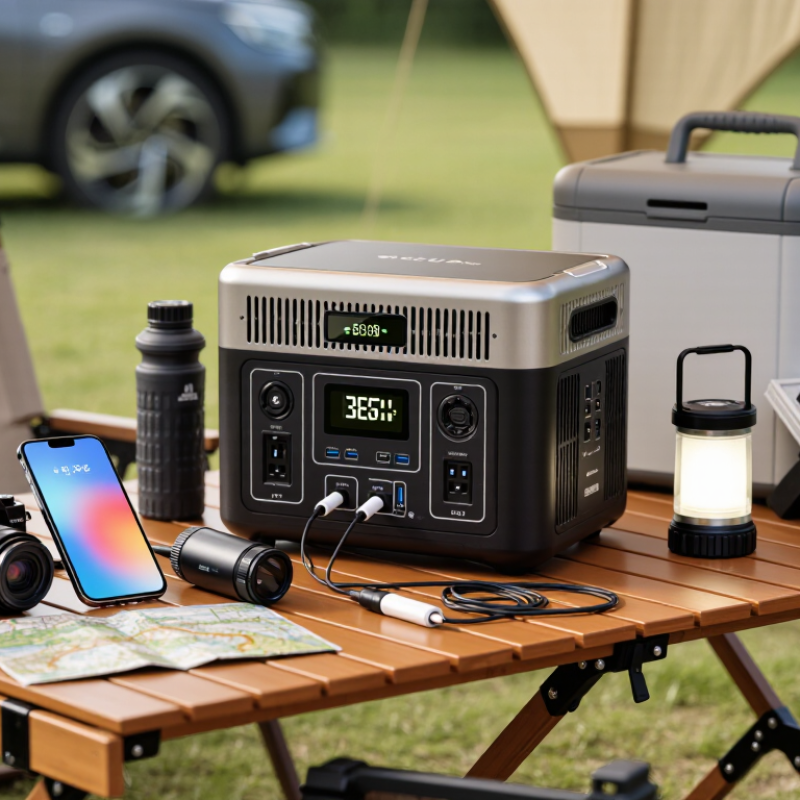
Define Your Portable Power Needs and Intended Use
How to Choose a Portable Power Station?
Define Your Portable Power Needs and Intended Use
Start with the situation, not the power station. A weekend campsite needs different capacity from home emergency backup.
List every device you may use. Include a phone, lamp, laptop, cooler, medical equipment, or small cooking appliance.
Write down each device’s running wattage. Check the label, manual, or a reliable power meter.
Then estimate daily energy use in watt-hours. A 60-watt laptop running for four hours needs about 240 watt-hours.
Allow extra capacity for charging losses and unexpected use. Around 20% is a practical starting point.
Power demand matters too. Some appliances draw a brief surge when their motors start.
A station must handle both continuous watts and starting watts. Ignoring surge power can cause sudden shutdowns.
Think about location and weather. A cold tent, dusty workshop, or hot vehicle changes how equipment performs.
I once calculated only normal laptop use and forgot a small fan. The battery emptied earlier than expected.
That mistake changed my planning method. I now record real measurements during a typical day.
Consider how often you can recharge. Wall charging may work at home, while vehicle or solar charging helps away from outlets.
Check cable types, charging times, noise, weight, and storage temperature before deciding.
Do not choose the largest capacity automatically. Extra weight can become inconvenient during a long walk.
A modest station may be better for lights and communication. Larger equipment suits higher loads and longer outages.
Keep medical or safety-critical equipment within its documented operating requirements. Manufacturer specifications deserve careful attention.
Evaluate Recharge Methods, Charging Speed, and Energy Efficiency
When choosing a portable power station, compare recharge methods before chasing capacity. Wall charging is usually fastest, while solar charging works quietly outdoors but depends on sunlight, panel angle, and temperature. Car charging is convenient, yet its lower input often extends the wait. A 1,000 Wh station receiving 180 W needs about 5.6 hours under ideal conditions. Real charging takes longer.
Read the input wattage carefully. A large battery with a weak charger may be frustrating. USB Power Delivery can reach 240 W under its Revision 3.1 specification, but the station, cable, and adapter must all support that level. Solar input also needs headroom. A 200 W panel rarely delivers 200 W continuously. Dust, clouds, and heat reduce production.
Efficiency matters after charging. NREL’s 2023 Annual Technology Baseline models lithium-ion storage at roughly 85% round-trip efficiency. The U.S. Department of Energy’s Energy Storage Grand Challenge Roadmap identifies about 85–95% as a typical lithium-ion storage target range. In practice, inverter losses and standby consumption reduce usable energy. A 1,000 Wh display may not provide 1,000 Wh through AC outlets. I often overestimate solar recovery by ignoring cloudy afternoons. Check the manufacturer’s input curve, idle draw, and charging temperature range. Then test the station with your real load, such as a 60 W laptop and a small lamp, rather than trusting capacity alone.
Check Portability, Durability, Safety Features, and Display Controls
Choosing a portable power station starts with realistic handling, not the largest battery number. Lift the unit with one hand, if possible, and check whether its handle cuts into your palm. A compact model can still feel awkward in a car or tent. Weight matters. Look for balanced construction, protected ports, and rubber feet that grip uneven ground. I once focused on capacity and ignored cable storage; that small mistake made setup frustrating.
Durability should match the places you actually visit. For regular outdoor use, inspect the casing, port covers, fan openings, and hinge strength. Dust resistance and light splash protection are not the same as waterproofing. Read the manual’s environmental limits carefully. Safety features deserve more than a checklist. Choose battery management, temperature monitoring, overload protection, and short-circuit protection. A clear warning system helps when powering a heater, lamp, or other demanding appliance. Independent safety testing and a traceable warranty can improve confidence, but neither replaces correct use.
The display should show input, output, remaining charge, and estimated runtime without confusing symbols. Buttons need to work with cold fingers or low light. Some screens provide precise figures, while others offer rough estimates. Treat runtime as guidance. Temperature, battery age, and power demand can change results. Check whether the controls prevent accidental activation during transport. I would also test every port before a trip, because unused sockets can hide problems. A short hands-on test often reveals more than a polished specification sheet.
How to Choose a Portable Power Station?
Compare portability, durability, safety features, and display controls using a practical 1–5 evaluation scale.
For portability, check total weight and the presence of a comfortable handle. For durability, compare battery chemistry and rated cycle life; LiFePO₄ batteries commonly offer around 3,000 or more cycles under specified test conditions. Safety should include battery-management protection against overcharge, over-discharge, short circuits, overheating, and overload. A clear display should show battery percentage, input and output power, remaining time, and active ports.
Balance Product Quality, Expandability, Warranty, and Overall Cost
How to Choose a Portable Power Station?
Product quality should guide your decision, not a low purchase price. Check the battery chemistry, inverter rating, cooling design, and protection systems. A dependable unit should provide stable output during temperature changes and repeated charging. Look for clear test data, safety certifications, and honest capacity figures. Usable energy is often lower than the advertised capacity because of conversion loss. That detail matters when running a refrigerator overnight.
Expandability can reduce long-term cost. Some systems support extra batteries, solar input, or replacement components. This flexibility helps when your energy needs grow. However, expansion hardware may be expensive or difficult to source later. Check connector types, maximum solar input, charging time, and total system weight before buying. Bigger is not always better. A heavy unit may remain unused in a garage.
Tips: Calculate the watt-hours needed for your most important devices. Add a safety margin of 20 to 30 percent. Compare the complete cost, including solar panels, cables, extra batteries, and delivery. Read the warranty conditions carefully. Confirm its length, battery coverage, repair process, and service location. A long warranty sounds reassuring, but vague exclusions can weaken its value. I would also test the return policy before purchase. My earlier mistake was focusing on peak output while ignoring portability. That choice made regular use inconvenient.
