How to Choose the Best Beachflag Pole in 2026?
Choosing the right Beachflag Pole in 2026 requires more than comparing prices or glossy product photos. Wind, ground type, flag size, transport needs, and repeated assembly all affect performance. A pole that looks stable inside a showroom may bend beside an exposed beach walkway.
Johan Lindström, a display-equipment specialist with more than two decades of field experience, says, “The best pole is the one that matches the site, not merely the flag.” That practical view shapes this guide. We will examine fiberglass flexibility, aluminum strength, joint quality, base options, and replacement parts. Small details matter. A loose connector can make a flag twist. A shallow water base may fail on soft sand. A heavy cross base can become awkward during event setup.
The best Beachflag Pole depends on the job. Teardrop flags need different tension than straight banners. A hotel entrance may favor a neat indoor base, while a surf event needs stronger outdoor support. Material labels can also mislead. “Weather-resistant” does not explain performance after weeks of ultraviolet exposure.
Be realistic.
This guide compares useful specifications with everyday handling. It also questions common buying assumptions, because durability claims are not always independently tested. We will consider setup time, packed length, repairability, safety, and long-term value. By the end, readers should understand which Beachflag Pole suits their venue, climate, budget, and promotional goals. The final choice should feel dependable in real wind, not just convincing on a product page.
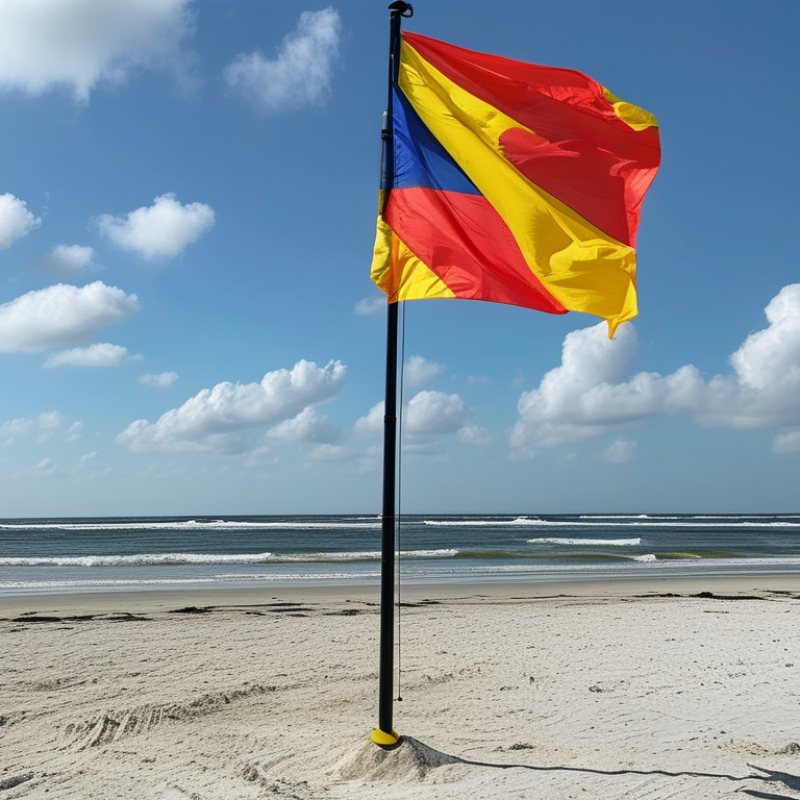
Define Pole Requirements by Display Scale: Common Heights from 2 to 5 m
Choosing a beachflag pole starts with display scale, not appearance. A 2 m pole suits indoor counters, shop entrances, and crowded exhibition aisles. It keeps the flag readable without blocking nearby products. A 3 m pole offers a useful middle ground for reception areas, cafés, and small outdoor promotions. The printed area becomes more visible, but the base still remains manageable.
For open spaces, 4 m poles create stronger sightlines across parking areas and event fields. A 5 m pole is better for large venues, roadside visibility, and busy outdoor entrances. However, height increases wind load and installation demands. According to the Outdoor Advertising Association of America, U.S. out-of-home advertising revenue reached $9.1 billion in 2023. That figure reflects the continuing value of visible physical displays. UFI’s Global Exhibition Barometer also reports continued recovery in exhibition activity, where clear wayfinding remains important.
Do not match pole height alone. Check the flag’s finished dimensions, sleeve design, ground surface, and expected wind conditions. A 4 m pole with a small graphic may look weaker than a well-proportioned 3 m system. For soft soil, use a ground stake with sufficient depth. For pavement, choose a weighted cross base or water-filled base. I have seen tall flags selected for prestige, then lowered because the base shifted. That judgment can be imperfect. Review the site first. Small details often decide whether a beachflag looks stable, readable, and professional.
Compare Fiberglass and Aluminum: Density, Flexibility, and Weight Data
How to Choose the Best Beachflag Pole in 2026?
Compare Fiberglass and Aluminum: Density, Flexibility, and Weight Data
Fiberglass usually has a density of 1.8–2.0 g/cm³, while aluminum measures about 2.70 g/cm³. This makes fiberglass lighter by material volume. However, finished pole weight depends on diameter, wall thickness, joints, and base fittings. Density alone can mislead buyers. A thicker fiberglass tube may weigh more than a slim aluminum tube.
Fiberglass bends smoothly under changing wind pressure. Its typical elastic modulus ranges from roughly 20–50 GPa, depending on the fiber structure. Aluminum sits near 69 GPa, so it feels stiffer and transfers more force into the fittings. During setup, fiberglass often feels forgiving in gusts. Aluminum feels precise, but it may dent after a hard impact. That difference matters beside busy walkways.
Check the complete pole, not only the shaft. A two-meter fiberglass section can be easy to carry, yet its connectors may add noticeable weight. Aluminum sections usually feel more rigid in the hand. They also tend to pack neatly. I once assumed the lightest shaft would create the easiest display, but the base changed the handling completely. That was a useful correction. Ask for measured weight, section diameter, and tested wind conditions. Flexibility is valuable, but excessive bending can make the flag twist and reduce readability. A small outdoor trial often reveals more than a specification sheet.
Assess Wind Safety with EN 1991-1-4 and Manufacturer-Tested Limits
How to Choose the Best Beachflag Pole in 2026?
Wind safety should guide your choice more than height or appearance. EN 1991-1-4 provides methods for assessing wind actions on temporary structures. It considers wind speed, terrain, exposure, building surroundings, and height above ground. The standard is not a simple “safe wind speed” label. Local National Annex requirements may also change the calculation.
Ask for documented, manufacturer-tested limits for the complete beachflag system. The pole, base, fabric, connector, and ballast must work together. A 3.5-metre pole with a cross base may behave poorly on exposed paving. The same pole could perform better with a filled water base on sheltered ground. Check whether testing used gusts, steady wind, or both. These details matter.
Look for test dates, setup photographs, load conditions, and clear shutdown guidance. A credible supplier should explain when to lower or remove the flag. Inspect the pole after transport, especially around joints and the ground sleeve. Small cracks can become serious during gusts. I would not rely on a generic wind rating alone. That shortcut is tempting, but it ignores site conditions and ballast weight. Even careful selection has limits. Weather can change faster than an event schedule, so someone should monitor the flag during use.
Match Base Type to Pole Height Using 20–30 L Water-Base Capacity
How to Choose the Best Beachflag Pole in 2026?
Match Base Type to Pole Height Using 20–30 L Water-Base Capacity
A beachflag pole needs a base that matches its height, flag area, and location. A 20–30 L water base provides roughly 20–30 kilograms of ballast when filled. For compact poles around 2.5–3 meters, a 20 L base may suit paved entrances, indoor events, and sheltered courtyards. It remains easier to transport and drain after use. Check the pole’s recommended base capacity before purchasing.
Taller poles create more leverage. A 3.5–5 meter pole usually benefits from a 30 L water base, especially with a broad or curved flag. On grass or soil, a ground spike may provide better stability than a water base. Hard surfaces require a flat, wide base that resists sliding. Wind changes everything. Strong gusts can exceed the capacity of either option, so outdoor displays may need additional approved ballast or temporary removal.
I once selected a lighter base because it was easier to carry. The setup looked fine at first, but the flag leaned during a windy afternoon. That mistake changed my checklist. I now compare total pole height, fabric dimensions, surface condition, and expected wind before choosing. Empty water bases are convenient, yet they feel deceptively light. Fill them completely, inspect the valve, and test the assembled flag before guests arrive. Small details matter.
Verify UV Resistance, Joint Strength, and 110–120 g/m² Flag Compatibility
How to Choose the Best Beachflag Pole in 2026?
A reliable beachflag pole must handle sunlight, wind, and repeated setup. UV resistance deserves careful checking, not just a quick glance at the material label. Look for UV-stabilized fiberglass or aluminum, then inspect the supplier’s test information. Outdoor exposure can fade weak plastics and make them brittle within one season. I once trusted a smooth finish without checking UV details. That shortcut failed.
Joint strength matters during gusts and daily assembly. Connect each section firmly, but avoid forcing tight joints that may crack later. A good pole should flex slightly while returning to its original shape. Check for loose sleeves, sharp edges, and uneven connectors before installing the flag. The base also needs suitable weight for the surface and expected wind conditions. Real site testing is more useful than impressive specifications alone.
Tips: Confirm compatibility with 110–120 g/m² flag fabric before ordering. Measure the sleeve diameter and pole length. Test the assembled pole for ten minutes outdoors. Watch the top section closely. If the flag pulls heavily against one joint, reconsider the design. Fabric weight can vary, even within the same stated range. Ask for material data, joint photos, and replacement-section availability. A small inspection now may prevent a bent pole later.
