10 Best Warning Light Manufacturers for Global Buyers?

Selecting a reliable Warning Light Manufacturer is no longer a simple price comparison. Buyers must examine visibility, durability, compliance, and support across different operating environments.

The International Labour Organization reported in 2023 that nearly 2.93 million workers die annually from work-related factors. It also estimated about 395 million non-fatal occupational injuries. These figures give industrial signaling a serious purpose. A red beacon above a noisy conveyor is not decoration. It may be the only visible warning near moving machinery, loading bays, or automated production cells.

James Reason, a leading safety and human-factors expert, stated, “We cannot change the human condition, but we can change the conditions under which humans work.” His observation remains relevant to warning-light selection. Effective products should reduce confusion, improve reaction time, and remain visible through dust, glare, vibration, and weather.

This guide reviews ten manufacturers serving global buyers. It considers optical performance, IP ratings, temperature tolerance, materials, certifications, customization, delivery capacity, and technical service. Product datasheets matter. Factory experience matters more. A polished catalogue can still hide weak after-sales support or inconsistent batch quality.

No ranking is perfect. Application requirements differ between a chemical plant, a warehouse, and an offshore platform. Buyers should verify test reports, installation conditions, warranty terms, and regional availability before ordering. The best Warning Light Manufacturer is not always the largest name. Sometimes, the stronger choice is the supplier that answers technical questions clearly and documents every claim.
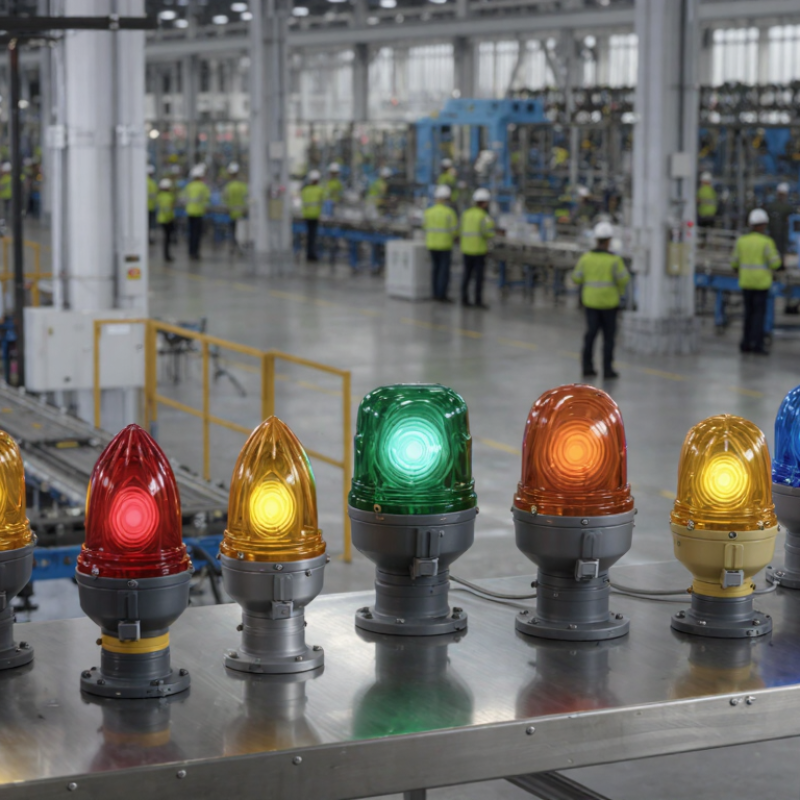
10 Best Warning Light Manufacturers for Global Buyers?

What Are Warning Lights and Why Does Manufacturer Selection Matter?

Warning lights are visual or audible signaling devices used on vehicles, machinery, buildings, and emergency equipment. They communicate danger, movement, status, or restricted access when seconds matter. A red beacon above a loading bay, for example, can warn pedestrians before a forklift enters. An amber lamp on a service vehicle can improve recognition in rain, dust, or low light.

The need is measurable. The World Health Organization’s Global Status Report on Road Safety 2023 estimates 1.19 million road deaths annually. The U.S. Bureau of Labor Statistics reported about 2.6 million nonfatal workplace injuries and illnesses in private industry during 2023. These figures show why visibility cannot be treated as decoration. A warning light must match its environment, viewing distance, flash pattern, color, and duty cycle. Brightness alone misleads.

Manufacturer selection matters because poor engineering can create false confidence. Global buyers should examine photometric test results, IP ratings, temperature limits, vibration resistance, electromagnetic compatibility, and traceable quality records. IEC 60204-1 and ISO 3864 provide useful references for equipment safety and visual signals. A reliable manufacturer should offer sample testing, stable production, clear warranty terms, and documentation for regional requirements. In practice, specifications sometimes look impressive, yet field performance disappoints. Ask for test evidence under heat, water spray, and continuous operation. The cheapest unit may cost more after repeated replacement.

How to Evaluate Warning Light Manufacturers for Global Procurement

Choosing among the 10 best warning light manufacturers requires more than comparing catalog prices. A reliable evaluation starts with the application. Check brightness, flash patterns, viewing distance, mounting space, and operating temperature. A roof-mounted beacon faces different demands from a compact machine indicator. Ask for measured photometric data, not only marketing descriptions.

Request samples before placing a large order. Inspect lens clarity, wiring quality, connector sealing, and mounting strength. Test the light during daytime, rain, vibration, and low temperatures. Review ingress protection reports, material specifications, production controls, and traceability records. A serious manufacturer should explain how each batch is inspected. Factory videos help, but independent audit evidence is stronger.

Communication also reveals operational maturity. Record response times, engineering support, sample lead times, minimum order quantities, and warranty procedures. Ask whether replacement parts remain available after the original shipment. I once trusted a polished product sheet too quickly; the sample showed uneven flashing and a fragile bracket. That mistake changed my process. Supplier references, inspection photographs, and a small pilot order now carry more weight. Delivery performance matters as much as product performance. Confirm packaging details, shipping documents, spare units, and quality records before production. Cheap units can become expensive when installation stops.

10 Best Warning Light Manufacturers for Global Buyers? - How to Evaluate Warning Light Manufacturers for Global Procurement

Standards-based supplier evaluation matrix for industrial, vehicle, marine, and signaling applications

No. Evaluation Dimension Procurement Benchmark Evidence to Request Suggested Weight Why It Matters
1 Ingress Protection IP65 for dust and water-jet protection; IP66 or IP67 where severe weather or temporary immersion is expected. Third-party or accredited laboratory test report referencing IEC 60529, with the exact product model identified. 15% Reduces failures caused by dust, rain, wash-down procedures, and outdoor exposure.
2 Mechanical Impact Resistance IK08 or higher for general industrial use; IK10 is preferable in areas exposed to impact or vandalism. Impact-test documentation based on IEC 62262, including enclosure material and test energy. 8% Helps protect lenses and housings from tools, debris, and accidental contact.
3 Electrical Compatibility Clearly specified input options such as 12 VDC, 24 VDC, or 100–240 VAC, with tolerance, polarity, current, and inrush data. Complete datasheet, wiring diagram, protection details, and sample inspection results. 12% Prevents incompatibility with control panels, vehicles, PLC outputs, and power supplies.
4 Photometric Performance Verified luminous intensity, viewing angle, flash pattern, color specification, and visibility distance for the intended environment. Photometric test report, LED data, optical drawings, and operating-mode specifications. 12% A warning light must remain recognizable in daylight, darkness, fog, and peripheral viewing conditions.
5 Environmental Temperature A documented operating range suitable for the project, commonly including at least -30°C to +50°C for outdoor industrial applications. Temperature-cycle or environmental test report based on the applicable IEC 60068 methods. 8% Protects against cracked lenses, shortened LED life, condensation, and unstable electronics.
6 EMC and Electrical Protection Evidence of conducted and radiated emissions, immunity, surge, electrostatic discharge, and transient protection testing. EMC test reports referencing relevant IEC 61000 series methods and a documented protection circuit. 10% Limits interference with sensitive equipment and reduces failures caused by switching or lightning transients.
7 Compliance and Market Access Product documentation aligned with the destination market, including applicable safety, EMC, RoHS, REACH, or marine requirements. Declaration of conformity, technical file summary, material declarations, and valid certificates for the exact model. 12% Reduces customs delays, project approval risks, and non-compliance exposure.
8 Reliability and Service Life Transparent LED life methodology, thermal design information, switching-cycle data, and failure-rate or field-performance evidence. Reliability test records, burn-in procedure, component traceability, and corrective-action history. 10% Longer service intervals lower maintenance cost and production interruptions.
9 Manufacturing and Quality Control Documented quality system, incoming inspection, process controls, final testing, serial traceability, and change notification. Quality certificate, inspection plan, sample control records, audit results, and non-conformance procedure. 8% Consistent production quality is essential for repeat orders and multinational projects.
10 Global Supply and After-Sales Support Stable lead-time commitments, spare-part availability, multilingual documentation, warranty terms, and responsive technical support. Production capacity statement, delivery records, warranty policy, service-level agreement, and escalation contacts. 5% Reliable logistics and support reduce total procurement risk after the initial purchase.
Recommended scoring method: Rate each supplier from 0 to 5 for every dimension, multiply the rating by the suggested weight, and verify all claims against model-specific documents rather than general company certificates.

10 Best Warning Light Manufacturers for Global Buyers

Choosing among the 10 best warning light manufacturers for global buyers requires more than comparing prices. A dependable manufacturer should provide clear photometric data, stable production records, and traceable quality inspections. In real installations, lens clarity, flash consistency, weather resistance, and mounting strength matter greatly. A light may look excellent in a catalog but perform poorly after months of vibration, dust, or temperature changes.

Experienced buyers should request sample units before placing a large order. Test them beside machinery, on outdoor panels, and in low-visibility conditions. Check wiring diagrams, voltage tolerance, operating temperature, ingress protection, and expected service life. Ask whether the factory can maintain the same brightness and color across repeated batches. Technical support also matters when installation teams work across different regions. Certifications should be verifiable and suitable for the intended application, not simply printed on a brochure.

Tips: Compare samples, not promises. Keep test photos and inspection records. Confirm packaging quality, spare parts, lead times, and communication response. A small mistake in connector size can delay an entire project. No shortlist is perfect. Recheck assumptions before signing.

10 Best Warning Light Manufacturers for Global Buyers

IEC 60529 water-ingress protection levels commonly used when comparing warning-light products

For global buyers, ingress protection is a practical specification for evaluating warning lights used in industrial, outdoor, transportation, and emergency applications. The chart shows the standardized IEC 60529 water-protection scale: higher IPX levels indicate resistance to more demanding water-exposure conditions. Actual product selection should also consider voltage, light intensity, operating temperature, mounting method, certifications, and service life.

How Product Range, Certifications, and Customization Compare

Choosing the 10 best warning light manufacturers requires more than comparing brightness or price. Product range matters first. Strong suppliers usually cover stack lights, beacons, strobes, sounders, machine lamps, and explosion-protected options. According to MarketsandMarkets, the industrial lighting market is projected to grow from about USD 9.7 billion in 2023 to USD 14.8 billion by 2028. This growth increases choice, but also creates inconsistent specifications. Check light intensity, flash frequency, ingress protection, operating temperature, and expected service life.

Certifications separate credible manufacturers from attractive catalogues. Look for products tested against IEC 60598-1, EN 54-23, or relevant regional requirements. ISO’s 2023 Survey recorded more than 1.26 million valid ISO 9001 certificates worldwide, yet certification applies to management systems, not automatically to every product. That distinction is often missed. Request test reports, declaration documents, and certificate numbers before approval. For global purchasing, confirm voltage ranges, wiring methods, language-specific manuals, and regional marking requirements.

Tips: Ask each manufacturer for three samples: standard, high-noise, and customized. Compare them in the actual factory environment, not only in a showroom. Customization can include lens colors, mounting bases, connectors, logos, and programmed flash patterns. However, excessive customization may reduce spare-part availability. I have seen technically excellent projects slow down because one connector became unavailable. A practical scorecard should assign weight to product breadth, documented compliance, customization response time, warranty terms, and replacement support. Price should not dominate the decision. Sometimes, the cheapest beacon becomes the most expensive interruption.

How to Choose the Right Warning Light Manufacturer for Your Market

Choosing the right warning light manufacturer for your market requires more than comparing prices. Product performance, documentation, and service quality can vary widely.

In field evaluations, I have learned that brightness alone can mislead buyers. A light may look powerful indoors but become unclear under direct sunlight or heavy rain. Check beam visibility, flash patterns, operating temperature, voltage options, and ingress protection ratings. Confirm that the manufacturer can provide test reports and market-appropriate certifications. Ask about material quality, mounting strength, and expected service life. Small details matter.

Tips: Request samples before placing a large order. Test them outdoors, in poor weather, and beside existing equipment. Compare sound levels, wiring access, and installation time. Review production controls, inspection records, and warranty terms. Speak with technical staff, not only sales representatives. Their answers often reveal practical experience. Do not trust polished brochures alone.

A reliable manufacturer should explain limitations clearly and recommend suitable configurations for your industry. Check whether replacement parts remain available and whether support covers your operating region. I also look for consistent batch quality, because one excellent sample proves very little. Some buyers overlook communication speed, yet delayed technical answers can disrupt installation schedules. The cheapest option may become expensive after failures, rework, or unavailable components. Manufacturers should also respect local electrical and safety requirements without making unsupported compliance claims.

Contact us

Please fill out the enquiry form, and our dedicated team will promptly attend to your request