What Is the Best Perfume Atomizer Supplier in China?
Choosing the best Perfume Atomizer supplier in China requires more than comparing prices. A reliable partner should demonstrate manufacturing experience, consistent quality, and clear communication. Product photos are useful, but they cannot reveal everything. Real evaluation begins with samples, factory evidence, and practical testing.
A professional supplier should explain materials, filling methods, spray performance, and packaging options. The atomizer should feel smooth in the hand and deliver a fine, even mist. Inspect the cap, pump, bottle seal, and thread connection carefully. Small defects often become expensive problems in large orders. Ask for batch records, quality procedures, and relevant export documentation. Responsible suppliers should also support compliant labeling and safe product handling.
However, no supplier is perfect. Delays happen. Communication may sometimes be unclear. A low quotation can also hide weaker components or limited after-sales support. I would not judge a factory from one successful sample alone. Repeated samples, production checks, and written specifications create stronger evidence. This approach reflects real purchasing experience rather than marketing claims.
The best supplier depends on your market, order volume, design requirements, and delivery expectations. A luxury brand may prioritize glass clarity and custom decoration. A travel product company may value compact size and leak resistance. Wholesale buyers may need stable pricing and flexible production capacity. This guide compares these factors carefully, helping buyers identify a trustworthy Chinese Perfume Atomizer supplier with realistic expectations and measurable standards. Reliability matters more than impressive promises.
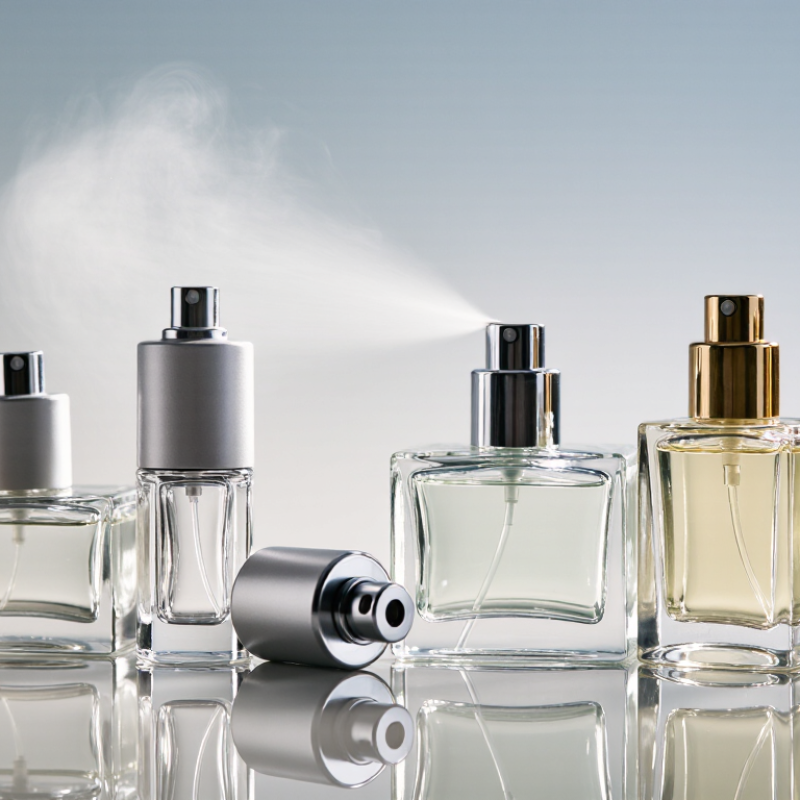
What Is a Perfume Atomizer Supplier?
A perfume atomizer supplier is more than a seller of small spray bottles. It develops, produces, tests, and ships dispensing components for fragrance packaging. These components may include the bottle, pump, actuator, collar, cap, and inner tube. A capable supplier explains how each part affects spray pattern, leakage resistance, hand feel, and filling efficiency. The work is technical. Tiny dimensional changes can cause uneven mist or a stiff pump. Good suppliers share material specifications, production tolerances, inspection records, and sample procedures before large orders begin.
In real sourcing, buyers should examine manufacturing experience, quality-control systems, and communication speed. Ask for physical samples, not only polished photographs. Test the atomizer repeatedly, including vertical spraying, pressure changes, cap fitting, and transport simulation. Check whether the pump returns smoothly and whether the closure stays secure. An experienced supplier can discuss compatibility between fragrance formulas and materials. They should also explain batch tracking, defect handling, packaging protection, and production lead times. Clear answers matter more than impressive promises.
The “best” supplier is not always the cheapest one. I once thought a lower unit price showed efficiency; that assumption was incomplete. Tooling, rejected units, delays, and rework can quickly change the real cost. A reliable partner admits limitations and records corrective actions. Still, no supplier is perfect. Buyers should review samples again when designs, materials, or production sites change. That simple discipline prevents avoidable surprises.
Key Factors for Evaluating Suppliers in China
What Is the Best Perfume Atomizer Supplier in China?
Key Factors for Evaluating Suppliers in China
Choosing a perfume atomizer supplier in China takes more than comparing unit prices. Check whether the supplier can explain pump output, bottle compatibility, material options, and expected tolerances in clear terms. Ask for samples from the same production process used for regular orders. Test each sample with your intended fragrance, then inspect the spray pattern, leakage, and collar fit. Small details matter. A fine mist should feel consistent, not merely look good in a product photo.
Review quality controls before discussing large quantities. Ask how incoming components are checked, how production batches are recorded, and what happens when a sample fails inspection. Request relevant test reports, but verify that they match the model you plan to buy. Communication is another useful signal. Can the team answer technical questions with specific information, or only offer broad promises? Production capacity and lead times should also be confirmed in writing. Price matters, but a low quote can hide thin specifications or changing component quality. I would not treat a polished showroom or quick reply as proof of reliability; those signals are easy to overvalue. Compare samples, documentation, and follow-through before deciding.
Types of Perfume Atomizers and Their Applications
Perfume atomizers vary by spray mechanism, capacity, and intended use. Crimp-pump atomizers are common in full-size glass bottles, where a fine, even mist helps distribute fragrance across skin. Screw-neck pumps suit refillable or travel-oriented packaging because they can be removed more easily. Miniature pump sprays, often holding only a few milliliters, work well for sampling and handbags. The right choice depends on the formula, bottle opening, target spray pattern, and how often the product will be used.
Applications differ in practical ways. A fine-mist pump is useful for light eau de parfum, while a more controlled spray can reduce overspray on smaller areas. For travel, compact bottles need secure closures and reliable leak resistance; a beautiful finish is not enough. According to Fortune Business Insights, the global perfume market was valued at US$50.46 billion in 2023 and is forecast to reach US$74.77 billion by 2032. This market figure does not measure atomizer sales, but it indicates the scale of the category these components serve.
When assessing a supplier in China, ask for pump output per stroke, dip-tube options, neck-finish compatibility, and samples tested with your actual fragrance. Request details on material consistency and quality checks across production batches. Small differences matter. A pump that sprays well with water may behave differently with a fragrance formula, and this is easy to overlook. Sources: Fortune Business Insights, Perfume Market report; supplier specifications and sample testing.
How to Compare Quality, Pricing, and Production Capacity
Choosing a perfume atomizer supplier means comparing measurable performance, not just a polished sample. Check spray consistency, leakage, collar fit, and output per press across several production batches. A useful bench test is simple: fill ten units, spray each twenty times, then inspect for clogging and seepage. Record failures. Smithers’ report, The Future of Global Packaging to 2028, forecasts global packaging demand will continue growing, making dependable production and quality controls increasingly important across packaging supply chains.
Ask suppliers for documented inspection criteria, batch records, and test results for materials and finished components. Compare prices using the same specifications, including pump, cap, decoration, packaging, tooling, and shipping. The lowest unit quote may exclude costly setup or quality checks. Request a pilot order before committing to a large run. Small differences matter.
Production capacity should be verified with recent output records, equipment lists, staffing patterns, and lead-time history. A factory’s stated monthly capacity is not the same as available capacity during peak orders. Confirm how it handles rejected parts and urgent reorders. I would also compare sample performance with goods from a normal production run; suppliers can make excellent samples. That gap deserves attention.
What Is the Best Perfume Atomizer Supplier in China? — How to Compare Quality, Pricing, and Production Capacity
| Comparison Factor | Quality-Focused Supplier | Cost-Focused Supplier | High-Volume Supplier | What Buyers Should Verify |
|---|---|---|---|---|
| Typical atomizer format | Crimp-on or screw-on perfume pump, with matching collar and actuator | Common stock pump and standard finish options | Standardized pump platforms suited to repeat production runs | Confirm neck finish, crimp diameter, dip-tube length, output per stroke, and compatibility with the bottle. |
| Common materials | Plastic actuator with metal or plastic pump components; aluminum or plastic collar options | Predominantly standard plastic components, with limited decoration choices | Material selection depends on the approved specification and order volume | Request a bill of materials and check material suitability against the fragrance formula and packaging requirements. |
| Indicative unit-price level | Medium to high; custom color, finish, and testing can add cost | Low to medium for stock designs and larger quantities | Often competitive at high volume, but tooling, decoration, and packaging affect the final price | Compare written quotations on the same specification, order quantity, Incoterm, packaging, and tooling basis. |
| Minimum order quantity | May be higher for custom colors, coatings, or molded components | Often more flexible for standard, in-stock components | Usually best suited to larger repeat orders | Ask for separate MOQs for stock parts, custom decoration, and custom tooling; do not assume one MOQ applies to all options. |
| Sampling and approval | May offer engineering samples and pre-production samples for approval | Stock samples are generally the simplest route to evaluation | Production approval samples should match the intended mass-production specification | Approve a signed reference sample and document color, dimensions, spray pattern, and component finish. |
| Quality checks | Can include dimensional inspection, spray testing, leak checks, and compatibility testing | Inspection scope may be more limited; specify requirements in the purchase order | May support documented in-process and final inspection for scheduled production | Request the inspection plan, acceptance criteria, test records, and a clear process for handling nonconforming goods. |
| Production capacity | Capacity depends on the degree of customization and the supplier’s production setup | Stock availability can shorten lead time, but replenishment capacity should be checked | Designed to support larger runs; actual output must be confirmed for the specific product | Ask for monthly capacity for the exact pump model, current order backlog, and a realistic production schedule. |
| Lead-time considerations | Custom approvals and finishing can extend the schedule | Stock products may ship sooner, subject to availability and inspection | Repeat orders can be easier to schedule after specifications are fixed | Separate sample, tooling, production, inspection, and transit times in the delivery plan. |
| Best fit | Brands prioritizing finish consistency, testing, and product-specific development | Buyers seeking standard components and a lower initial order cost | Buyers with stable specifications and recurring, higher-volume demand | Select based on total landed cost, verified performance, order size, and delivery risk—not unit price alone. |
Note: These are supplier-profile comparison criteria, not verified quotations or claims about any individual manufacturer. Prices, MOQs, lead times, and capacity vary by specification, order quantity, season, and shipping terms; request current written quotations and samples before placing an order.
Steps to Select and Verify the Best Supplier
What Is the Best Perfume Atomizer Supplier in China?
Steps to Select and Verify the Best Supplier
Start with the product, not the sales pitch. Define bottle capacity, spray output, neck finish, materials, and target order quantity. Ask shortlisted suppliers for technical drawings and samples from the same production line. Test each atomizer with your intended liquid: check the spray pattern, leakage, cap fit, and repeated pump action. Small details matter. A fine mist in a sample room may behave differently after transport or weeks of storage.
Use market data to frame your supplier search, not to replace product testing. Grand View Research estimated the global fragrance market at USD 50.85 billion in 2023 and projected 5.9% annual growth through 2030. This is not an atomizer-market figure, but it signals sustained demand for packaging that performs consistently. Request documented quality procedures, batch inspection records, material specifications, and a clear process for handling defects. Verify factory details through a live video walkthrough or an independent audit; a polished catalog proves little.
Before placing a large order, agree on measurable acceptance criteria: leak rate, spray consistency, dimensional tolerances, and packaging condition. Ask for a pilot run and inspect randomly selected units, rather than relying only on supplier-picked samples. Confirm production capacity, lead times, payment terms, and who pays for rework. Keep written records. I would still treat one successful sample as limited evidence; real confidence comes from repeatable results across batches.
Article Source:
Contact us
Please fill out the enquiry form, and our dedicated team will promptly attend to your request