7 Best Double Doors for Global Buyers?
Choosing the best Double Doors for global buyers requires more than attractive photographs and a low quoted price. Door performance changes with climate, building use, opening size, and installation quality. A steel entrance may suit a busy commercial property, while insulated fiberglass doors can perform better in coastal or humid regions. Timber remains visually appealing, but it needs careful sealing and regular maintenance.
This guide examines seven practical Double Doors options for international projects. The selection considers materials, thermal insulation, weather resistance, security hardware, accessibility, and long-term service needs. It also considers shipping weight, packaging protection, replacement parts, and communication with overseas suppliers. These details often decide whether a door performs well after installation.
Real projects are rarely perfect. Product descriptions can omit tolerances, drainage design, or hardware limitations. That assumption is too simple. Buyers should request technical drawings, sample finishes, test reports, warranty terms, and installation instructions before ordering. Local building requirements must also be checked by qualified professionals, because standards differ between countries and applications.
The seven options below are not ranked by appearance alone. Each one has useful strengths and possible compromises. Some doors offer excellent insulation but require more precise fitting. Others provide strong visual impact but demand higher maintenance. A reliable purchase balances design, performance, budget, delivery conditions, and local support. The most suitable choice may not be the most expensive one.
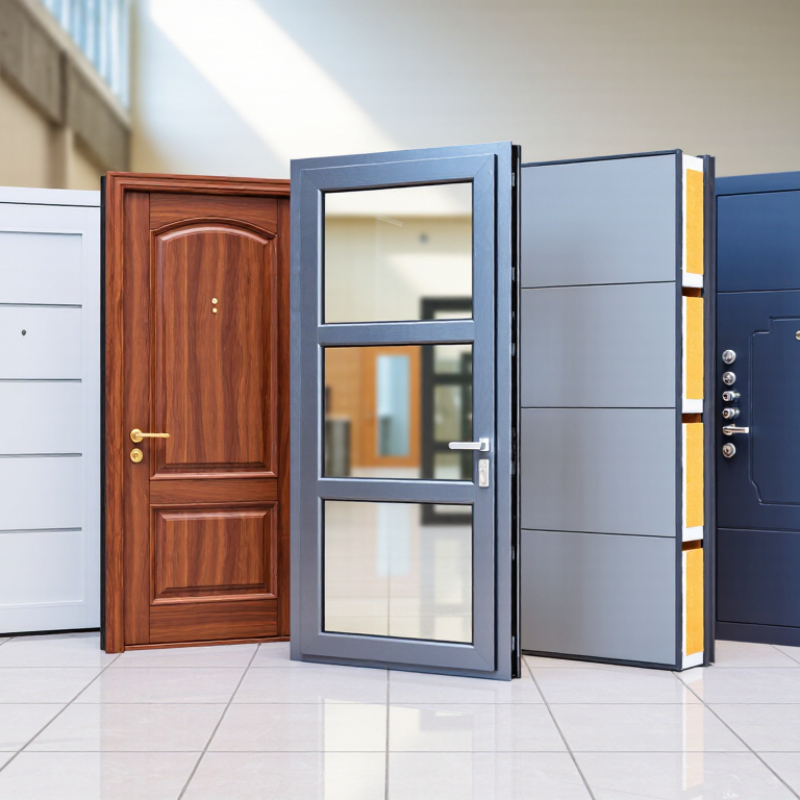
Double Doors: Definition, Features, and Global Applications
7 Best Double Doors for Global Buyers?
Double Doors: Definition, Features, and Global Applications
Double doors are an entry system with two coordinated panels within one frame. The panels may swing inward, outward, or meet at the center. One panel often serves daily traffic, while both panels open for furniture, machinery, or large deliveries.
Their main features include wider access, balanced visual design, and flexible hardware. Buyers should check frame strength, hinge capacity, locking points, weather seals, and glazing performance. Aluminum suits humid areas when properly treated. Timber offers warmth but needs regular protection. Steel provides strong security, although it may require corrosion control near the coast. Fire-rated or insulated options must include verified test documentation.
In my project experience, installation accuracy matters as much as the door material. A slight frame twist can cause rubbing, drafts, or uneven locks. It is easy to overlook this. Measure the opening after the wall finish is complete, not before. Global applications include villas, hotels, schools, offices, warehouses, and public buildings. In cold regions, buyers often prioritize thermal breaks and low air leakage. In tropical climates, ventilation, shade, and moisture resistance become more important. For busy public entrances, outward opening, clear width, accessible thresholds, and durable closers deserve careful review. Local building requirements still vary, so technical documents should be checked with qualified professionals before ordering.
| Double-Door Type | Definition and Main Structure | Typical Materials | Key Features | Typical Clear Opening | Thermal Performance | Common Global Applications | Security and Weather Resistance | Main Advantages | Important Buying Considerations |
|---|---|---|---|---|---|---|---|---|---|
| Insulated uPVC French Doors | Two hinged door leaves meeting at the center, usually with one active leaf and one secondary leaf secured by flush bolts. | Multi-chamber uPVC frames, double- or triple-glazed glass, galvanized steel reinforcement, EPDM or equivalent seals. | Low maintenance Good airtightness Multiple colors Low threshold options | Approximately 1,200–1,800 mm wide × 2,000–2,400 mm high | Typical whole-door U-value: approximately 1.0–1.8 W/m²K, depending on glazing and frame design. | Residential entrances, balconies, patios, apartments, and moderate-climate housing. | Good resistance when fitted with multi-point locks and compression seals; performance depends strongly on installation quality. | Cost-effective, energy efficient, corrosion resistant, and easy to clean. | Check local fire, egress, accessibility, wind-load, and glazing-safety requirements before ordering. |
| Thermally Broken Aluminum Double Doors | A pair of hinged aluminum leaves separated from the exterior frame by a low-conductivity thermal barrier. | Powder-coated or anodized aluminum profiles, insulated panels, laminated or tempered safety glass, stainless-steel hardware. | Slim sightlines High design flexibility Large glazed areas Strong frame | Approximately 1,400–2,400 mm wide × 2,100–3,000 mm high | Typical whole-door U-value: approximately 1.2–2.2 W/m²K for thermally improved systems. | Modern homes, commercial entrances, offices, hotels, retail premises, and warm or humid regions. | Good resistance to corrosion and weather when correctly finished; security depends on lock, glass, and cylinder specification. | Durable, stable in changing temperatures, and suitable for larger door sizes. | Specify a true thermal break, drainage design, coastal-grade finish where needed, and tested air and water performance. |
| Solid or Engineered Timber Double Doors | Two traditional hinged leaves made from solid wood or laminated engineered timber, often installed in a decorative frame. | Hardwood, softwood, engineered timber, veneers, insulated cores, weather-resistant coatings, and metal reinforcement where required. | Natural appearance Custom profiles Repairable surface Good acoustic potential | Approximately 1,200–2,000 mm wide × 2,000–2,600 mm high | Typical whole-door U-value: approximately 1.2–2.0 W/m²K for insulated engineered timber designs. | Heritage properties, villas, luxury residences, cultural buildings, restaurants, and hospitality projects. | Can provide strong security and weather protection, but requires proper finishing, sealing, and hardware maintenance. | Warm visual character, high customization, and good compatibility with traditional architecture. | Confirm moisture content, wood treatment, coating system, threshold drainage, and maintenance requirements for the destination climate. |
| Steel Double Security Doors | A pair of hinged leaves built around galvanized or stainless steel sheets, reinforced cores, and a heavy-duty frame. | Galvanized steel, stainless steel, mineral wool or honeycomb cores, powder coating, laminated glass, and multi-point locking systems. | High impact resistance Fire-rated options Heavy-duty hardware Industrial finish | Approximately 1,400–2,400 mm wide × 2,000–3,000 mm high | Performance varies widely; insulated models commonly achieve approximately 1.5–2.5 W/m²K. | Industrial facilities, warehouses, utility rooms, secure buildings, apartment entrances, and high-traffic areas. | Very good resistance to forced entry when tested as a complete door set; fire and security ratings must be verified by certification. | Strong, durable, and suitable for demanding traffic and security conditions. | Request complete assembly test reports, corrosion protection details, fire-rating duration, and compatible wall-anchor requirements. |
| Aluminum Bi-Fold Double Doors | Two folding door panels, or two equal panel groups, that stack or fold toward the sides to create a wide opening. | Thermally broken aluminum frames, insulated glazing, stainless-steel rollers, hinges, and weather seals. | Wide opening Space saving Indoor-outdoor connection Large glass area | Approximately 1,800–4,800 mm wide × 2,000–2,800 mm high | Typical whole-door U-value: approximately 1.3–2.4 W/m²K, depending on panel count and glazing. | Patios, terraces, restaurants, event spaces, pool areas, resorts, and contemporary residences. | Moderate to good performance when correctly installed; more moving parts require careful adjustment and maintenance. | Provides a very large clear opening and efficient use of floor space. | Check track drainage, sill height, panel weight limits, roller quality, wind rating, and replacement-hardware availability. |
| Sliding Double Patio Doors | Two large panels that move horizontally along tracks; one panel may slide behind or past the other to open the passage. | Aluminum, uPVC, or timber-aluminum composite frames, insulated glass units, rollers, tracks, and compression or brush seals. | Smooth operation Minimal swing space Panoramic glazing Accessible sill options | Approximately 1,600–4,000 mm wide × 2,000–2,800 mm high | Typical whole-door U-value: approximately 1.2–2.4 W/m²K, depending on the frame and glazing system. | Residential patios, balconies, conservatories, hotels, offices, and buildings with limited interior space. | Good weather performance when tracks, interlocks, and seals are properly designed; security requires anti-lift features and suitable locks. | Easy access, excellent daylight, and no door-leaf swing into the room. | Review track cleaning needs, water drainage, glass safety, anti-lift protection, and the maximum panel weight. |
| Fire-Rated Metal Double Doors | A certified pair of hinged leaves designed to resist fire and smoke for a specified period as part of a complete door assembly. | Galvanized steel or stainless steel, mineral fiber core, intumescent seals, fire-rated glazing where applicable, and certified hardware. | Fire resistance Smoke control options Durable construction Panic hardware options | Commonly 1,400–2,400 mm wide × 2,000–2,400 mm high; larger sizes require project-specific testing. | Thermal insulation is secondary to fire performance; the fire rating may commonly range from 30 to 120 minutes, subject to certification. | Stairwells, hospitals, schools, factories, commercial buildings, plant rooms, and emergency exits. | High fire and smoke-control potential only when the entire certified assembly is installed correctly. | Supports life-safety planning and withstands demanding commercial use. | Verify the applicable national standard, rating direction, closing sequence, vision-panel limits, threshold details, and approved hardware. |
Note: Dimensions and performance figures are representative industry ranges rather than guarantees. Final values depend on the complete door system, glazing, hardware, wall construction, climate, installation method, and applicable local standards. U-values are expressed in W/m²K; lower values generally indicate better thermal insulation.

Contact us
Please fill out the enquiry form, and our dedicated team will promptly attend to your request