What Is the 2026 Best Lumbar Traction Table?
Choosing the best Lumbar Traction Table in 2026 is not simply a matter of comparing motors, straps, or glossy displays. The right table must support careful clinical reasoning, consistent positioning, patient comfort, and measurable treatment goals. It should also fit the practitioner’s experience, room size, workflow, and patient population.
Dr. James M. Cox, a respected chiropractor and developer of Cox Technic, has often emphasized, “The patient is the most important part of the system.” That principle remains highly relevant when evaluating modern traction equipment. A quiet motor is useful. Precise control matters more. A padded surface, secure pelvic support, adjustable angles, and smooth force changes can affect the patient’s confidence during treatment.
Some tables now include electronic programs, decompression settings, memory controls, and digital progress records. These features may improve consistency, but they do not replace examination or professional judgment. Evidence for traction is also mixed across different lumbar conditions. That deserves honest attention.
Comfort matters.
A technically advanced table can still fail if patients feel trapped, unstable, or poorly supported. Clinicians should inspect weight limits, maintenance requirements, warranty terms, emergency release functions, and training support before purchase. They should also compare real user feedback, not only manufacturer claims.
This guide examines leading 2026 models through a practical lens. It considers construction, control accuracy, safety, usability, and long-term value. Our assessment cannot predict every clinical result. That limitation is important. The “best” Lumbar Traction Table may be the one that safely matches a clinician’s method and a patient’s individual needs.
What Is a Lumbar Traction Table and How Does It Work?
What Is the 2026 Best Lumbar Traction Table?
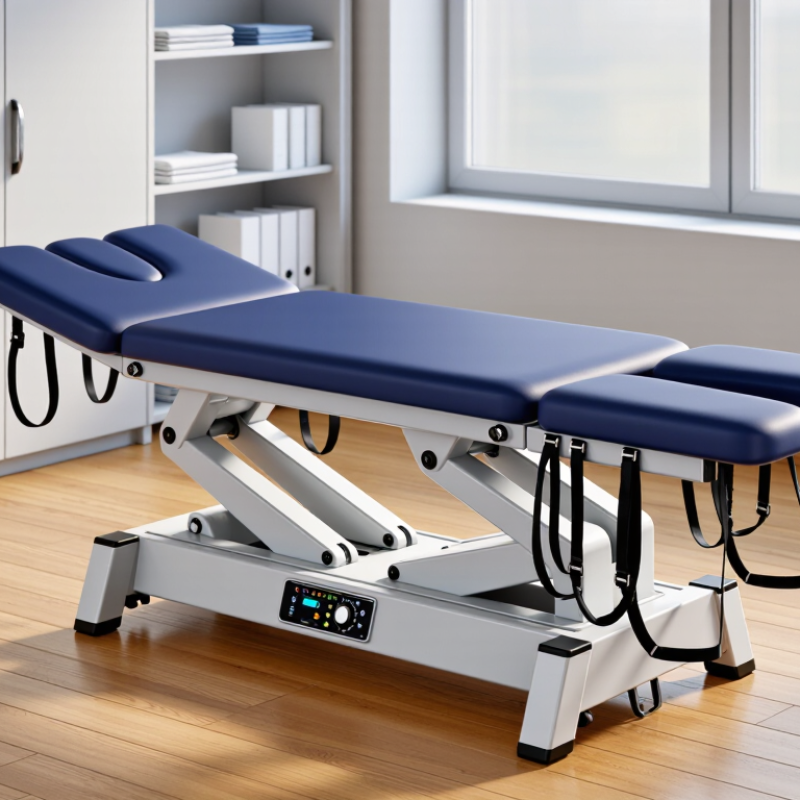
A lumbar traction table gently separates the lower spinal segments through controlled pulling force. The patient usually lies face up or face down, secured with a pelvic harness. A motor then applies steady or intermittent tension through the lower back. Some tables divide at the waist, allowing movement during traction. This design can feel less rigid than a fully fixed surface.
The best table in 2026 is not automatically the most expensive model. It should offer accurate force adjustment, smooth speed changes, emergency release, stable padding, and clear patient controls. A therapist also needs easy access to the harness and enough space for safe positioning. Small details matter. A loose strap can change the treatment experience.
Traction may temporarily reduce pressure or improve movement for some people with selected lower-back conditions. However, research results are mixed, and it does not repair every spinal problem. A careful clinician should screen for fractures, severe nerve symptoms, infection, recent surgery, or other risks before treatment. It is not a cure.
In practice, comfort can influence tolerance more than impressive specifications. I would not choose a table from a brochure alone. Test its noise, movement, fit, and release mechanism with trained staff. Even then, the “best” choice may need revision after observing real patient responses.
Key Features of the Best 2026 Lumbar Traction Tables
What Is the 2026 Best Lumbar Traction Table?
The best 2026 lumbar traction table should prioritize controlled movement, patient comfort, and measurable safety. A stable frame prevents unwanted shifting during treatment. Smooth motor operation also matters, especially when patients feel anxious or sensitive.
Look for adjustable pelvic and thoracic supports. They should fit different body shapes without excessive pressure. A clear control panel should adjust traction force, treatment time, and rest intervals. An emergency release is essential. Thick, breathable padding can reduce discomfort during longer sessions. Easy-to-clean surfaces support reliable clinical hygiene.
Tips: Test the table with several users before purchasing. Check whether the harness stays secure during gentle movement. Ask a qualified clinician to review patient suitability, because traction is not appropriate for every condition. A quiet motor may improve relaxation, but silence alone does not prove quality. Some advanced tables also have a learning curve. That detail is easy to overlook. Review maintenance access, warranty terms, and calibration procedures before making a decision. The most expensive option may still feel awkward, unstable, or poorly matched to a clinic’s daily workflow.
How to Compare Lumbar Traction Tables for Different Needs
What Is the 2026 Best Lumbar Traction Table?
The best lumbar traction table is not the most expensive model. It is the table that matches the patient, treatment plan, and clinical environment. In practice, I would compare pelvic and thoracic restraint first. These supports should hold the body steadily without creating pressure around the ribs or hips. A split tabletop can reduce friction during traction, while smooth height adjustment helps clinicians position patients with less strain.
Control matters too. Look for precise force settings, gradual progression, emergency release access, and clear load limits. Digital controls may improve repeatability, but simple controls can be easier to operate during a busy appointment. Noise, cleaning access, table width, and transfer height also affect daily use. A patient with limited mobility may need wide padding and low entry height. A sports rehabilitation setting may prioritize faster adjustments and stronger positioning options. No table fits every case.
Tips: Ask the clinician to test the table with a weighted load or volunteer. Check whether the straps stay secure during movement. Review training materials, service support, and inspection records before purchase. Do not judge comfort from a showroom mattress alone. Small details matter. I would also record patient feedback after several sessions, because my first impression may be wrong. Stop treatment and seek qualified clinical guidance if pain, numbness, or unusual symptoms increase.
Safety Standards and Clinical Considerations for Lumbar Traction
What Is the 2026 Best Lumbar Traction Table?
The best lumbar traction table is not defined by maximum pulling force. Safety begins with patient selection, device stability, and controlled adjustment. The Lancet’s 2023 Global Burden of Disease analysis estimated that 619 million people experienced low back pain in 2020. It projects 843 million cases by 2050. That scale demands careful clinical judgment, not aggressive settings.
A suitable table should support gradual force changes, secure pelvic and thoracic positioning, and rapid release during discomfort. Electrically powered systems should address IEC 60601-1 electrical safety requirements, while ISO 14971 supports documented risk management. Examine emergency stops, load limits, strap integrity, pinch points, and cleaning procedures. Fit matters. A poorly positioned patient can feel pressure across the ribs or pelvis within minutes.
Clinical evidence remains mixed. NICE guideline NG59 advises against traction for low back pain with or without sciatica. Earlier Cochrane evidence also reported limited or no clinically important benefit for many patients. That matters. Traction should not replace neurological screening, red-flag assessment, or an individualized rehabilitation plan. Record pain response, symptoms, skin condition, and post-treatment changes. Stop when symptoms worsen.
Some clinicians may still observe benefits in selected cases. The evidence does not justify certainty. A thoughtful purchasing review should include clinician training, maintenance records, patient access, and independent testing. The most expensive table may still be the wrong one.
How to Select and Maintain a 2026 Lumbar Traction Table
What Is the 2026 Best Lumbar Traction Table?
How to Select and Maintain a 2026 Lumbar Traction Table
The best 2026 lumbar traction table should match clinical needs, patient size, and treatment space. It should provide stable pelvic support, smooth movement, and clearly adjustable traction force. A strong frame matters, but comfort matters too. Patients may tense their muscles when the pads feel cold or restrictive. Fit matters more. Check the table’s weight capacity, usable length, height range, and emergency release before purchase. Controls should be easy to read during treatment. In practical evaluations, I would also test noise, vibration, and access for patients with limited mobility.
Do not select equipment from specifications alone. A table may appear advanced but still feel awkward in daily use. I once overlooked the importance of quick positioning during a busy assessment. That small mistake affected workflow more than expected. Clinicians should review training requirements, service access, electrical safety documents, and adjustment accuracy. A qualified professional should confirm whether traction is appropriate for each patient.
Maintenance protects both performance and trust. Inspect cables, locks, bolts, rollers, and cushions before regular use. Clean contact surfaces with approved materials, and avoid excessive moisture near electrical controls. Follow the service schedule for lubrication and calibration. Keep records. If movement becomes uneven, stop using the table until it is inspected. Monthly checks can reveal wear, although the exact interval should follow the manufacturer’s instructions and local clinical policies. Safety can never be assumed.
What Is the 2026 Best Lumbar Traction Table?
How to Select and Maintain a 2026 Lumbar Traction Table
A reliable lumbar traction table should be selected for patient safety, stable positioning, smooth traction control, appropriate weight capacity, easy cleaning, and service support. The chart presents a practical general maintenance schedule. Always follow the table manufacturer’s instructions, local safety regulations, and the requirements of a qualified healthcare professional.
