2026 Top Powder Feeder Types for Global Buyers

Selecting the right Powder Feeder in 2026 requires more than comparing prices, motor ratings, or catalog photographs. Global buyers must match the feeder with powder behavior, production targets, cleaning procedures, and local service capabilities. A fine pharmaceutical powder may bridge inside a hopper, while a dense mineral powder can overload the drive. Moisture, particle size, bulk density, and electrostatic charge can change performance quickly.

Andrew Jenike, a pioneer in bulk-solids engineering, offered a useful warning: “Bulk solids do not flow like liquids.” That principle still matters. It explains why a screw feeder, loss-in-weight feeder, vibratory feeder, or rotary valve can perform differently under similar conditions. This guide examines the leading Powder Feeder types for international purchasing teams. It compares dosing accuracy, operating stability, maintenance effort, integration needs, and lifecycle cost.

Real factories are rarely perfect.

A feeder that works well during a factory test may struggle after shipment. Voltage differences, climate, operator training, and inconsistent powder preparation can expose weak assumptions. Buyers should request material trials, calibration data, contact-part specifications, and documented service support. They should also question impressive accuracy claims without test conditions. That is where many purchasing decisions become less certain.

This overview does not treat one feeder as universally superior. Instead, it provides a practical framework for selecting equipment responsibly. The best choice depends on the application, the powder, and the consequences of dosing variation. Careful testing remains more valuable than confident marketing language.
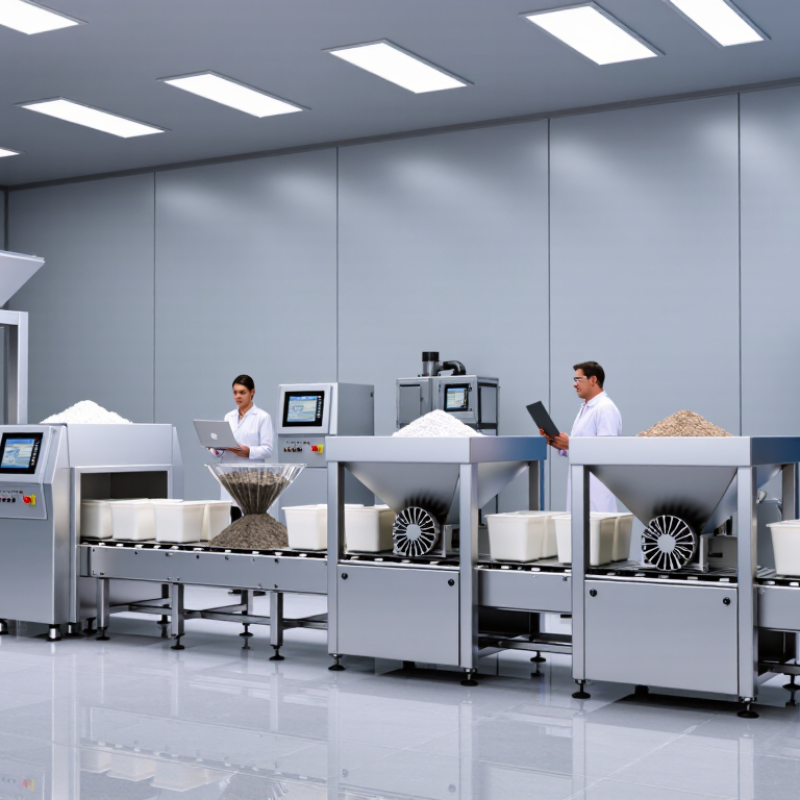
2026 Top Powder Feeder Types for Global Buyers

What Is a Powder Feeder and Why Does Its Type Matter?

A powder feeder is a machine that delivers dry material at a controlled rate. It connects storage, dosing, and the next production stage. Common types include loss-in-weight, volumetric screw, vibratory, rotary, and fluidized feeders.

The type matters because powders behave differently. Fine particles may bridge above a screw. Moist powders can form clumps. Lightweight powders may fluidize too easily.

A loss-in-weight feeder measures actual mass loss and supports high dosing accuracy. A volumetric feeder is simpler, but its output changes when density changes.

Vibratory feeders handle some free-flowing powders gently, while rotary designs offer steady delivery for consistent materials.

Small differences matter.

In practical testing, I check flow rate, particle size, moisture, bulk density, and refill behavior. I also watch for pulsation at the outlet. A feeder may perform well during a short trial, then drift after several hours. That detail is easy to miss.

Calibration should use the real powder, not only a similar substitute.

Operators also need clear cleaning access, overload protection, dust control, and documented settings.

No selection method is perfect. A technically accurate feeder can still fail when its hopper is too narrow or its screw is poorly matched.

Buyers should request repeatability data, maintenance intervals, and test results under realistic conditions. The best choice is not always the most advanced type. It is the type that remains stable, serviceable, and measurable in the buyer’s actual process.

How Powder Feeder Types Work and Where They Are Used

Powder feeders control the amount of powder entering a process. Their performance depends on flowability, moisture, particle size, and bulk density. Screw feeders use a rotating auger to move powder at a controlled rate. They suit plastic compounding, chemical blending, food processing, and additive manufacturing. Volumetric screw feeders are simple and economical. However, their output can change when powder density shifts.

Gravimetric loss-in-weight feeders use load cells to measure hopper weight continuously. The controller adjusts screw speed as the material level falls. This design supports accurate dosing in pharmaceutical, battery, and fine chemical production. Vibratory feeders use controlled vibration to move free-flowing powders gently. They work well with dry granules and powders that resist bridging. Rotary feeders provide steady discharge from hoppers, especially in powder handling and pneumatic conveying systems. No feeder fits every powder.

Tips: Test the actual powder before purchasing. Check bridging, dust, adhesion, and refill behavior. Record accuracy at both low and high feed rates. Keep the hopper shape, screw size, and refill method consistent during trials. In practice, a feeder may perform well in a factory test but struggle after humidity changes. This is easy to overlook. Buyers should request calibration data, cleaning procedures, contact-material details, and service support. A short trial with production powder often reveals more than a polished specification sheet.

2026 Top Powder Feeder Types for Global Buyers

How powder feeder types work and where they are used

Feeder type How it works Common applications
Loss-in-weight screw feeder Measures hopper weight loss and adjusts screw speed for gravimetric control. Plastics compounding, pharmaceuticals, food ingredients and specialty chemicals.
Volumetric screw feeder Delivers powder according to screw speed and calibrated volume per revolution. Blending, packaging, batching and processes where bulk density is consistent.
Vibratory feeder Uses controlled vibration to move free-flowing powder along a tray. Dry food products, minerals, granules and gentle product transfer.
Rotary valve feeder Uses rotating pockets to meter solids while helping maintain pressure separation. Pneumatic conveying, cement, lime, ash and bulk mineral handling.
Belt weigh feeder Measures material load and belt speed to control continuous mass flow. High-throughput mining, aggregates, cement and industrial minerals.

The chart shows representative industrial feed-rate ranges in kg/h, not market-share data. Actual capacity depends on powder density, particle size, moisture, flowability, screw or belt geometry, and required accuracy. Gravimetric feeders are generally preferred when dosing precision is critical, while rotary valves and belt weigh feeders are commonly selected for higher-throughput bulk handling.

Key Factors for Comparing Powder Feeder Designs

2026 Top Powder Feeder Types for Global Buyers

Powder feeder design should match material behavior, not only the target throughput. A 2024 Grand View Research report estimates the global powder metallurgy market at USD 2.4 billion in 2023. It also projects a 7.3% compound annual growth rate through 2030. This growth increases demand for stable, measurable powder delivery.

Loss-in-weight feeders suit processes requiring continuous accuracy. They monitor hopper weight and adjust screw speed automatically. Volumetric screw feeders cost less, but density changes can reduce consistency. Vibratory feeders handle free-flowing powders gently. They may struggle with cohesive materials. Rotary and twin-screw designs can improve discharge stability, especially when powders bridge easily.

Particle size distribution should be checked under ISO 13320. Shear strength and flow behavior can be evaluated with ASTM D6128. These tests often reveal problems that a supplier’s brochure misses. Moisture sensitivity also matters. A powder that flows well at 22°C may form a hard arch at higher humidity. Feeder comparisons should include accuracy, turndown ratio, cleanability, calibration time, spare parts, and control-system compatibility. Operators should test the actual powder, not a similar sample. That sounds obvious. It is still missed.

A 1% accuracy claim may hide different test conditions. Ask for data across the full operating range. Consider dust containment and inspection access. A feeder with fewer moving parts may simplify maintenance, yet sacrifice fine control. The cheapest design is rarely the lowest-cost choice after cleaning, rejected batches, and downtime.

2026 Top Powder Feeder Types for Global Buyers - Key Factors for Comparing Powder Feeder Designs

Feeder Type Metering Principle Typical Throughput Range1 Typical Accuracy2 Powder Suitability Main Advantages Key Limitations Common Applications
Loss-in-Weight Gravimetric Feeder Continuously measures the reduction in hopper weight and adjusts feed speed to maintain the setpoint. Approximately 0.01–2,000 kg/h, depending on screw size, material density and feeder configuration. Often about ±0.25% to ±1% of feed rate under stable operating conditions. Most free-flowing, cohesive, floodable and difficult powders when the hopper and screw are properly designed. High feed precision; compensates for bulk-density changes; suitable for recipe-based continuous processing. Higher purchase cost; requires load-cell protection, calibration and controlled refill management. Chemical processing, plastics compounding, food ingredients, pharmaceuticals and battery materials.
Volumetric Screw Feeder Feeds a calculated volume per screw revolution at a controlled rotational speed. Approximately 0.1–5,000 kg/h, depending on screw diameter, pitch, speed and powder bulk density. Commonly about ±1% to ±5% after calibration with a consistent material. Best for powders with relatively stable bulk density and predictable flow behavior. Simple construction; comparatively low cost; easy to integrate with batch or basic continuous systems. Accuracy can change when moisture, particle size, aeration or bulk density changes. Blending, extrusion, compounding, dry-mix production and general material transfer.
Twin-Screw Feeder Two intermeshing or closely arranged screws convey and meter powder while improving agitation and deaeration. Approximately 0.05–3,000 kg/h, depending on screw geometry and material properties. Typically about ±0.5% to ±2% in a calibrated gravimetric configuration. Cohesive, fluffy, low-density, bridging or poorly flowing powders. Improved hopper discharge; better control of difficult powders; reduced risk of bridging and rat-holing. More moving parts; higher energy use; cleaning and screw changeover can take longer. Fine chemicals, polymers, pigments, additives, food powders and pharmaceutical excipients.
Vibratory Feeder Controlled vibration moves powder along a tray or channel toward the discharge point. Approximately 0.1–1,000 kg/h, depending on tray size, amplitude and powder flowability. Usually about ±1% to ±5%; performance depends strongly on particle shape and flow consistency. Free-flowing granular materials and powders that do not compact easily. Gentle handling; few contacting parts; straightforward inspection and cleaning. Less suitable for highly cohesive, sticky or very fine powders; vibration may create dust or segregation. Food, aggregates, minerals, granules, tablets and dry bulk ingredient handling.
Rotary Disc Feeder A rotating disc or pocketed rotor carries a measured layer or portion of powder to the outlet. Approximately 1–2,000 kg/h, depending on disc diameter, speed and material characteristics. Commonly about ±1% to ±3% with consistent powder properties and calibration. Free-flowing powders and granules with relatively stable bulk density. Compact layout; moderate-to-high capacity; can provide steady discharge with simple mechanics. Performance may vary with powder level, density and flowability; less effective for cohesive powders. Batching, blending, packaging, agricultural materials and general dry-powder dosing.
Belt Feeder A moving belt transports a controlled cross-sectional load at a regulated belt speed. Approximately 10–10,000 kg/h, depending on belt width, loading depth and material density. Typically about ±0.5% to ±2% in a properly calibrated weighing system. Free-flowing powders, granules and bulk solids; especially useful for higher-capacity conveying. High capacity; relatively gentle conveying; suitable for longer discharge distances. Requires adequate space; belt tracking and material buildup must be managed; less suitable for very fine cohesive powders. Minerals, cementitious materials, fertilizers, food ingredients and bulk-solid processing.
Pneumatic Powder Feeder Uses conveying air to transport powder through a pipe; feed rate is controlled by pressure, air flow and solids loading. Approximately 1–10,000 kg/h, depending on conveying mode, distance and powder density. Often about ±2% to ±10% unless combined with accurate upstream dosing and feedback control. Powders that can be pneumatically conveyed without excessive degradation, plugging or segregation. Flexible routing; enclosed transfer; suitable for elevated, remote or hygienic discharge points. Higher air and energy demand; possible particle attrition, segregation, static charge and filter-load issues. Centralized powder transfer, food processing, chemicals, plastics and pharmaceutical plants.
Notes: 1 Throughput figures are indicative engineering ranges rather than guaranteed ratings. Actual capacity depends on screw or belt dimensions, bulk density, particle-size distribution, moisture, cohesion, aeration, feeder speed and installation design. 2 Accuracy figures are typical target ranges under stable conditions after commissioning and calibration; they should not be treated as universal performance guarantees.

How to Select the Right Powder Feeder for Global Operations

2026 Top Powder Feeder Types for Global Buyers

How to Select the Right Powder Feeder for Global Operations

Selecting a powder feeder starts with the material, not the machine catalog. Fine, cohesive powders may bridge inside a hopper. Free-flowing granules behave differently. Auger feeders suit steady dosing, while vibratory feeders handle powders that need gentle movement. Twin-screw designs can improve consistency when materials vary during production. Loss-in-weight feeders provide tighter control when batch accuracy matters.

Test the actual powder before approving a purchase. Measure bulk density, moisture response, particle size, and flow behavior. A feeder that performs well with dry samples may struggle after humidity changes. That detail is often underestimated. Request a trial using several production batches, including the difficult one. Record feed-rate stability, cleaning time, calibration drift, and residue around seals.

Global operations require more than dosing accuracy. Check electrical compatibility, control-system communication, documentation quality, and spare-part availability in each destination market. Stainless steel contact surfaces may simplify sanitation, but they do not solve every cleaning problem. Ask whether operators can adjust settings without special software. Remote support helps, yet local service capability remains important. I would also question impressive laboratory results when no long-term production data is available. Reliability is proven on ordinary shifts, with real operators, changing weather, and imperfect maintenance.

Global Standards, Maintenance, and Purchasing Considerations

2026 Top Powder Feeder Types for Global Buyers

Global Standards, Maintenance, and Purchasing Considerations

Powder feeder selection should begin with material behavior, not catalog categories. Gravimetric loss-in-weight feeders suit recipes requiring tight mass control. Volumetric screw feeders can reduce cost when bulk density remains stable. Vibratory units may handle fragile powders gently, but bridging can still interrupt production. A clean spreadsheet can hide this risk.

Global buyers should request calibration records, material-contact specifications, and documented test methods. ISO 9001 remains a useful quality signal; the ISO Survey 2022 reported more than 1.2 million certified sites worldwide. Certification does not guarantee feeder performance, however. Ask for repeatability data using your actual powder, moisture range, and target feed rate. Standards such as IEC 60079 and NFPA 652 may influence equipment selection where combustible dust hazards exist. Local requirements still control.

Maintenance details often decide long-term cost. Inspect screws, seals, load cells, and flexible connections during planned shutdowns. Keep spare wear parts sealed and clearly labeled. Operators should record drift, vibration, cleaning time, and unexplained mass loss. These small records become valuable purchasing evidence. The World Bank’s Commodity Markets Outlook has repeatedly shown that raw-material prices can shift sharply, so buyers should examine energy use and consumable costs, not only purchase price. I would not assume the largest feeder is safer. Oversizing may reduce accuracy at low rates, while undersizing creates constant stress. Test before committing.

Article Source:

Contact us

Please fill out the enquiry form, and our dedicated team will promptly attend to your request